“Israel is the Kind of First Love that is Always New”

“Israel is the Kind of First Love that is Always New”

Naomi Farahan of Carmel, Indiana, is a rising senior at University High School in San Diego.  She is the founder and editor in chief of the U Post – her high school’s online publication, president of the Young Democrats Club and participates in a number of other activities.  Naomi has a close connection to Israel and has always been an advocate for the country.  This summer, she is traveling Israel with Young Judaea’s Discovery program, after receiving the Hadassah Leaders of Tomorrow Award. This highly selective merit-based award gives two high school women the opportunity to receive full tuition for a four-week Young Judaea Teen Summer Program in Israel.  


Every time I prepare for a trip, a sort of nervousness stirs. Some of this has to do with my tendency to forget important details, like an extra pair of contact lenses. But for the most part, I feel uneasy because I know that soon enough, I will never be the same. I will have changed as a result of the coming experience. I will never again be able to say “I’ve never be there” or “I’ve never seen that.”


This is especially true for Young Judaea’s Discovery summer program. While I’ve been lucky enough to go to Israel several times, I have never been to Greece. More importantly, I have never met the 79 other kids with whom I will travel. It is nerve-racking, knowing that I’m going to embark on this journey with people that I’ve never met before. Will we stay friends? Ten years down the road, will we attend each other’s wedding as we look back on our awkward first encounters at airport security? I’m getting ahead of myself, but you see my point. Every experience we have change who we are, and I know that the Discovery program has the potential to impact my life in a big way.


I am incredibly excited to be going back to Israel this summer. The Holy Land and I have an interesting relationship. My first trip was in the fourth grade, when I went to support my older brother as he received his red beret and became an elite paratrooper in the IDF, and I immediately fell in love with Israel. Every visit is an immensely profound experience, connecting me to my family, to my roots, and to my people. I do not know if this connection starts when your plane lands, or when you touch your hand to the uneven limestone of the Kotel, or when you take the first bite of your first shwarma. It sort of just happens – it envelops you before you get the chance to notice that you have fallen in love. And it never gets old; it happens every time I go back. Israel is the kind of first love that is always new, always extraordinary.


I feel as if my brother, who has passed away since my first visit, beckons me to explore the same corners of Israel that he explored. He participated in the Discovery program as a high school student, and used to say that it was thanks to that trip that he formed such a strong connection to the land. I am honored to have this same opportunity.


While I’ve been to Israel several times, I am not exactly sure what to expect from this trip. I’ve never been a tourist with 79 other kids, so I’m going in with my arms and eyes wide open. My bag is bursting at the seams – we cannot contain our excitement, and I cannot stop myself from over-packing. For those who are reading this, I’ll update you once we arrive in Israel. Thank you for reading!

No Longer a Stranger in a Strange Land

No Longer a Stranger in a Strange Land

by Daniel De Wijze, Year Course/FZY Participant

It’s not often that something amazing starts with a Google search, but that’s what happened to me last April. I typed ‘Jewish gap year in Israel’ into the search bar and before long I was on the phone to the FZY office. After some thought, I came to the decision that I wanted to spend the next 9 months in Israel. My friends were confused when they learned about my choice. Why was I going to Israel if I wasn’t religious and going to Yeshiva? Why was I putting off University for a year? Why was I going to be wasting my time?

The reality is that I really feel that I have grown greatly as a person whilst on Year Course. I have learned all about the history, culture and politics of the State of Israel, and why it is so important to us as the Jewish people. My ability to speak Hebrew improved drastically, which is something that never would’ve happened in England. In addition, I feel that I have become more independent, resourceful and confident. I also have a newfound appreciation for dishwashers after having to do the washing up for 9 months!

When my family visited Israel for Pesach, I felt proud to be able to show them around Israel, explaining Hebrew signs and ordering for them at restaurants – no longer a stranger in a strange land, Israel has become my home.

On the very first day of Year Course, I remember sitting in my room in Beit Ar-El with my roommate, Leo Brosh. It was a hot August day outside and we were lying on our beds, waiting for the Americans to arrive. There was an unspoken note of mystery about the Americans – what would they be like? Were they loud, were they friendly, did they really speak with such a ridiculous accent? The answer to all of those questions was of course yes, but that takes nothing away from how much I love the Americans and the fun we have had living together.

Something that I love about Year Course, and that I think enriches it beyond measure, is the mix of American, English and Israeli (and yes, European) cultures. I find it fascinating how people from different places have entirely different views of the world. Sometimes it can be strange and difficult, like when an Israeli shouts at you in rapid Hebrew for swiping your Rav Kav too slowly on the bus, or when your New Yorker roommates shout at you for eating your pizza with a knife and fork…

But most of the time it has been brilliant. Joining in the giant Purim carnival in Holon, when everyone, kids and adults alike, dressed up. Eating my first ever s’mores. Wandering around the Shuk, and paying a visit to the Etrog man. Actually understanding that the Superbowl is a sporting event and not, as would be logical, a giant bowl. And of course, going for schwarma.

Israel is an extraordinary country. From the outside, it doesn’t really look like it can work at all, with Jews, Muslims, Christians, Bedouin, Druze… not to mention the varying levels of religious observance that everyone has, and of course the many surrounding Arab states who seek our destruction. But somehow on the whole, people find a way to live together, often through acts of deep kindness and compassion.

The moment I realised how special Israel was to me was during a hiking trip with my friends in the CarmelNational Park. We had been following a trail for many hours, and because we had been a little lax with our preparation, we had run out of food and water. Finally we exited the forest and found ourselves in a small town. We stopped and asked a couple on the street where we could buy water. In response, they invited us into their parents’ home, where we were given drinks and told to rest. After chatting with our new hosts for a while, we were suddenly presented with a delicious meal – and they kept apologising for not being able to give us more!

Israel really is a country where people help each other, and I feel that by volunteering this year, first at YeminOrdeYouthVillage and then in Bat Yam, I really have been part of that ethos. Volunteering isn’t always easy – sometimes I felt unappreciated or frustrated when the kids I worked with didn’t want to learn, or acted up. Or when I was really tired and couldn’t really be bothered to go to the farm that day. But the truth is, I know that when you volunteer you are appreciated and valued, and you are truly helping to make the world a less shitty place.

I would like  to thank all the people who made my Year Course special and unique. Firstly, all my teachers in Beit Ar-El – David Kay, Susan Yammer, my Ulpan teacher Sephy, and of course, the fabulous Avi Rose. Saba and Safta, who were so kind to me in Yemin Orde. My madrichim, Josh, Bar and Tali. Joel, who does so much for us behind the scenes that we never see. Not forgetting Kate, Adam Jenshil, the security guards at Beit Ar-El, the host families I have stayed with and anyone else I have forgotten.

Thank you all.

To end, I return once again to the first day of Year Course, when everyone had finally arrived. I remember being overwhelmed by all the new faces as I walked around, all my introductions blurring together so that I couldn’t remember anyone at all. For me, the transition from the mass of strangers I met on that day to the group of amazing friends I can see before me now… that has been without doubt, the best part of the journey.


What Will You Do in Israel?

What Will You Do in Israel?

By Erin Philips, WUJS Participant


When I first decided to join WUJS, I was a little concerned about how I was going to fill my time in Israel. I was leaving a full-time job, family, boyfriend and friends back in the United States, and even though I knew I would have an internship, a weekly program tour, and a weekly arts track activity, I was worried there was still going to be a lot of blank space in my schedule. Although some of this free time was part of the incentive for coming – I was looking forward to working on my writing portfolio – I’m someone who likes to be busy.


Needless to say, I shouldn’t have worried. While there was plenty of time to hang out during the first few weeks of orientation and while I was settling in to my new life in Tel Aviv, I soon found myself with more things I wanted to do than there were hours in the day. This past month (my third in Israel!) has been a whirlwind of activity. To give you an idea of the wealth of things to see, do, and experience, here is a summary of what I’ve been up to lately:


* Arts & Culture – I saw the Inbal Pinto & Avshalom Pollak Dance Company’s newest show “Dust,” an amazing contemporary dance performance incorporating light, sound, animation, and props at the Suzanne Dellal Center. I joined a group of fellow sketchers at a Drink & Draw class with a live nude model at a DIY arts and craft studio in Jaffa. I went on a Jane’s Walk tour of art galleries and street art in the industrial warehouse district of south Tel Aviv, and went to a Tel Aviv Arts Council screening of the classic Israeli comedy Givat Halfon Eina Ona. On an arts track visit to the Eretz Israel Museum, I saw a textile show and an exhibition of astonishing nature photography put together by London’s Museum of Natural History and the BBC Worldwide.


* Parties – I danced until 3 a.m. on my first visit to a Tel Aviv nightclub (I’m not a huge partier which is why it took me so long to experience a little bit of “the city that never sleeps”), and went to something called a “Universal Unicorn Rave” in a hostel where everyone had dreadlocks. I was definitely out of my element.


* Holidays (in Israel there is at least one a week) – I observed Yom Hazikaron (Memorial Day) by going to a ceremony for fallen olim (immigrants) who had joined the Israeli army. On Yom Haatzmaut (Independence Day) I went to a BBQ for internationals and met English-speakers from all over the world living in Israel.


* Travel – Two other WUJIES and I went on a three-day trip to Eilat (a resort town at the tip of the Red Sea) and Jordan (a spectacular, awe-inspiring country). In Jordan we had a private tour guide and stayed in his family’s Bedouin style camp in Wadi Rum, a protected area in the middle of the desert. We went on a jeep tour that included rock climbing, sandboarding and a lot of tea-drinking, had a sunset camel ride, ate a traditional feast cooked under the sand, and slept in tents. The next day we spent four hours exploring the ancient city of Petra, which is as amazing as everyone says it is. I bored my family with endless photos of rock and sand vistas, but the Jordanian desert is stunning.


* Agriculture – I went to a commercial beekeeping farm in Caesarea and learned about beekeeping, Colony Collapse Disorder, and the honey-making process. Over our 10-day program break, my WUJS best friend and I WWOOFed, i.e. we volunteered on an organic family farm in the Negev desert for a week, which was an exhausting, rewarding, and eye-opening experience.


So far I’m having an inspiring, challenging, incredible time living abroad. Sleep will have to wait!

Hidden Treasures of Tel Aviv – in Mini Israel

Hidden Treasures of Tel Aviv – in Mini Israel

by Maria Olshanskaya, WUJS Participant

 Even if you’ve been to Israel a dozen times, the seemingly kitschy exhibit at Mini Israel might reveal to you the hidden gems you’ve been missing on prior visits.  Mini-Israel is a tourist attraction situated about half-way between Tel Aviv and Jerusalem on the outskirts of Latrun, a Trappist Monastery famous for its delicious wines and the nearby “Yad Lashirion” memorial and museum for Israel’s tank units.  As one might imagine, the park contains a number of 2-5 foot models of many of Israel’s iconic sites amongst which you can walk to get a feel for the whole country in a short time.  The exhibits are visually stunning and many have audio elements as well.  There are mini cars and buses driving on mini roads, mini people walking and chatting at mini-cafes and mini-houses.  There are even mini-worshippers praying in mini-synagogues, mini-churches and mini-mosques (try saying that ten times fast!)  in their own languages according to their own different traditions, cultures, and religions.

I’ve been living in Tel Aviv for a few months now and have a good sense of what is what around town.  But I surprised to find that in mini-Tel Aviv I found several amazing buildings and places I’ve never visited before. Some of them are really hidden in the labyrinths of streets and to find them you need to know where to look. But there were others that I had passed million times and just never noticed.

These four locations stuck out to me for their beauty, unique representation of “Tel Avivi” style, and the fact that I didn’t even know that they existed!

1. The “Shell” Synagogue

The synagogue’s real name is Hechal Yehuda, but one look at the building will explain why it got such a nickname.  Situated on Ben Saruk street, 13, hidden in-between tall modern buildings and parking lot, this amazing building has a funky architecture that definitely diverges from traditional synagogue designs. I think this is a perfect representation of a city that has houses hundreds of synagogues and sponsors pluralist Kabbalat Shabbat services, despite its secular reputation.

2. “The Crazy House”

Once again, the name speaks for itself.  This gaudy building on HaYarkon street 181, just next to Marina Hotel, looks like it’s out of a Tim Burton movie. Tel Aviv, like many big cities, is full of people trying to stand through clothing, hair styles, tattoos, or even how their dog is groomed.  No structure in town is more unconventional, loud, and noticeable than this though.

 3. Pagoda house

Situated in the center of the city, the Pagoda House has a funky mix of Japanese, German, and Middle Eastern styles that truly illustrates the international, multi-cultural mix that Tel Aviv strives for.  The former residents of this building include the chief editor of “Ha’aretz,” Israel’s oldest newspaper and the Polish ambassador.  Fun fact: this was the first house in Tel Aviv to have a passenger elevator.

4. Bialik square

This little square is lined with multicolored buildings built in the old Tel Aviv style with beautiful balconies and an elegant fountain – tucked quietly away just three blocks from the shuk! The beautiful orange, white, and blue colored buildings include the first city hall, the Bialik Museum, and the Rubin Museum.  This was the center of Hebrew culture in the first years of pre-state Israel.  The Bialik Museum used to be the house of Israel’s first Poet Laureate Chaim Nahman Bialik, and the Rubin Museum was the house of Reuven Rubin, one of Israel’s most famous painters.  The place is the physical embodiment of the Hebrew culture reborn in Tel Aviv, built from Hebrew poetry, music, and art.

It is always great to be reminded that where you live is full of secret beauty.  My trip to mini-Israel certainly retaught me that lesson.  Living in a city with as much to offer as Tel Aviv is an opportunity that I relish every day.

An Interview with The Dog Matchmaker

An Interview with The Dog Matchmaker


by Sarah Oren Brasky, Year Course 2004 – 2005

[Note: Mrs. Brasky graduated from Binghamton University with a BA in Cinema in 2008. She created FosterDogsNYC.com in 2009, and soon after started The Dog Matchmaker in 2010. Upon completing her MS in Elementary Education at Southern Connecticut State University in 2013, she became a preschool teacher at Congregation Beth Elohim in Brooklyn.]

After my senior year of high school, I went on Young Judaea’s Year Course in Israel program, where I spent nine months in Israel, traveling around the country and spending time volunteering and taking college-level courses.

Sarah_Oren_arava

For those people who know me, they are well aware of my passion for animals. I had volunteered and worked with dogs throughout middle school and high school, and was able to continue this work while on Year Course. Our YC section spent four months in Tiberias, on the Gallilee. The region is beautiful, though the city itself has many poor areas and is not the most desirable locale. One saving grace was when I received my volunteer placement: the municipal animal shelter (Kalbiyah). This was not a job for the faint of heart. The facilities were under-funded, smelly, and often filthy; many dogs died of illness during my time there. At one point, I felt so badly for one tiny puppy (he must have been five weeks old) that I received permission from the shelter manager to bring him back to the dorms with me; suffice it to say, my YC friends were enamored. I ran an adoption event with my somewhat limited Hebrew skills, and hung beautiful posters all over town. This was a time to dive further into dog rescue, and to be helpful in a place that was in dire need.

Sarah_Oren_kangaroo

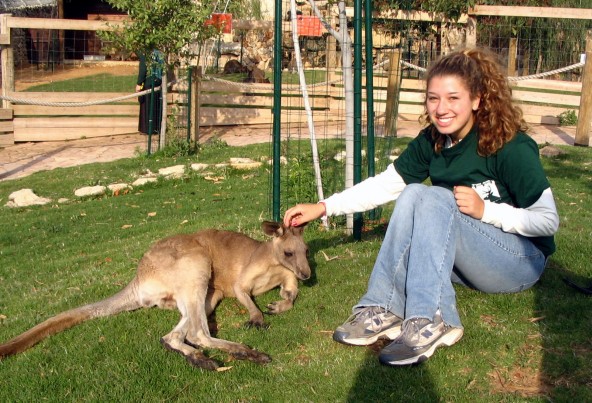
Not only did I volunteer with Tiberias’ municipal animal shelter, but I also spent four weeks working full-time at the Biblical Zoo in Jerusalem. This experience was pretty incredible; one of those opportunities I might have never had in the “real world.” Where else can you bathe a hippo, take a selfie with a kangaroo, hold a dove and an iguana (separately), and scoop up giraffe poop — in one day?

After graduating from SUNY Binghamton in 2008, I began fostering dogs. My website www.fosterdognyc.com developed quite organically. I saw a need for a central website that not only provided info about fostering in general, but also displayed shelter dogs in need of/currently in foster care. What began as a small blog in August of 2009 has become a thriving nonprofit organization boasting hundreds of success stories (dogs who found homes through my site)! I now have a team of dedicated volunteers who help run our events and charitable giving efforts.

Around the time of FosterDogsNYC.com’s birth, I started my small business The Dog Matchmaker. My goal is to connect potential adopters with the dog of their dreams, strictly through adoption. www.thedogmatchmaker.com. In fact, I just made a match this week: a lovely retired couple wanted to adopt a small fluffy dog who would get along with their cat; I knew just the dog, and they are smitten! My work has been featured in Costco Connection, The Jewish Week (NY), The Bark Magazine, Petfinder.com, and more!

When someone wants to adopt a dog and finds out about my service, they start by completing my simple questionnaire. Their responses to my questions really help me figure out what dog they are looking for as well as what dog types to recommend for them. For example, if someone tells me that they want a Poodle puppy, though they work full time and want a mellow dog, then I would start by recommending that they consider an older poodle, who would be calmer and able to be alone for longer periods of time. Part of my job is to support the adopters and remind them how wonderful adoption is, and how to make it a pleasant process for everyone. Nothing makes me more fulfilled than facilitating a successful adoption match – and foster match!

SARAH_SHAGGY

Adoption and fostering is incredibly important. Millions of dogs and cats are euthanized in animal shelters yearly due to lack of space in municipal shelter, though thousands – if not millions – of animal lives would be spared if those animals had a safe home to live in. I hate to be a drag, I really do; but if everyone says, “I want to foster, though I’d get too attached,” no one would do it. Sure, we all get somewhat attached to our foster pets (full disclosure: I kept two of my eight foster dogs!), it’s only natural. What keeps me grounded is the reminder that these animals will move on to great “forever” homes, and I’ll still have room to take on a new foster pet in the future. Foster homes are the “missing link” in many shelter systems, and can make such an incredible difference! No matter how pleasant the animal shelter facility might be, a home is a far better place for a dog. These are domesticated creatures, bred to be companions to humans; most dogs crave human interaction! When faced with small kennels/cages, cold floors, few walks, and frequent barking/whining, a dog can become distressed, thus not appearing very desirable to incoming adopters. It’s a lose-lose scenario for those distressed animals: utter discomfort plus lack of adopters. When placed in a foster home, they begin to relax, learn routines, practice their housetraining, improve their health, socialize with people and animals, and of course gain better photos!
My independent volunteer time on Year Course was a great pipeline to Foster Dogs NYC and the Dog Matchmaker. It allowed me to continue helping animals and explore dog fostering with confidence and support, in a community that so badly needed the assistance.
I have so many projects at the moment, it’s hard to know where to begin. Foster Dogs NYC needs to raise funds, as we plan to prepare “Foster Starter Kits” for new foster caretakers in NYC. These kits will include: durable rubber toy, locally-made treats, a do-it-yourself dog ID tag, emergency information sheet, and biodegradable dog waste bags. We also want to raise funds to sponsor a new Fospice dog this summer. Fospice is our program to help an elderly shelter dog into foster care, and provide funding where possible. We have several willing foster homes, and need funding ($500 sponsorship per dog) in order to take on a new recipient. Read more about Fospice here: http://fosterdogsnyc.com/introducing-fospice-program/

WUJS en Espanol!

WUJS en Espanol!

by Fernando Kopelman, WUJS Participant

Primer semana en Tel Aviv. Después de la pequeña aventura que implica siempre viajar, me instalé en el nuevo departamento, junto a dos roomates. Estamos ubicados en el corazón del barrio joven -y ridículamente hipster- de Florentin, entre bares, restaurantes orgánicos veganos, fábricas de muebles con techos de chapa y graffitis en las paredes. En un tercer piso un amplio balcón se despliega de un espacioso y luminoso living, conectado a una agradable cocina abierta, con un baño de buen tamaño y dos habitaciones pequeñas. Este será mi hogar por los próximos cinco meses, como participante del programa de WUJS.

Al día siguiente de la mudanza conocí a resto de los participantes y al staff del programa, en una primera reunión de orientación. Somos un grupo menor al anterior –alrededor de 22 participantes- pero bastante diverso. La mitad de diferentes ciudades de Estados Unidos, la otra mitad de lugares como Rusia, Inglaterra, Francia, Latvia, Kazakhstan, Australia y Argentina –quien suscribe-, todos con profesiones que fluctúan de abogados a escritores y de programadores a maquilladores. Promete ser un grupo interesante y agradable.

Los días siguientes han sido tranquilos. Orientación por parte de los coordinadores, información importante, algunas caminatas para conocer lugares útiles. Comer falafel, cenar hummus, comer más falafel. Empezar a conocernos con los otros miembros. Relajarnos, adaptarnos y disfrutar el viento fresco y el Sol del poco convincente invierno Israelí.

Ahora, siendo casi las ocho de la noche de un viernes, la ciudad ya lleva más de una hora apagada. Adelantándose al Shabbat -sábado-, en el cual según la tradición judía no se trabaja, no se enciende fuego ni se usa energía eléctrica, entre otras cosas, los negocios bajan sus persianas y las calles se van silenciando. La ciudad, joven y moderna, no se acata a todas las reglas, sin embargo. Las ventanas brillan, algunos autos se dejan oír de vez en cuando y una fiesta con karaoke dentro de algún hogar demuestra que no estamos en Jerusalem. Pero el trabajo cesa y la gente aprovecha para reunirse y comer. Ese es nuestro plan de esta noche, reunirnos todos los integrantes del programa a tener una cena de Shabbat. Es extraño practicar costumbres judías con un grupo de gente que, en su mayoría, no las practica por separado. Pero nunca he dicho que no a la oportunidad de reunirme con gente, comer y pasar un buen rato.

Mañana, como todos los sábados, lo tendremos libre. El domingo partimos a un viaje de dos días al sur, para luego empezar con las clases intensivas de hebreo la semana que viene. El jueves debería de tener mi primer excursión al estudio de animación donde se supone que estaré como pasante.

De a poco nos iremos asentando y entrando en nuestras respectivas rutinas, intentando equilibrar esta sensación de ser turista y ciudadano a la vez. Y no podría estar emocionado.

Shabbat Shalom (que es como desear un buen sábado; aunque el sábado israelí es como un domingo y el domingo como un lunes).

JServe in Burlington, Vermont

JServe in Burlington, Vermont

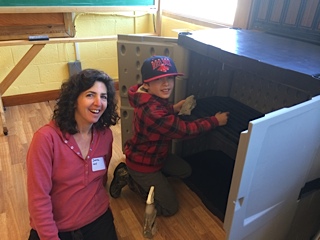
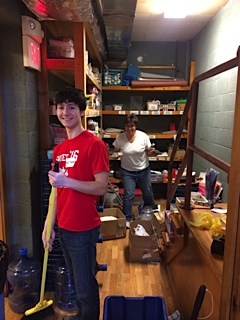
While several of our Judaean communities participate in Jserve programs, we are so very proud of our Burlington, VT Judaeans, who along with their advisors and the whole community brought together 70 volunteers to participate in various mitzvot at the Ohavei Zedek (OZ) Synagogue and in the larger community. They cleaned and organized toys, closets, classrooms, as well as the kitchen and the community freezer at OZ in preparation for the Passover holiday; cleaned up the grounds around the synagogue and helped clean, organize and paint in the Shalom Shuk, a thrift shop run by Ohavi Zedek Synagogue, and staffed by volunteers, serving the refugee community in the area. It was a great day of Tikkun Olam!

13722399035_d34e4f4932_o

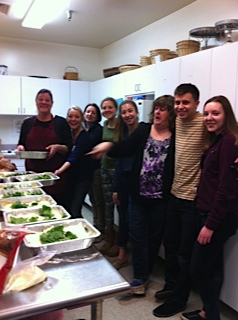
The Tsofim group made lasagnas and cookies at the Ronald McDonald house, a home away from home for families with children being treated at the Vermont Children’s hospital at Fletcher Allen.

13722435913_3693cde28d_o

The Bogrim group made and served meals at the COTS Daystation and the Burlington Emergency Shelter, preparing food to feed approximately 80 people as well as preparing lasagnas for Vermont Respite House and adding 10 lasagnes to the community freezer at OZ for families in the immediate community in need of meals. (BES’s, OZ’s community freezer’s and VRH lasagnas were prepared in Temple Sinai’s kitchen).

13722792764_18d38af605_o

The Burlington, VT group was the recipient of a JServe grant, which enabled them to support their program and make a meaningful impact in the community.

Kibbutz Ketura: 40 Years in the Desert

Kibbutz Ketura: 40 Years in the Desert

Founded by Young Judaea Year Course alumni in November 1973, mere weeks after the end of the Yom Kippur War, Kibbutz Ketura’s history has always reflected its desert home. Against many odds and elements, Ketura has produced some of the world’s most innovative environmental technologists and technology, leading Israel and the world into a greener existence.

solar field
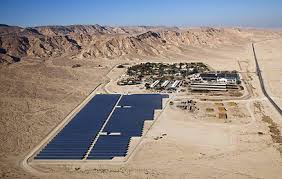
The Solar Field at Kibbutz Ketura

 Yosef Abramowitz, a lifelong Judaean and member of Ketura, has consistenly landed the kibbutz in the headlines since 2006 through his work with the Arava Power Company, of which he is a co-founder. Most recently, Abramowitz announced that his companies Gigawatt Global and Energiya Global have secured $23 million in financial support to build Africa’s first utility-scale solar field in Rwanda, on land owned by the Agahozo-Shalom Youth Village. ASYV was the creation of the late Anne Heyman, philanthropist, activist and Young Judaean. The solar field in Rwanda will reflect the same research and design that went into Ketura Sun, Israel’s first commercial solar field designed and built by Arava Power Company in 2011 in – you guessed it – Kibbutz Ketura.

Not only Has Ketura been at the forefront of green technology and entrepreneurship, but the kibbutz also houses the Arava Institute of Environmental Studies, which brings together Israeli, Palestinian, and Jordanian students for environmental study and research in one of the top programs in the Middle East. Students research water management, sustainable agriculture and development and energy conservation. One of the institute’s most noteworthy and publicized accomplishments was the recent germination of a Judaean date palm using a seed from roughly 2000 years ago, found at Masada. Long considered extinct, the tree itself now grows at Kibbutz Ketura and stands as a living testament to the survival and regeneration of Israel itself.

Ketura is also home to a large facility of Algatech, the world’s leading supplier of astaxanthin, a red micro-algae said to benefit human health and fight diseases like cancer and immune disorders. The facility has been commercially producing the algae since 2003, and Kibbutz Ketura’s sunny, desert location ensures year-round production.

As part of their ongoing anniversary celebration, Ketura will be holding an open day at the Kibbutz Friday, May 2. For more information and to RSVP, click here.

Year Course Around the World

Year Course Around the World

KUMA trip to Poland

Diary From the Agahozo-Shalom Youth Village in Rwanda
by Stephanize Blitzer, Year Course Participant

Being here in Rwanda has really made me appreciate everything I have.  I may not have all the things I want in the world, however I am surrounded by love and kindess and I also have a lot to give.

Tuesday was my third and last time making mud bricks for the house that the senior-4 class will be building.  Words cannot describe how good and refreshing it felt to be helping out someone in need.  I will miss getting my feet all muddy, singing songs, having discussions with the students, and showing the young children how to take photos on an iPhone, but the smiles and the laughter as well as the grateful looks will always be something that I will take with me as a gift.  There is no way to illustrate how I felt helping to make the bricks and being surrounded by such passionate young adults.  As cliché as it sounds, my experience building bricks over the past three weeks brings tears to my eyes thinking as I think about the hard work that the students put in and how enthusiastic they are.  There is so much devotion that went into making the bricks and making sure that the children were smiling and having a good experience, too.

Over these past weeks, I have been trying to figure out how to describe my experience in Rwanda.  Like so many Year Course experiences, it is difficult for me to find words that will evoke the emotions  I’ve been having other than saying it has been amazing.

The Year Course Group in India

Siyur Series 4 – The Underground Prisoners’ Museum

Siyur Series 4 – The Underground Prisoners’ Museum

by Brittany Herzenberg, Year Course Participant

Several weeks ago, our Zionism class headed to downtown Jerusalem for a tour of the Underground Prisoners Museum.

The building, which originally served as a women’s dormitory in the famous Russian Compound, was converted into a prison during the British Mandate. The British initially imprisoned both Jews and Arabs together, but separated them once conflict arose. During the War of Independence, the Haganah, the Irgun, and Lechi, the three main underground Jewish paramilitary groups, captured the Russian Compound. The building itself served multiple uses over the years, and in 1991 the prison was converted into a museum to commemorate prisoners from these underground movements.

museumIn the museum, Rabbi Kahn gave us a tour of the cells, synagogue, courtyards, and kitchen. A part of the tour that stood out to me the most was the Prisoners and Detainees of Bethlehem exhibit, honoring the women who fought in the Haganah and other underground groups. It was amazing to see that the women were just as daring as the men in their acts of rebellion. We watched a video that explained the hardships the women faced in the prison, and through it all, how passionate they remained for the cause. After Israel gained independence from the British, most of the detained women joined Israel’s army and continued fighting for their beliefs.

At the end of our tour we sat down with Zippy, our guest speaker that afternoon. Born and raised in New York, Zippy was also just 18 years old when she came to then-Palestine for the year. The difference between us is that while we arrived in August 2013, Zippy arrived in 1947, just several months before Israel’s fight for independence began. Telling us personal stories of what life was like in the ‘settlement’, or Yishuv as the Jews called Mandatory British Palestine, Zippy described how she was invited to join the Haganah and fought for Israel’s independence. An aspiring journalist, Zippy wrote down all of her experiences, primarily in letters she sent back to her family in the United States. Decades later, she found the letters in her mother’s house and compiled a book, Letters from Jerusalem: 1947-1948. It was amazing to hear a first hand account from someone who came to Israel with similar intentions as us, during an incredible point in history.museum2

Visiting this museum made me truly realize what a remarkable city I’m living in. It’s amazing that such history – that of the British Prison and Zippy’s own experiences – just north of Ben-Yehuda street, a bustling area where now we stop to grab falafel.