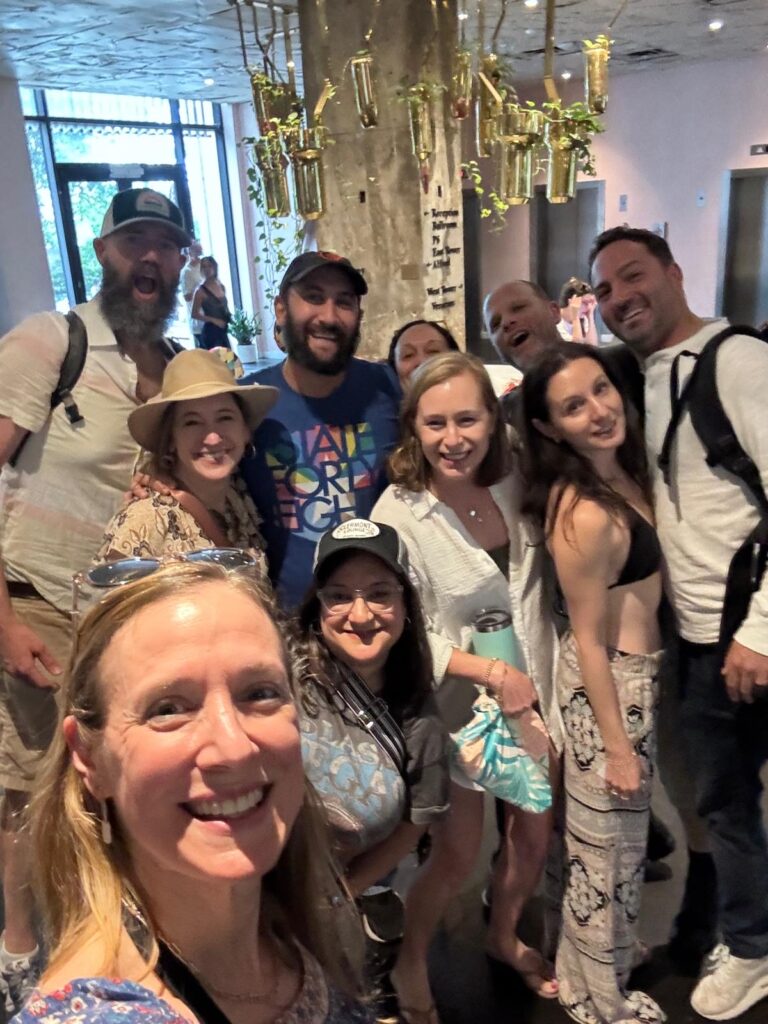
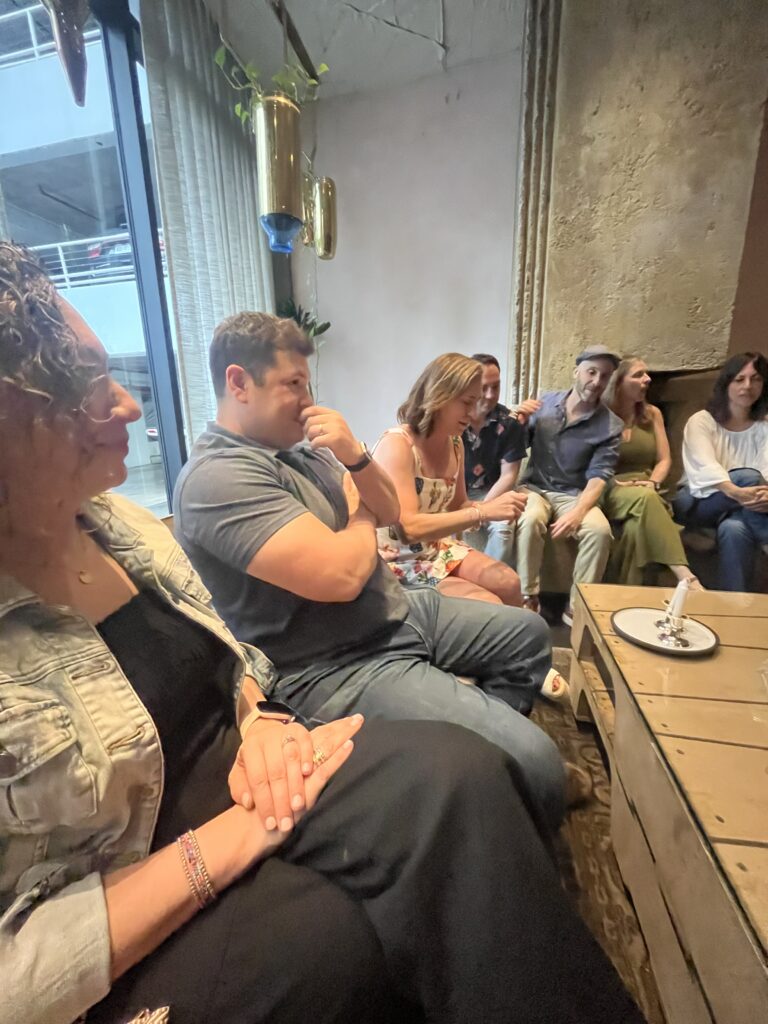
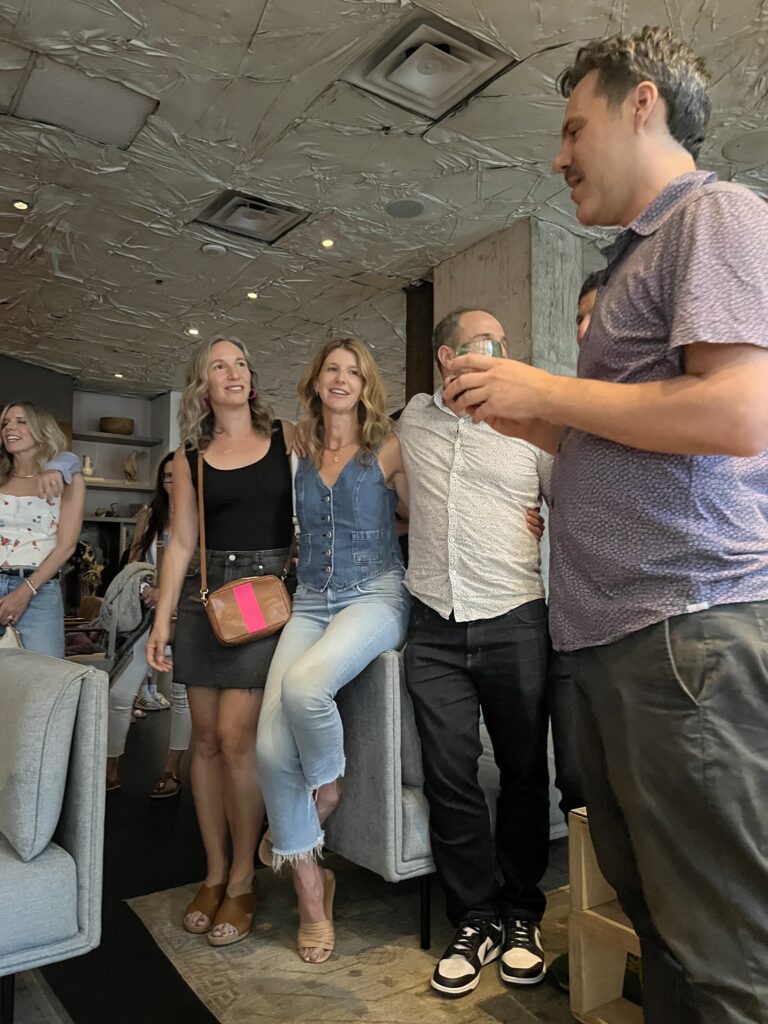
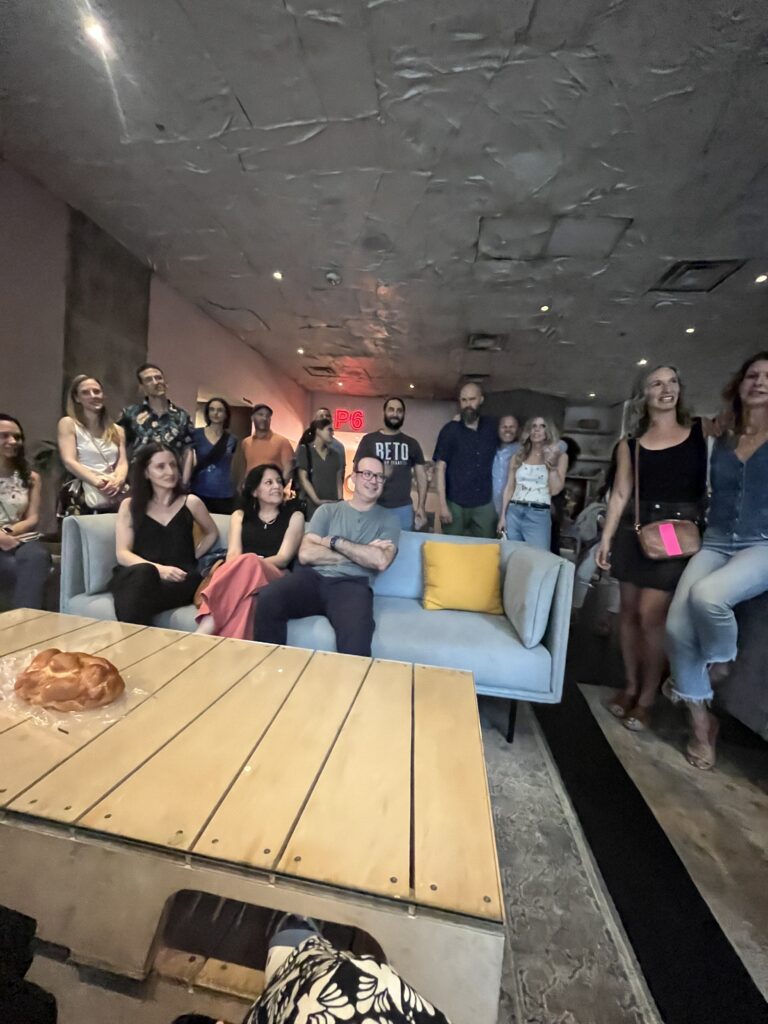
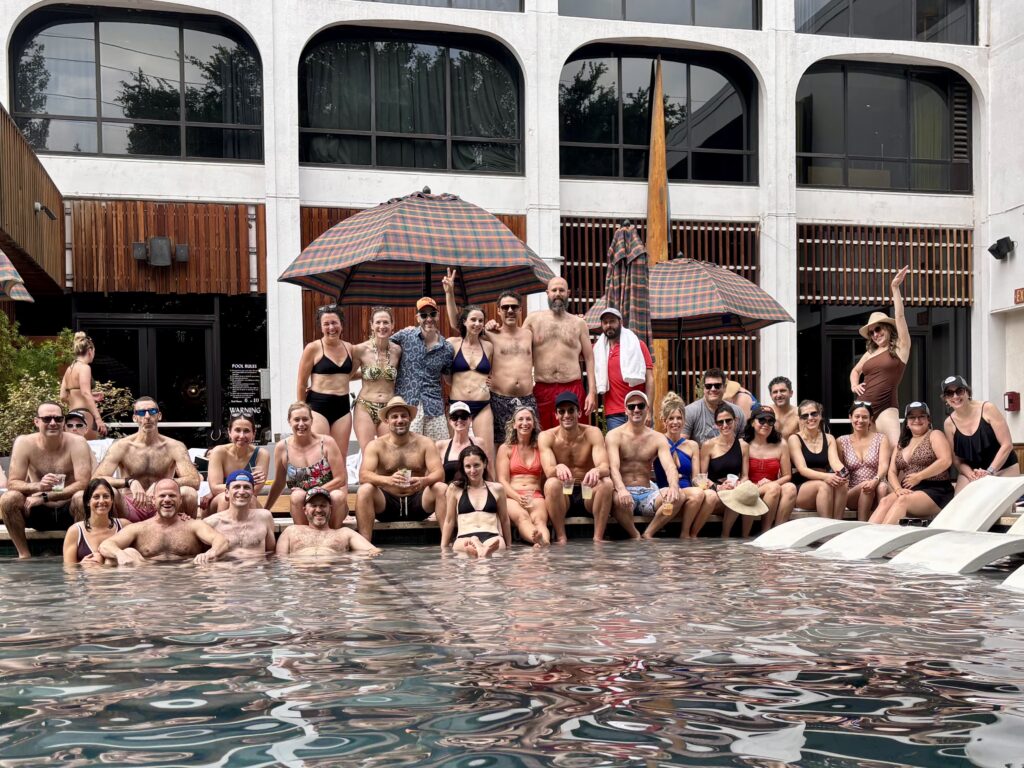
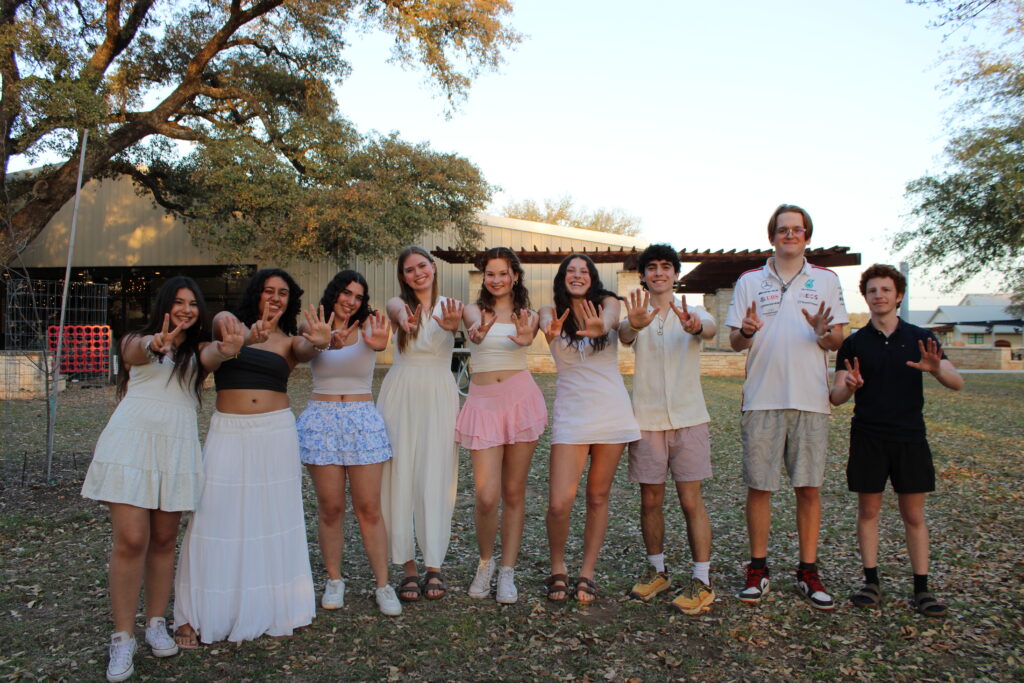
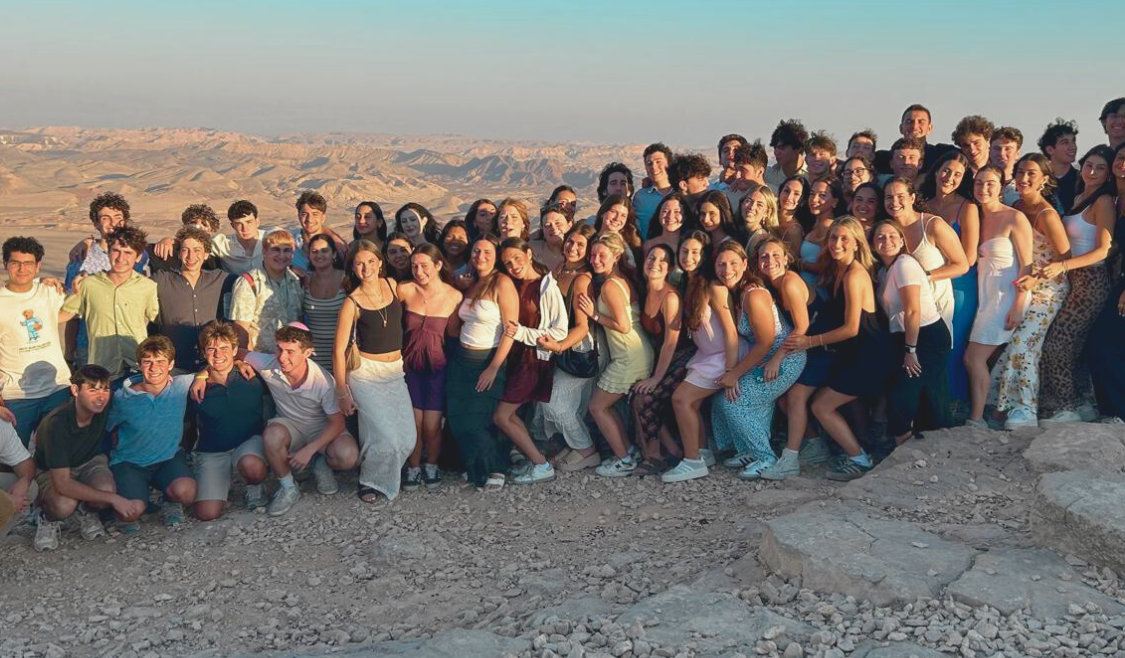
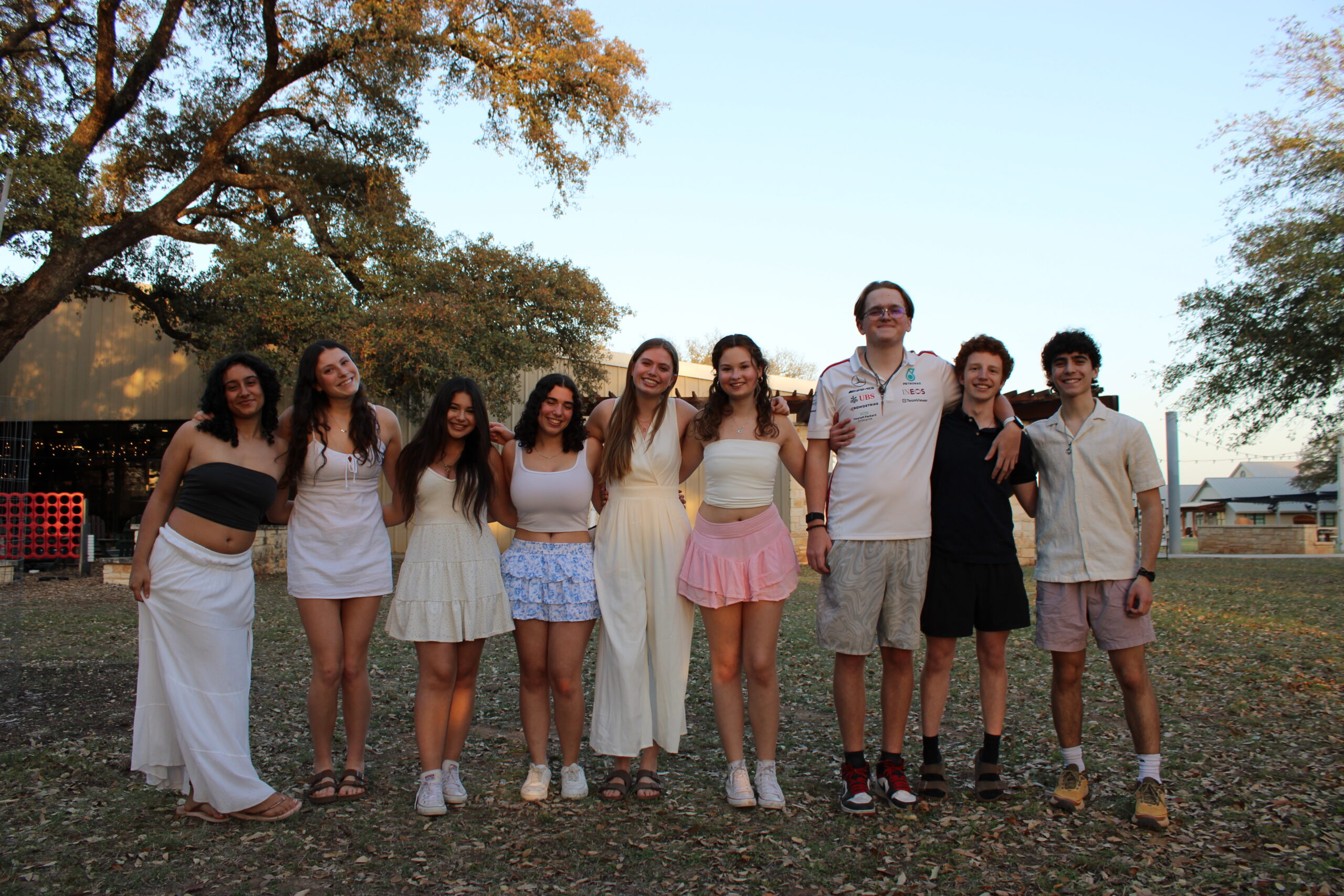
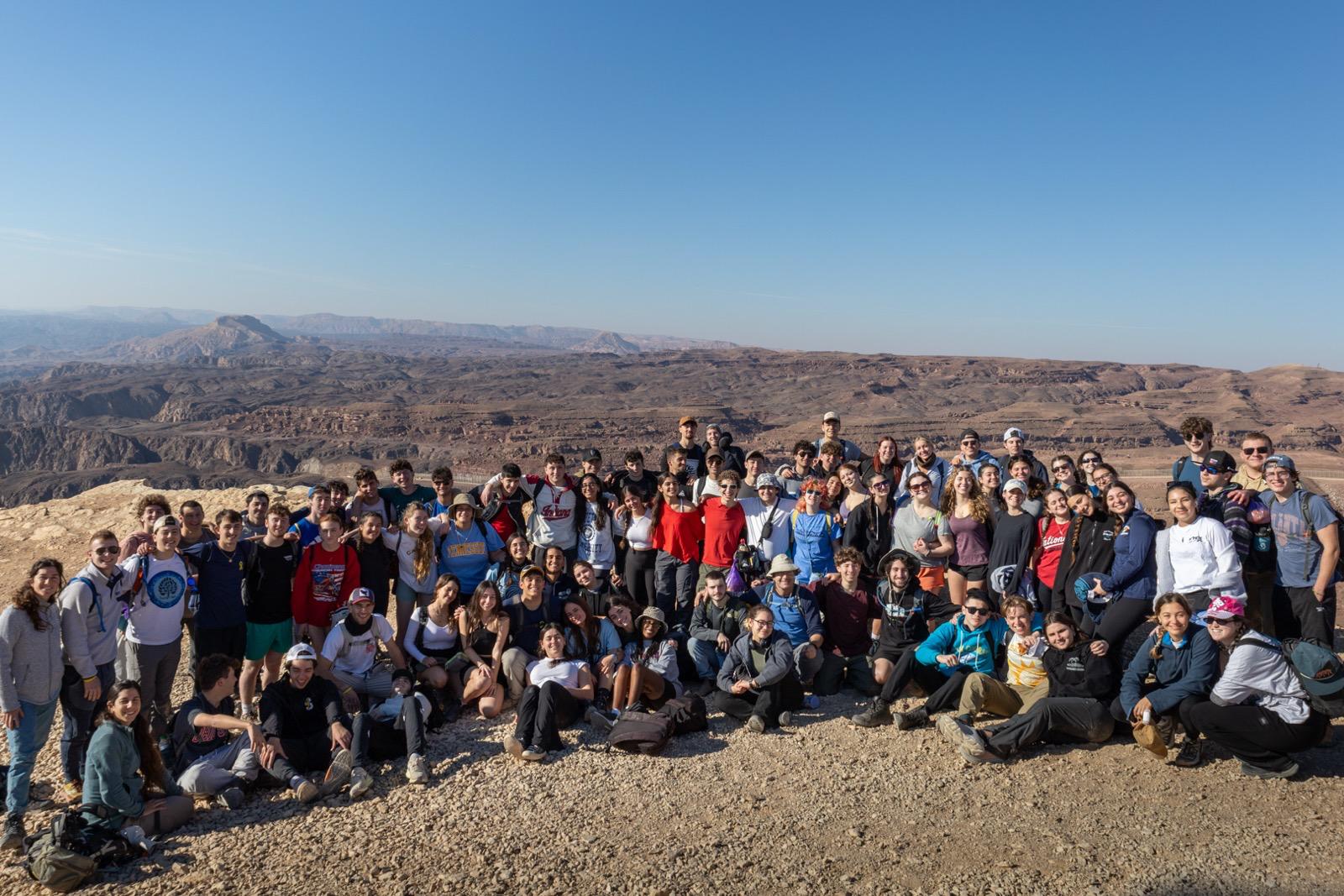
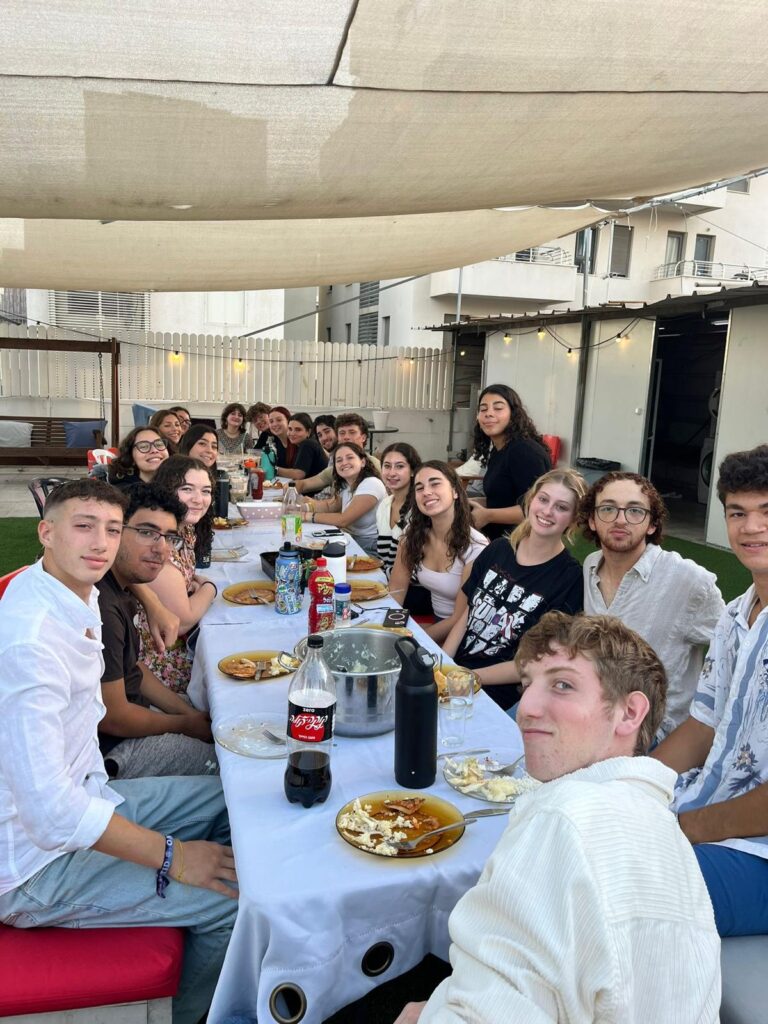
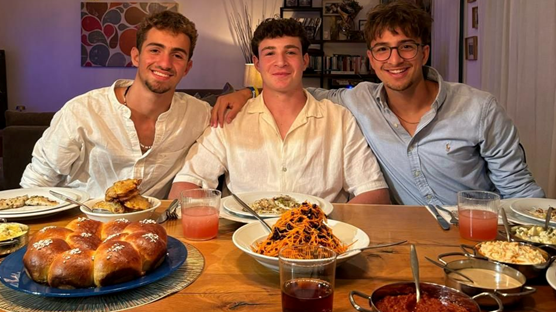
What an incredible weekend! Thirty-five friends, scattered across the country and even as far as Spain, descended upon Austin, Texas on April 25th for our 26th 1998-1999 Year Course reunion. This was only our second reunion since 2019, making it even more special. It was a weekend packed with all the elements that make these gatherings so special: love, laughter, deep conversations, and plenty of reminiscing.
We kicked things off right with some fun by the pool, soaking up the Texas sun and shaking off the travel dust. As evening approached, we got dressed up for dinner, but not before a truly special moment in the hotel lobby. We gathered to celebrate the start of Shabbat, lighting candles and saying the blessings over wine and challah. It was a beautiful and meaningful way to begin our time together. Dinner was classic Austin – delicious BBQ, followed by an evening of nostalgic music and dancing that had everyone on their feet.
Saturday morning brought an invigorating tiyul on the Austin Greenbelt, a perfect way to experience the city’s natural beauty. We worked up an appetite for a great lunch, then it was back to the hotel for more poolside party fun. As the sun began to set, we headed out for some authentic Austin flavor: tacos and dancing at the White Horse honky-tonk. The energy was infectious, and we danced the night away, reliving old memories and making new ones.
This reunion was a testament to the enduring power of friendship. Despite the years and the distance, the bond between us remains as strong as ever. Catching up, sharing stories, and simply being together felt like coming home. huge thank you to Young Judaea, YJ’s camps, and Year Course for bringing all these lovely individuals together and helping created lifelong friendships. Here’s to many more years and many more reunions!
Ready to plan your Year Course reunion? Email alumni@youngjudaea.org!
My Year as National Mazkira
Young Judaea
May 20, 2025
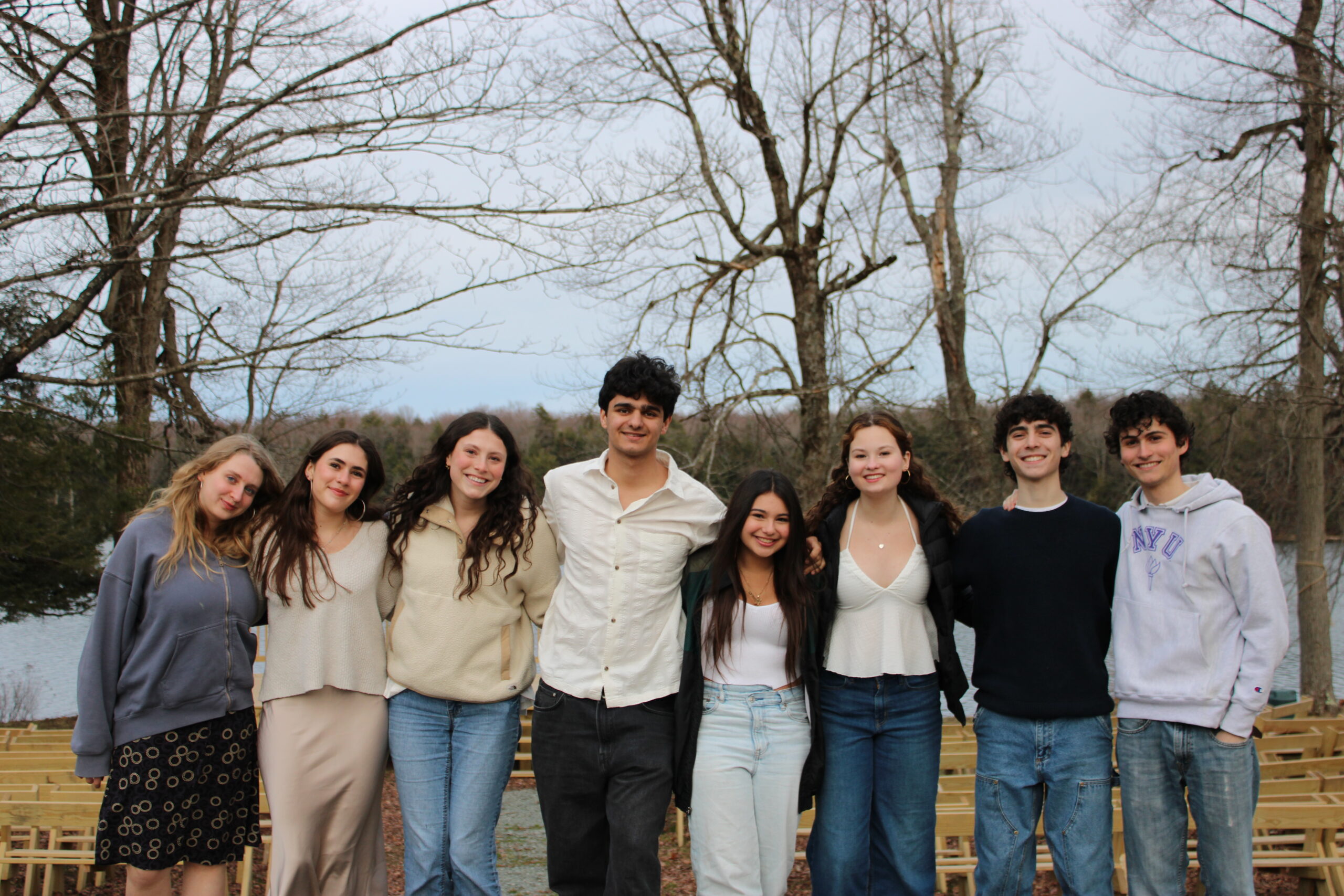
My name is Nomi Gedzelman, and I have served as the National Mazkira of Young Judaea for this past year, 2024-2025. As the National Mazkira, I get to be the voice of the teens in our movement — and there’s a lot to unpack there, because we have such a wide range of opinions, experiences, and perspectives.
As teens, we’re in this really transitional space — not quite kids anymore, not quite adults — figuring out who we are and what we stand for. It’s so important that during this time, we have spaces where we can grow, lead, and express ourselves, even if we’re still figuring things out. Places where it’s okay to make mistakes and learn from them. Places that help us understand not just where we’re going, but also where we come from.
Young Judaea is one of those places. It’s a community that gives teens a platform to lead, to be heard, and to connect — especially with Israel. And that connection is so important, especially now. As American teens, sometimes it can be hard to fully feel that weight, because we’re living so far away. But through Young Judaea — through our programs, our Israel trips, our camps, our friends from Israel, our shlichim — we build real relationships with Israelis. We hear their stories. We know their names. We understand that behind every siren and every moment of silence is a real person with a family, with dreams, with a future that was cut short. Young Judaea doesn’t just talk about Israel — it connects us to Israel in a way that’s personal, emotional, and lifelong.
Especially now, after October 7th and everything that’s happened since, it’s more important than ever for Jewish teens to feel connected — to our people, to our history, to our homeland. We need places where we can not only express our love for Israel, but also grapple with the hard stuff — the losses, the complexities, the realities of what it means to be a Zionist today.
This past year has been so inspiring, seeing what we as a community were able to accomplish within our movement, and the impact we’ve made. In November, I had the opportunity to represent Young Judaea at the Z3 Project Conference in Palo Alto, CA. It was in this moment that I became determined to bring this kind of thought-provoking and quality content to our National Convention. Having the opportunity to inspire the Young Judaea community and see my peers inspire each other has been monumental and has taught me even more the importance of the space Young Judaea provides us with.
At first event of the year Mazkirut Leadership Training weekend, I had the pleasure of meeting the Regional Maz members from across the country, and I was struck by confidence and determination. From there, three of our new regions took off and held incredible events, in the Southeast, Texas and LA. In March, I flew to Texas and attended the first ever SWeeT convention and had the best time. Seeing the power of our Young Judaea traditions across the country yet again showed me the power and strength we hold as a community.
I want to thank everyone for making this year as special as it was and also remember 1909 when Young Judaea was founded giving us all the place to become leaders. We are carrying the fundamental values of Zionist youth leadership on and continuing to expand ourselves. I am so excited to continue being involved in the ways that I can and to see the unique takes on year round programming as we embrace pluralism, intellectual conversations, traditions, the Jewish people, and most of all each other.
As we transition to adulthood, we should have the power to dictate what our adult world will look like. Now more than ever it is important for teens to have places to express their voices and to develop themselves into leaders.
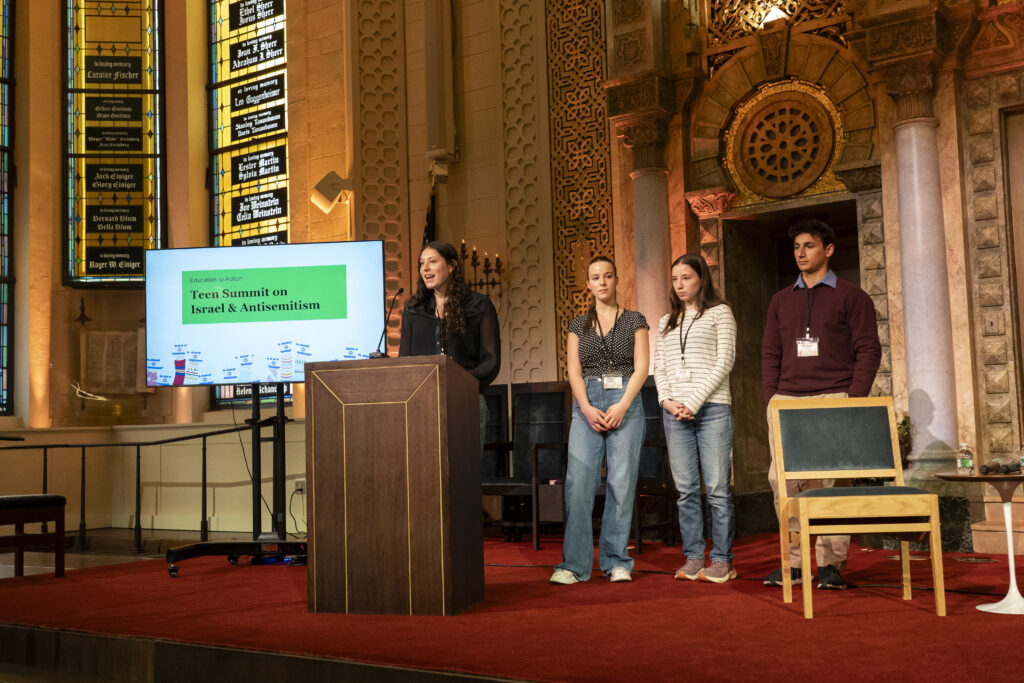
Photo credit: Stephanie Berger
Recently, there’s been a rise of antisemitism, making it clear that it is not just thing of the past. We must reflect to understand the potential dangers of the rise in antisemitism that is happening now. In April, Young Judaea, along with Park Avenue Synagogue and other local partners, spearheaded Education to Action: Teen Summit on Israel and Antisemitism — a space made for teens, by teens, to talk honestly and openly about what we’re facing right now. We heard from powerful voices like Adela Cojab and Montana Tucker — both of whom have taken bold stands against antisemitism and anti-Zionism, using their platforms to educate, remember, and speak out. Montana shared how the stories of her Holocaust survivor grandparents fuel everything she does, especially since October 7. Her message hit hard: we are the next generation of memory keepers and changemakers. A group of teens, myself included, came together to write a statement called “Voices Not Victims” — a statement that’s not just about what’s happening to us, but what we’re going to do about it. It’s a call for every Jewish teen to add their name, their story, and their voice — because we’re not just watching history unfold. We’re shaping it. And when we stand together, loud and proud, we’re not just honoring the past — we’re building the future.
Young Judaea empowers us to be those kinds of leaders. Leaders who remember. Leaders who build. Leaders who create strong Jewish communities rooted in pride, resilience, and real connection.
Born from Survival: Meeting our Rescuers and Moving Forward
Young Judaea
April 23, 2025
By Vivian Genn Pittman
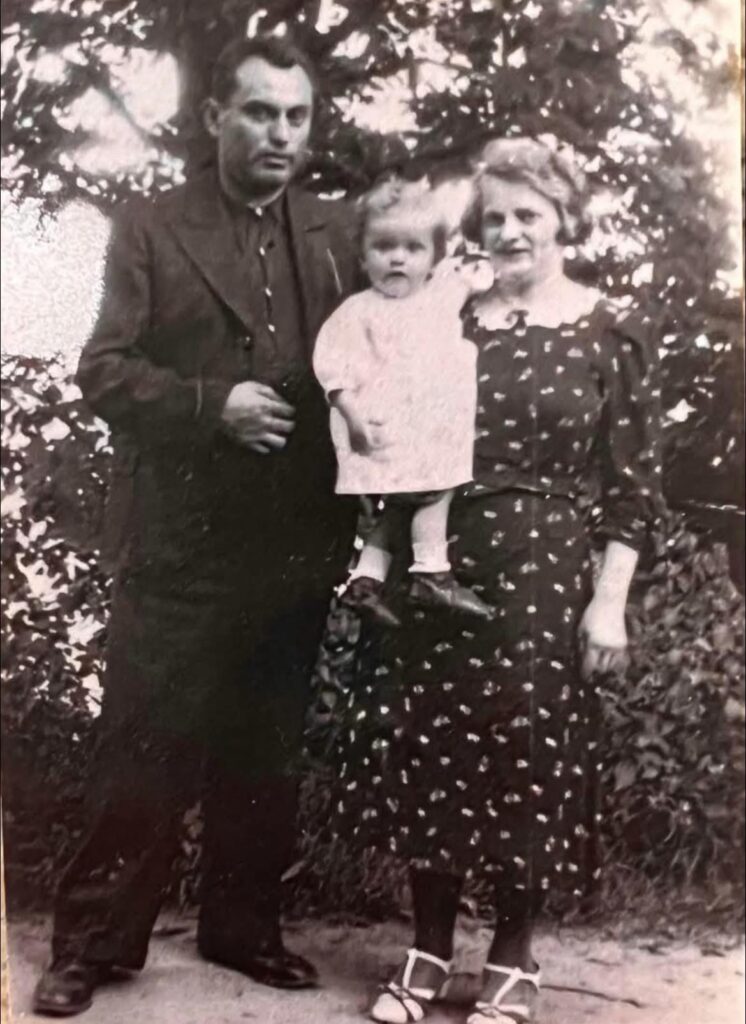
My brave grandmother Sabina Herbst and my mother Myra kept in touch for years with the Rajskis—the Christian family who courageously hid them in the attic of their barn for almost a year during the Holocaust. Letters were exchanged faithfully until the 1950s, when communication abruptly stopped.
Myra and Sabina had immigrated to America a few years beforehand, in 1948, to start a new life for themselves. They tried to move forward and bury the traumatic past, which included Sabina’s husband/ Myra’s father Chaim Herbst taken away when Myra was just three, witnessing loved ones being killed, and surviving unimaginable anxiety, loss and fear. Myra and Sabina lived hard in America, enjoying education, work, family, friends and Jewish traditions. They tried to keep the dark war memories at bay and the Rajkis in their hearts.
In the 1990s, something shifted. After attending the first Hidden Children’s Conference in New York City, Myra felt a surge of determination: she had to find the Rajskis and thank them, in person, for having the courage to do right in the face of evil. With the help of the United States Holocaust Memorial Museum and Yad Vashem, she succeeded.
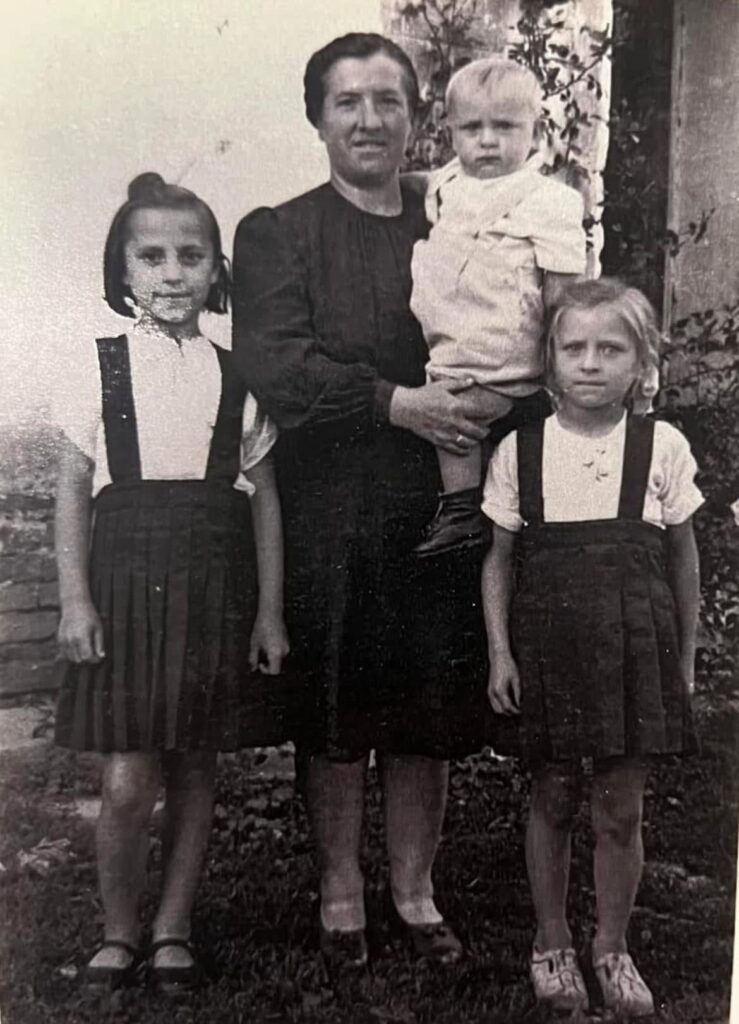
By then, the Rajski parents—Wincenty and Stefania—had sadly passed away in Poland. But the two young daughters, whom my mother had watched running free through the fields from the cracks of the wooden barn attic, were now grown women, one living in Poland and one in Michigan, with large families of their own. A third sibling, born after the war, had children as well. Myra invited the Rajski siblings and their families to our home in New Jersey for a reunion.
Although excited, Myra was also nervous. She worried: Would the Rajskis resent that their parents had risked their lives for Jews? Did they harbor antisemitism? Would they come at all?
My sister and I, along with our parents, waited anxiously in our hometown of Tenafly, NJ, not yet fully grasping the rarity and magnitude of what was about to unfold.
And then—they arrived.
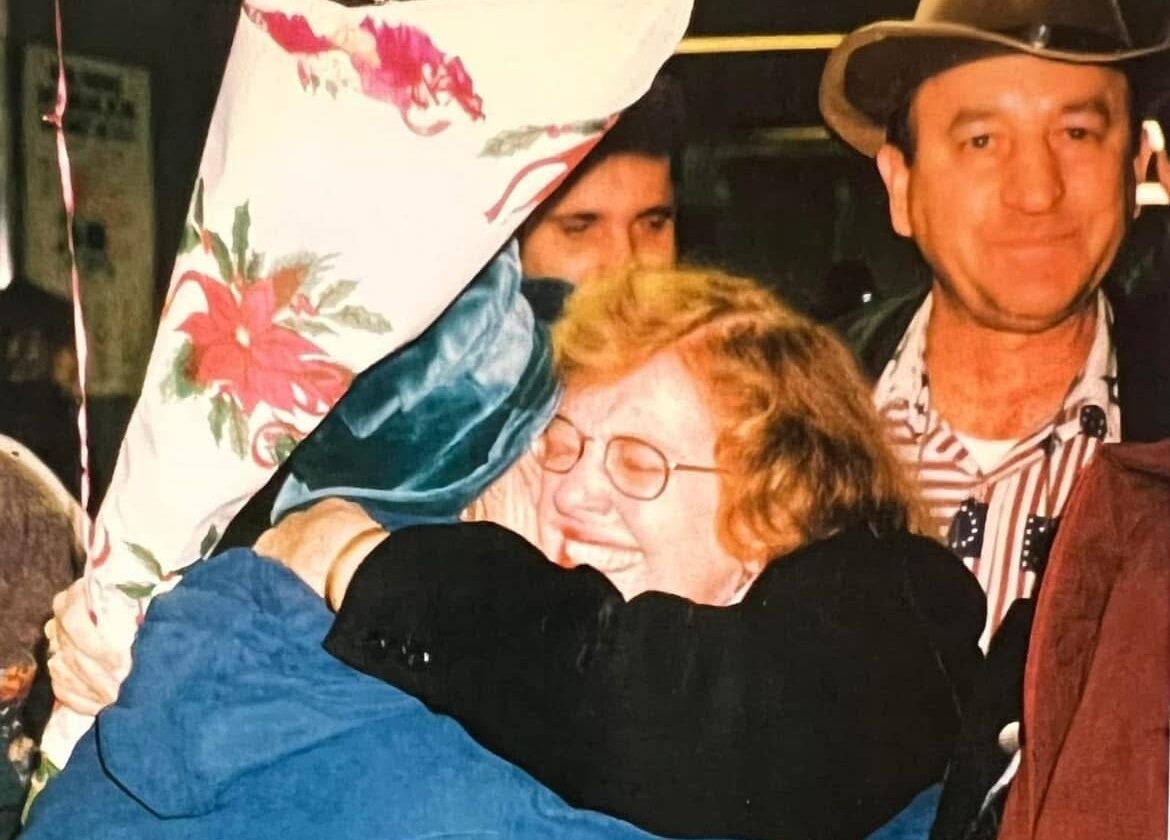
The reunion was emotional and unforgettable. Arms outstretched, tears flowing, languages broken but hearts full. We spent several days together in our old brick house, swapping stories and photos, exploring Ellis Island, touring New York and New Jersey, and bridging decades of silence with laughter, love, and shared humanity.
For Sabina and Myra, it was almost impossible to believe. After barely surviving the harsh conditions of war, and the ghetto, after losing friends, family, belongings and freedom, after hiding in the woods, caves and then in a freezing attic for nearly a year, after surviving, rebuilding, remembering—they could now thank the family who had risked everything to save them.
Sabina beamed with pride as she showed off my sister and I, her two “mana shaina medelach” in Yiddish “my beautiful girls”- and the life she had built in America.
Later, Myra ensured the Rajskis were honored at the United Nations in a meaningful ceremony. Their names were added to the Wall of the Righteous at Yad Vashem. Our families have stayed connected since—visiting each other, meeting children and grandchildren, liking Facebook posts, texting across states and even continents.
The Rajskis were among the first to reach out to us after October 7th. Even now, they are a reminder of hope, of courage, of goodness. They feel like family.
It is a privilege, an honor, and also a profound responsibility to be a Holocaust descendant. The perspective colors every part of my life, each day.
When I’m cold, I think of the rickety barn attic where my mother and grandmother hid, or the icy winds of a death march. When I see food left uneaten at a hotel breakfast buffet, I think about how many lives those scraps could have saved. When I see warm jackets piled into the lost and found bin, I wonder how many people could have survived with that added layer of warmth.
On other days, I draw strength from the resilience of my Grandma Sabina and my mother Myra. I speak up. I show up. I support Jewish causes, educate and organize, send my kids to Young Judaea Zionist summer camps and programs, visit Israel, and with my mom and children, share our family’s stories. History only survives if we carry it forward.
I am filled with urgency to preserve, to protect, to remember. To honor those who were murdered simply because they were Jews. To pass down stories that are harrowing, but also full of miracles, compassion, kindness and breathtaking courage.
I am in awe of the gratitude and strength that allowed my mother and grandmother not only to survive, but to thrive; to pursue education, to fight injustice, to live joyfully and proudly. Sabina never remarried, but poured her love into her only daughter, her granddaughters, and her Jewish identity. Myra, embracing her freedom, married her husband Manny later in life and focused on social work, Judaism, family and community, believing that living well was the best revenge.
We remember. We reflect. We respect. We tell the truth about the Holocaust and its lessons. We inspire, do good, and we hope for better. We appreciate and we celebrate life. Even in challenging times we are not alone and we are stronger together.
And we help ensure: Never Again.
Vivian was a camper and counselor at Camp Sprout Lake and Tel Yehudah and went on Year Course. Her children have also attended Sprout Lake, Tel Yehudah, Year Course, and Gesher. Her daughter Natalie is the incoming National Mazkira of Young Judaea.
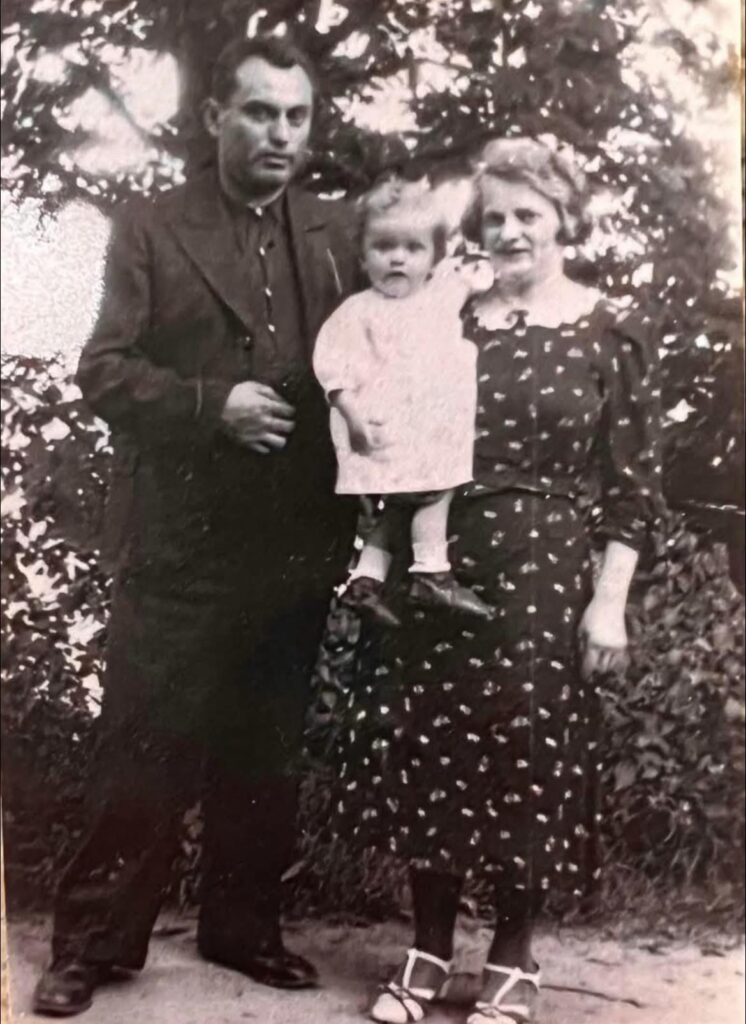
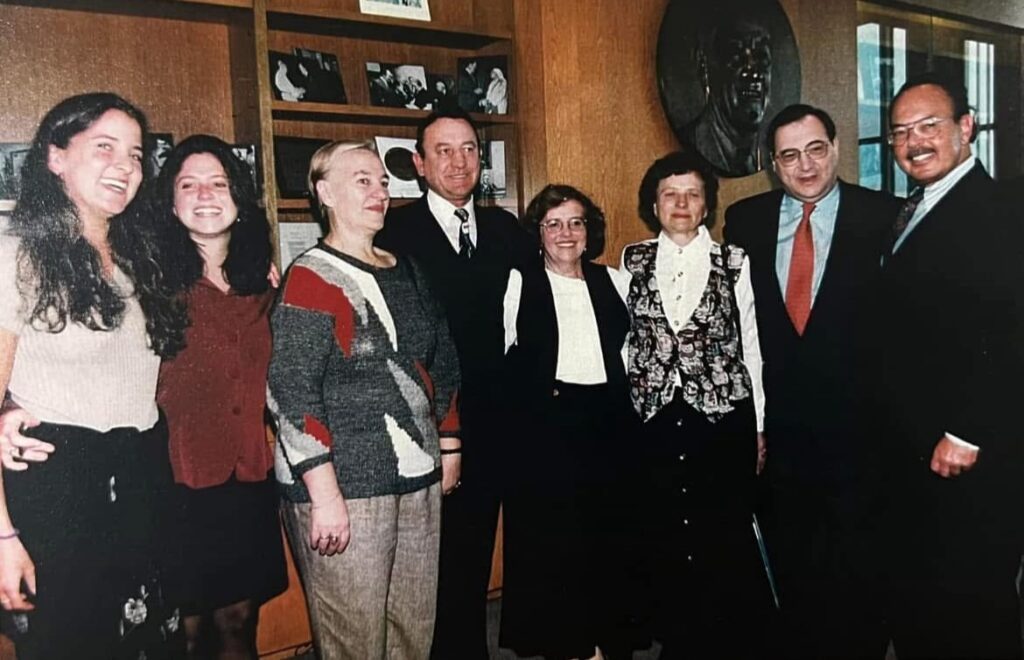
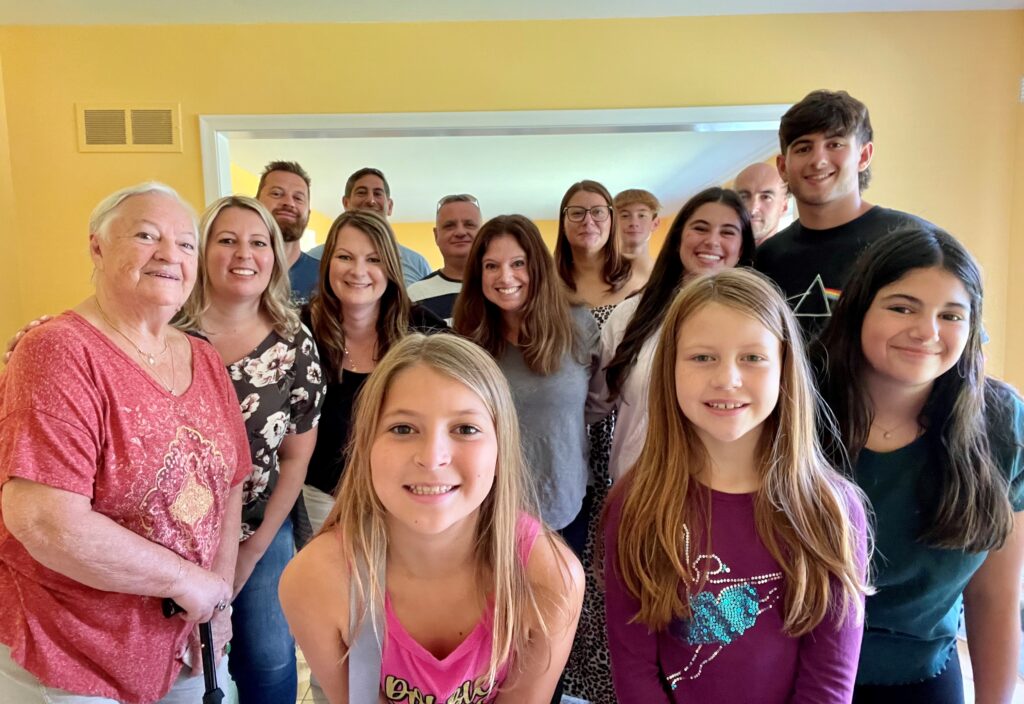
Post warSabina, Chaim and Myra “Zunia” Herbst , pre warReunionHonoring the Rajski Family A get together with generations of our families
YJ Seder Companion
Young Judaea
April 9, 2025
To supplement your seder this year, our Central Shaliach, Amit Castel has written a special Seder Companion to add more meaning to your table.
One of the core pillars that Young Judaea prides itself on, is the commitment to be a strong pluralistic movement. For me, pluralism in YJ is prioritized through programming and marketing.
Over the past year while leading discussion groups at YJ Teens conventions, I’ve learned how to facilitate conversations around controversial topics. Each group was able to hold respectful dialogue despite differing opinions. This was possible because as members of Young Judaea, we value pluralism — creating a space where difficult conversations can happen without fear of judgment.
One example of a program I planned was a conversation on freedom of speech during protests on college campuses, and a discussion on how teens feel about it. Initially, I was worried about the topic being too controversial or that the groups would be uninterested. However, I was pleasantly surprised when my group ran with this topic and created their own conversation about the limits that should or shouldn’t be placed onto the first amendment. I love that YJ allows us to have conversations about serious issues in the world whether it be religious, political, or Zionist in nature.
The emphasis on pluralism in YJ enables teens to not only feel safe in group environments, but to feel confident in sharing their opinions on matters that are relevant to their interests.
Embracing our differences on Year Course
Young Judaea
April 2, 2025
By Sidney Parker, Year Course 2024-2025
Young Judaea Year Course has given me a chance to engage with all kinds of people and have meaningful discussions in my own time. While we have structured classes and guest speakers meant to spark conversation, I find that the real learning often takes place outside of those defined spaces—whether it’s during our day hikes, at lunch, or in between classes.
Year Course is full of people with different opinions, and we’re all eager to share them. For instance, two of my friends are at opposite ends of the political spectrum—one is extremely left-wing, the other deeply right-wing. Every conversation they have about politics ends in a heated debate, with each throwing sources and ethical arguments at each other. Despite their differences, they are two of the closest people I know. They’ve chosen to room together and spend time together regularly. Even though neither of them has changed their political views, they coexist peacefully.
There’s also a religious divide. Some students go out daily to wrap tefillin, wear prayer shawls, and pray, while others, like me, get excited to grab cheeseburgers with friends who also don’t keep kosher. What’s amazing is that everyone here has sought out Rabbi Adam, our educational director, to learn more about Judaism on their own terms and have open, honest conversations with an expert about Jewish perspectives. Year Course gives me the freedom to grow and learn as a person, knowing that no one will judge me while I explore new ideas and navigate my own beliefs.
Throughout the program, I’ve had the opportunity to engage with people from all walks of life and consider perspectives different from my own—all without fear of offending anyone or ruining relationships. At the end of the day, we all share meals together and sleep under the same roof. No difference in opinion could ever break the bonds we’ve built over the course of this year.
Year Course Through My Eyes: An Israeli Scout’s Journey
Young Judaea
March 7, 2025
Shalom ,
I’m Itay, and I wanted to share a bit about my Year Course experience with you.
I’m sure you’ve heard a million things about what goes on during Year Course, but I wanted to give you a fresh perspective—straight from an Israeli Scout (aka the best part of the program).
I’m part of Garin Atid, a group of Tzofim (Israeli Scouts) on Year Course. And if you ask me, we’re definitely one of the best things Year Course has to offer. There are a ton of gap year programs in Israel, but Year Course is one of the only ones where Israelis and participants from abroad actually live together and become best friends for life.
Israelis my age have the option to do a year of service before we draft into the IDF, and every year, the most amazing people (aka me 😎) get to join this program. We spend the year with Americans, Canadians, and Brits, learning from each other and figuring out life together.
The relationship between the Israelis and Americans on the program is a special one because it’s a relationship from which we learn a lot. It has something more to it than a regular friendship.
I get to show my new friends around my home in Israel, correct their Hebrew when they are ordering food, and teach them how to argue with the waiter to get extra tahina for free. In return, they teach me all about life in America. So far, I’ve learned some very important things, like:
✅ What a fraternity is (still a little confused, not gonna lie) ✅ Where I can find the best Pizza when I come visit the States ✅ That Thanksgiving without turkey is basically a crime
One of my favorite experiences on Year Course so far was when my best friends from the program came to stay with my family for Shabbat. It was so funny watching them enjoy a real Israeli Shabbat dinner. It’s loud, there’s way too much food, and the chaos is all new for them. It meant so much to me that they came to spend time with my family, and now they know they have family in Israel for life.
In my opinion, I think being on the program makes the experience much more authentically Israeli. As they hear the songs we love, visit the places we enjoy, and get to know Israel in an authentic and real way, we get to help our friends live their dream Israeli life.
Year Course has already been one of the best experiences. Meeting my friends for life and seeing Israel through their eyes has been so special. I can’t wait to see what the rest of the year brings!
Shabbat Shalom! Itay the Israeli Scout
Flatmates again, 53 years later
Young Judaea
February 21, 2025
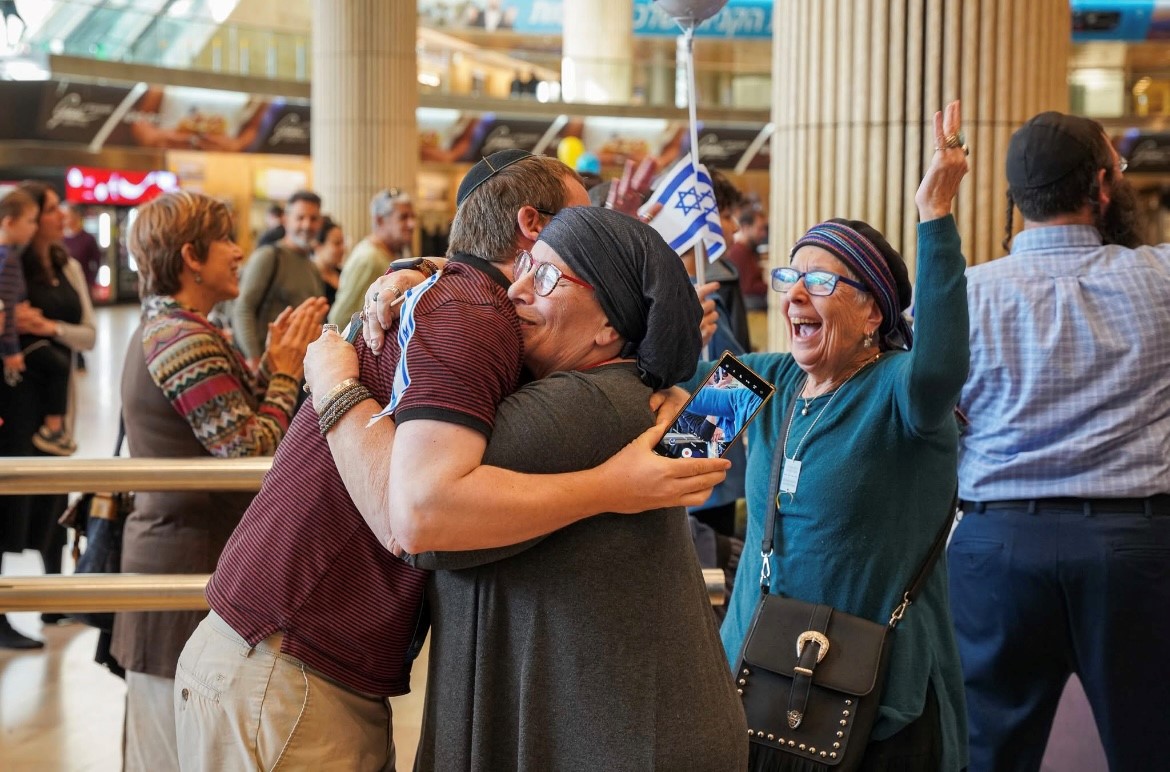
We recently spoke with Cyndi Schoenbrun and Chanale Hidegkuti (Lipsky), lifelong Young Judaeans and alumni of Year Course 1971-1972. Cyndi and Chana are now flatmates in Israel following Cyndi’s recent Aliyah! The two had a lot to say on growing up in the movement, memories of Year Course, recent reunions, and what it means to live in Israel now.
Cyndi: I was active in my region in Eastern Pennsylvania and Philadelphia as a teen. I went to camp Tel Yehudah only in 10th and 11th grade before going on Year Course. After Year Course I went away to a small town college in the middle of PA with barely any Jews, let alone Young Judaeans, and after I graduated and returned to the Philadelphia area, the first thing I wanted to do was get a job in my profession and get involved with YJ in some capacity. A friend of ours from Year Course was the Senior Advisor and I got a job running a club. Two years later I got married to the EPA Regional Director!
Chana: I’m from Cincinnati, Ohio originally. And I was in the Cincinnati chug. We were so lucky we had HUC there. So we had a continual, contingent of well educated folks. And then I went to Camp Tel Yehudah I went for regular and I went for MA, and then we went on Year Course, which was THE bomb. We loved it! I worked for the movement before and after as a chug leader, and I was on the International Executive Board for programming, I was in Hamagshimim, and I worked at camp.
When did you start having Year Course reunions?
Cyndi: Chana and I were friendly on Year Course, there were 80 of us, but nothing really happened until we had our first reunion outside of Washington D.C.
Chana: I used to fly to California for work, and one time instead of staying in a hotel I stayed with a friend from our Year Course. We decided to try and find every person from our Year Course, and we did. We found all but one. Some are in Israel, some in America, but it was wonderful (that first reunion we had).
Cyndi: That was when people started getting more in touch with each other on a wide ranging basis. and then it came time to begin planning our 50th reunion. And that was when you and I (Cyndi and Chana) started to work together. We planned the reunion along with eight people. It was originally supposed to be in Israel, but because of COVID was on Zoom. We ended up having two reunions that way.
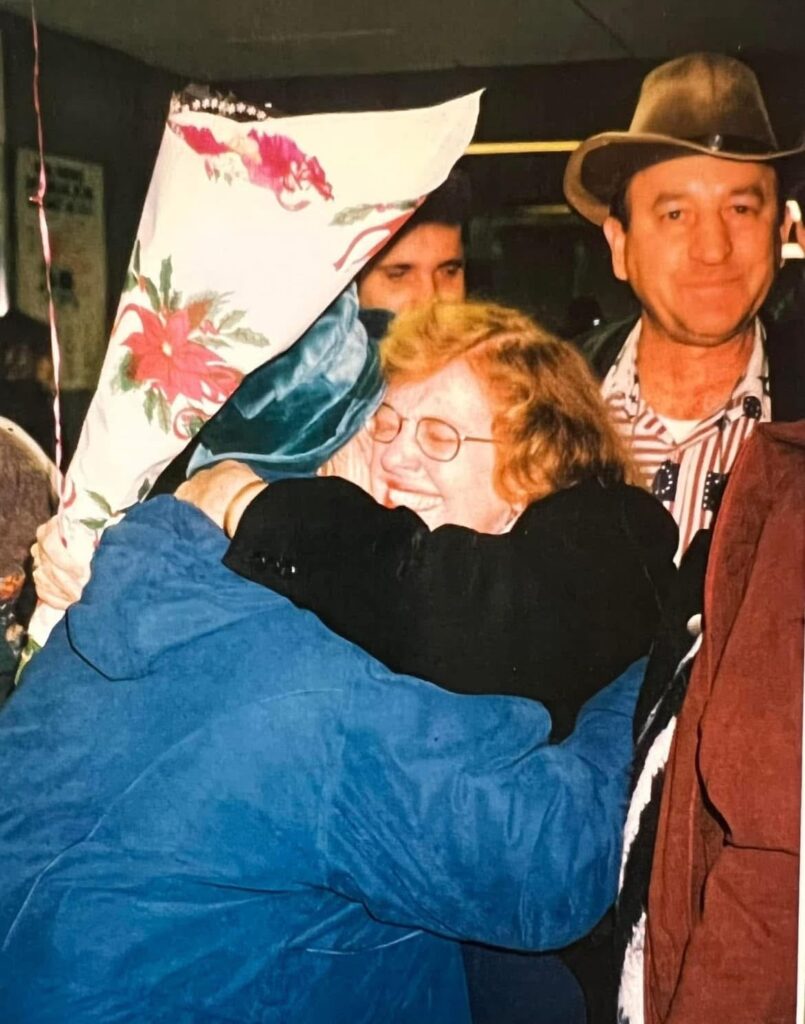
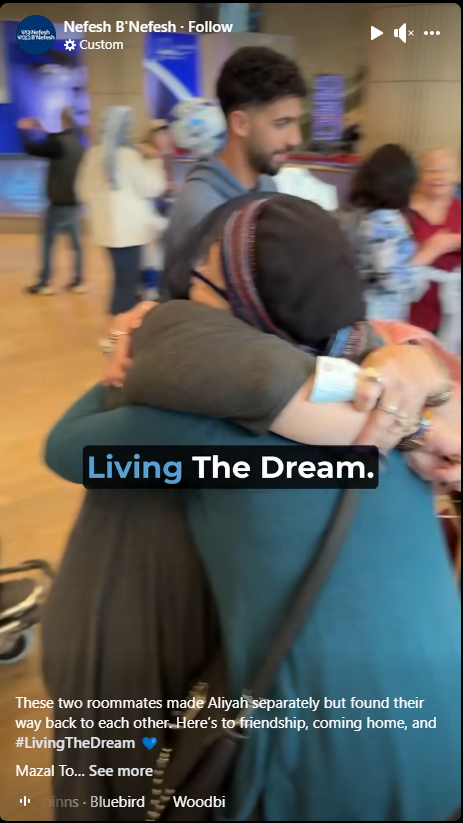
Nefesh B’Nefesh Shared a Video of Chana and Cyndi reuniting at the airport. Click here to watch.
Tell us about Aliyah.
Chana: I made Aliyah in 2019. And, that was, an experience. I learned a lot. And then just about the time that Cyndi was thinking of coming, I was finding an apartment for two. And the intention was, when you come, we’ll be the two. We have a little two bedroom apartment, very cozy, very nice. On a clear day, you can see the Dead Sea and Jordan, we are on the Green Line. Since Cyndi came in and from that point on, it’s been a matter of accommodating to being Israeli.
We’re learning a lot and we’re getting around. We’re being part of the community. Life is good!
Impact of YJ
Chana: We are still in contact with our chevrei and we’re old. Did we mention we’re really old? But, you know, we visit Young Judeans who have been here (in Israel) forever, our madrichim and our chevrei, and our life is involved in part, with people who have been Young Judeans, in other years.
I’ll tell you one cute story. The first week I got here Friday night, we went to a new shul, I asked someone, “שהוא בית הכנסת האמריקאי” And finally I get to this, big shul and there’s stairways up and there was a greeter at the door, and he looks at me and he says, “Hillary Lipsky, Young Judaea Year Course ’71-’72!” I said, how could you possibly know that? He said, “Kobi Ableman, Young Judaea Year Course ‘74-’75 come inside and meet your chevrei!”
So at that moment we were connected with, at least a decade of olim from Young Judaea.
Chana: We are your we are your quintessential Young Judaean chevrei. We have Young Judaeans living all around us (in Israel).
Chana: Let me clarify. Young Judaea was the most consequential, important moment of my entire life.
Cyndi: Me too.
Chana: Mel Reisfield would speak at camp. You know, you would measure your development in the movement by how many times you had heard his sicha. He got up one time in the moadon and he said, “There has not been a time in history where Jewish people could live three generations, in a civilized society. For those of you in the room who are Ashkenazi, do the math. It’s you.”
So when you see that ugly anti-Semitism pop up, do not tarry. It didn’t work so well the last time. Soon as you see it, if you’re not already in Israel, get up and get yourself to Israel. So, for me, it’s like a an electrode in the brain. And then I’m looking around in my world and I saw it, and that electrode came alive. And I reached out to Nefesh B’Nefesh I did everything I needed to do so we could be here.
Both: It’s really okay with us specifically if you find a Young Judaean and who’s questioning how their life could be in Israel. Please, connect them with us.
What’s a memory that sticks out from your time on Year Course?
Cyndi: We were the last full Year Course before it split up into different sections. We had ulpan each day for about four hours. I still didn’t speak a comprehensible Hebrew but one of the things that amazed me was how I still was able to get around. And it was because of Young Judaea that I felt comfortable being in Israel. I didn’t feel that it was going to take me seven out of the ten months to acclimate to the country. And, I remember getting a really bad sunburn when we were at Caesarea on the beach area.
Chana: In those days, we couldn’t pack suitcases and take them. We were allowed one suitcase so most of our clothing and all came in trunks and on a ship. Trunks, trunks, can you imagine that? It was delayed and two months later it finally arrived. And that night you would thought everybody was going for their senior prom.
We were all dressed and I remember that first Friday night…I always had this background of connecting to Judaism. And they took us that Friday night to the Kotel. Even now, I’m still getting choked up just remembering it. It was like the culmination of everything that we had experienced through Young Judaea, through being in camp, and, I won’t say that was the only big memory, but it was just really incredible.
Chana: You got to know people from everywhere on Year Course. And we all had the same thing at the core. And that’s what made it a cohesive group. You didn’t necessarily hang around with all 73 or 78 other people, but there was a something of a cohesiveness. Young Judaea gave us that reason and purpose and that mission.
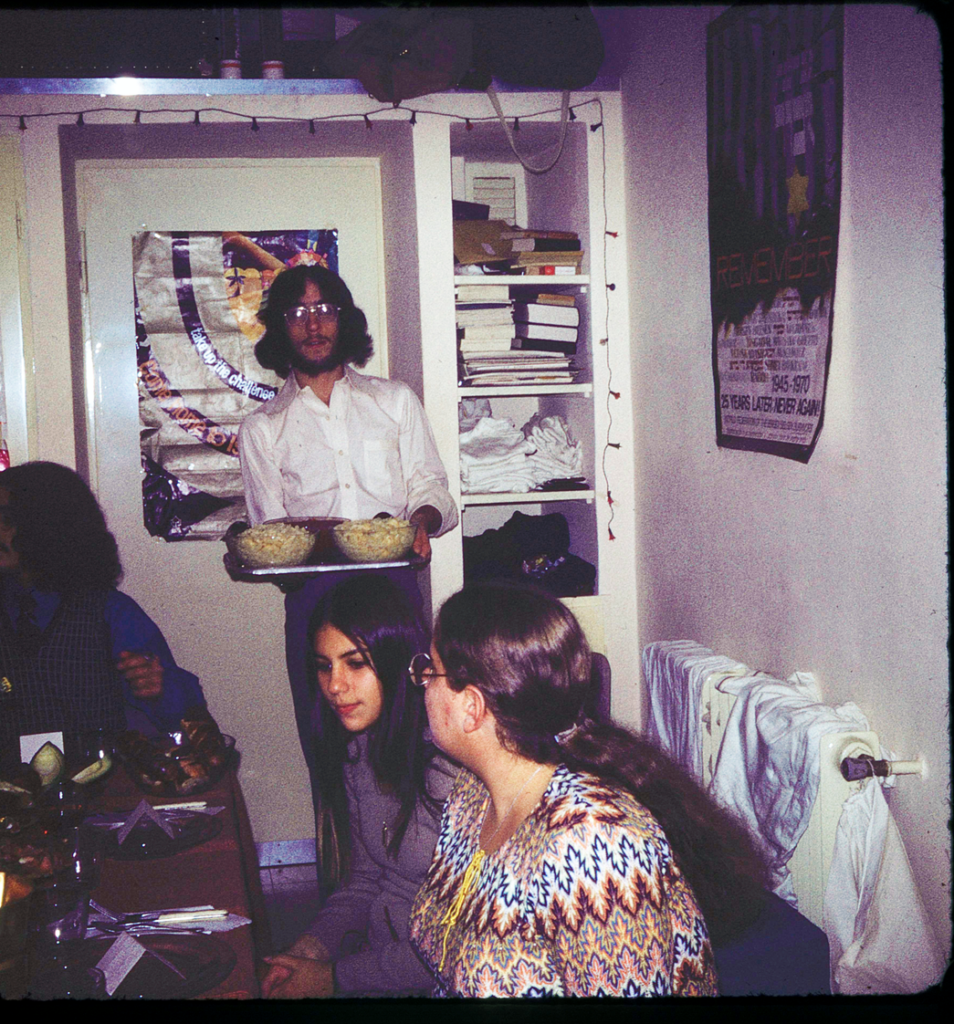
Chanale (front of photo) on Year Course 1971-72
Cyndi at Gadna on Year Course 1971-72
Young Judaeans March for the Hostages
Young Judaea
February 11, 2025
Interview with Dan Goldstein
When did you start meeting weekly in DC for the hostages? Tell us about these meetups.
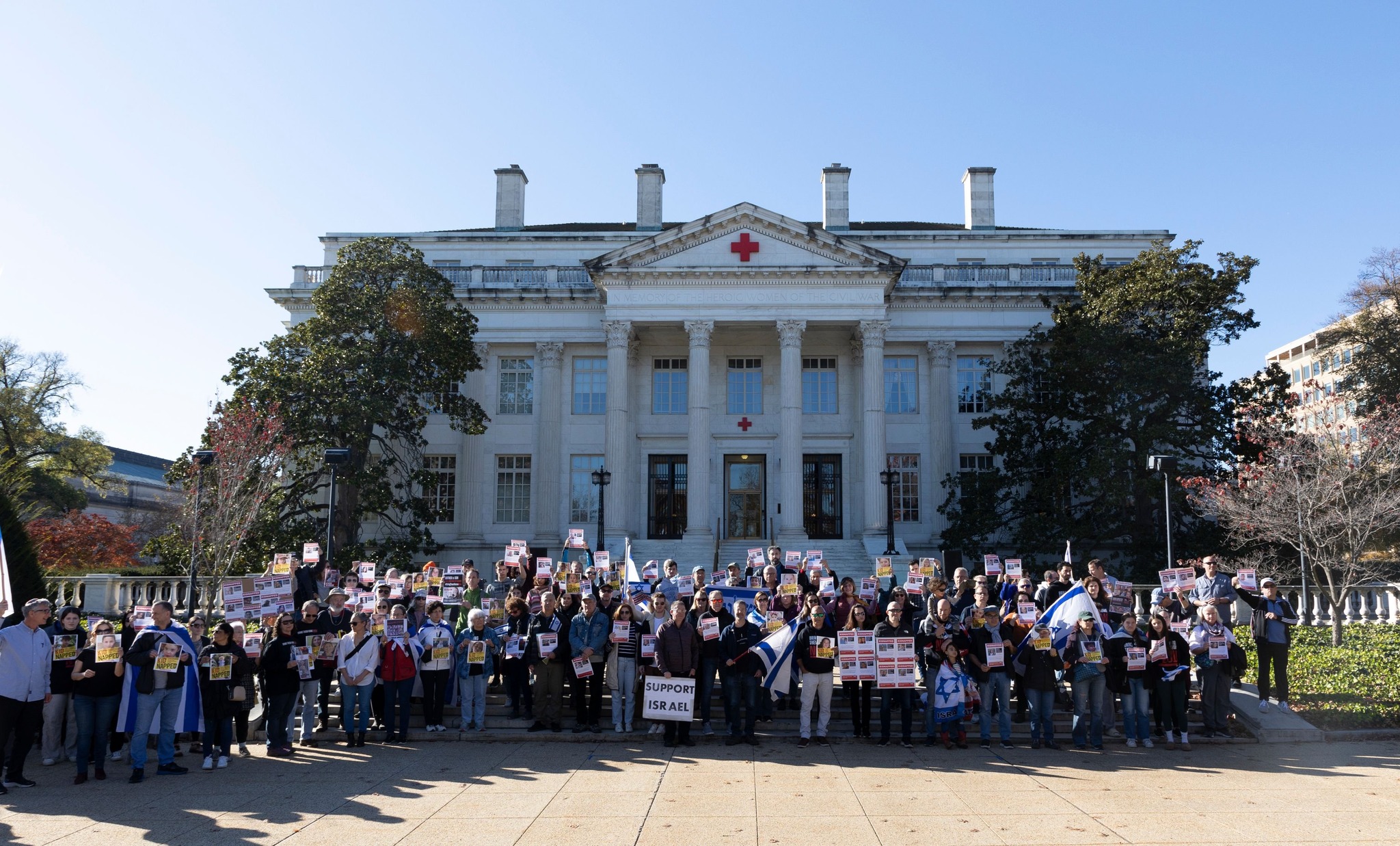
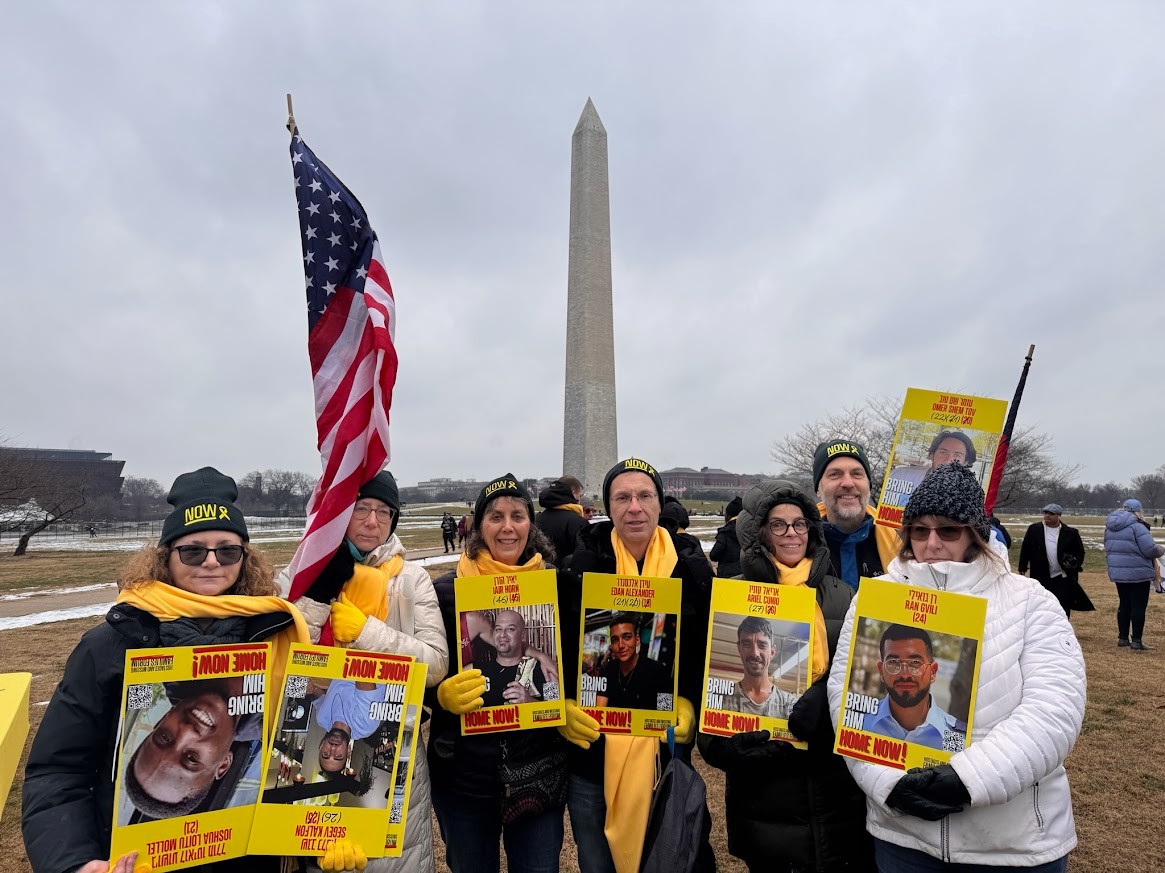
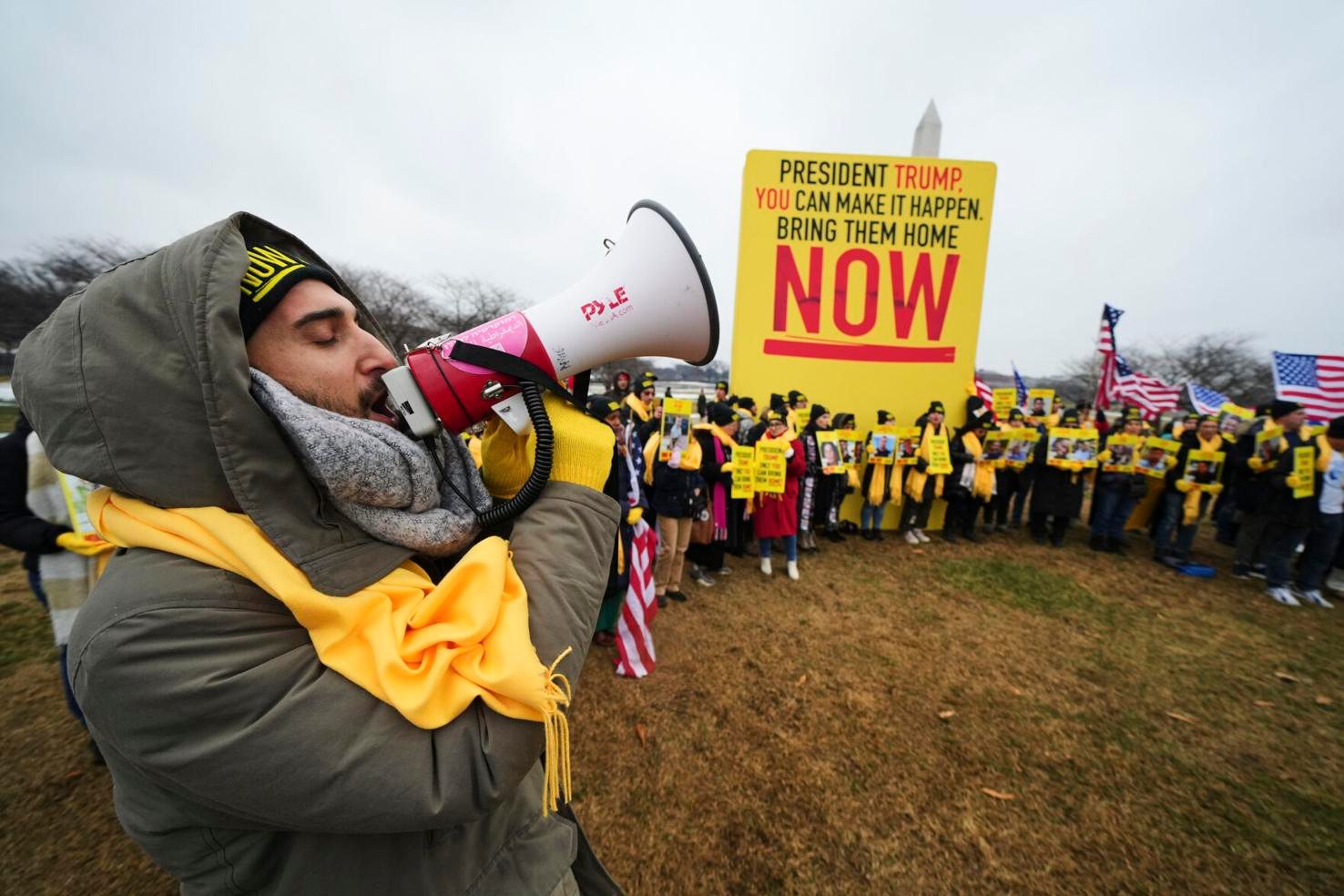
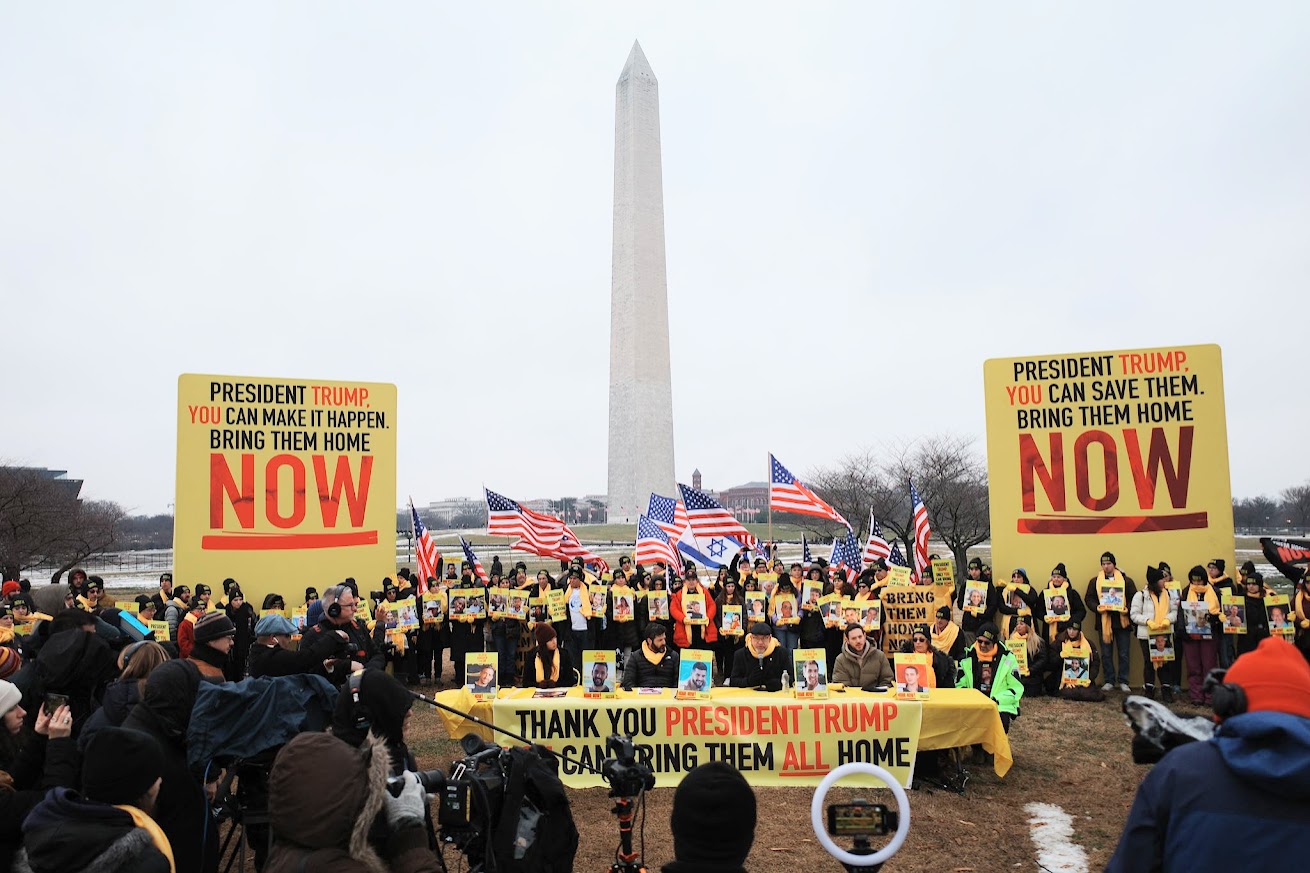
On the second or third week of the war, I joined with a group running weekly vigils for the hostages at the American Red Cross Headquarters, which is within sight of the White House. This is one of multiple groups in the DC area running regular events for the hostages, where all the groups are a mix of Israeli and American participants. Nowadays, the vigils are mostly on the National Mall near the Capitol, with some other sites on occasion. Most of the events get around 30-40 people on a weekly basis — sometimes a lot more — but never more than a handful of Young Judaeans, usually just the same 5-6 Young Judaeans each week. The lack of Young Judaeans at the events has been a huge disappointment for me.
Is there any one memory or story from a rally that stands out in your memory?
There have been so many amazing moments over the past 16 months! One recent one was in December, when Keith Siegel’s wife Aviva marched with us and spoke to us, holding her granddaughter’s hand. As I’m sure you know, Keith grew up in Chapel Hill, North Carolina, and was a childhood friend of multiple Young Judaeans, including the very well-known Alon Tal (Young Judaea’s first Knesset member!). When Aviva spoke with us, we didn’t even know for sure whether Keith was alive — and now here he is, back home in Israel with his family.
Why do you think it’s important to advocate for the hostages?
Advocating for our hostages embodies all the values that we learned in Young Judaea: Zionism; the redemption of captives; “all Jews are responsible for each other” (כל ישראל ערבים לזה, a song we sang at Tel Yehudah), Tikkun Olam… How could we not go to the vigils and marches for the hostages?
What is your YJ history?
I grew up in UNYS region, went to TY as a camper 1975-78, TY kitchen 1979-80, Yearcourse 1979-80, TY madrich 1982-83, made Aliyah 1984, lived on Kibbutz Ketura 1984-2001, had Young Judaeans as my sergeants in the IDF, was the Shaliach for Midwest/Central States/WPA 1994-96 (so also at CYJ Wisconsin 1995-96), sent our son to TY 2010-11.
How can interested Young Judaeans join you for these rallies?
Find me on Facebook! I can give you all the information you need.
Reflection of National Convention 2025
Young Judaea
February 4, 2025
By Nomi Gedzelman, National Mazkira 2025
When I was elected to be National Mazkira at National Convention last year, one of the things I was most looking forward to was the opportunity to inspire and educate my peers. As the 2025 National Convention approached, I knew that the rest of the National Mazkirut and I were organizing something special and I couldn’t wait to see it come to life.
As the buses arrived at National Convention, my excitement grew, and my vision was starting to come to life. The first few hours were filled with that unique magic of reuniting with old friends who are like family, the feeling of tight hugs and the sounds of excitement. Our beautiful Young Judaea style Shabbat was led by National Mazkirut and included traditions from across our movement and all of our camps. Shabbat was filled with discussions and education around Israel led by the fantastic Israel Social Action Programmers from all Regional Mazkiryot and the inaugural Israel Intern. Of course, we had those moments of laughter and bonding, as we played board games, did yoga, and a rousing game of hot takes.
This year, though, Sunday looked different than any other day at a past National Convention. National Convention is typically laid back, with peer-led discussion groups and lots of time to hang out with friends. With combating antisemitism as the National Initiative, a very urgent and relevant issue, I felt inspired to scale National Convention up.
During Shira on Shabbat, right before Havdalah, I got up before everyone to set the tone for Sunday, a conference-style day focused on combating antisemitism. I told everyone to be slightly more professional, wear jeans, and wash their face to prepare for the outside guests whom I was inspired to bring to the Sunday conference. I was slightly afraid that my peers and friends would be hesitant about focusing and remaining attentive the next day. Still, I knew after hearing Adela Cojab speak they would be all in.
On Sunday morning, I stood in front of all of Convention, just like the CEO of the Oshman Family JCC, Zach Bodner, did in Palo Alto, CA, at the Z3 Project Conference, ready to inspire my peers to take a stance against antisemitism and take on the vital advocate role of our generation. I was blown away by Adela Cojab’s presence in California, when I was there representing Young Judaea at the AZYC Teen Leaders Summit, and her story of advocating against antisemitism on NYU’s campus.
It is critical for Young Judaea to be teens’ inspiration in uniting against antisemitism, and as the National Mazkira, I feel it is my job to do whatever is in my power to empower my friends and fellow teens.
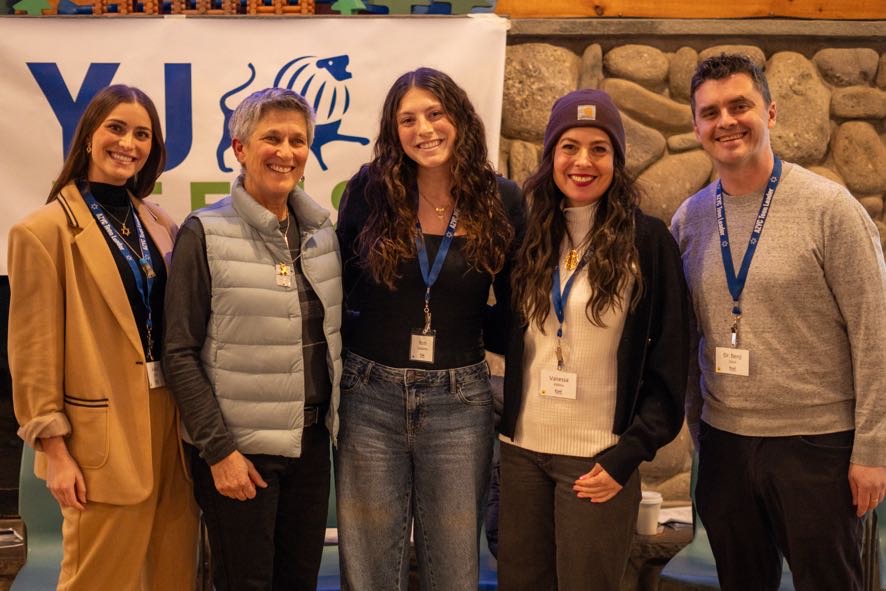
I introduced Adela, smiling at her and the rest of the room with admiration and pride. As she shared her story, I looked around, and not surprisingly, everyone’s eyes were glued as they nodded in agreement, engaged in Adela’s story. The room was filled with questions and hopeful faces. Vanessa Hidary then presented a spoken word piece about reclaiming her Zionism in the past year, captivating people’s ears with her poetry. Throughout the day, people came up to me with praises, “Wow, Nomi, this is amazing,” “Nomi, how did you find these people?” and “Nomi, how can I do something like this at my regional convention?”, and every time I was approached I felt a sense of relief that my hard work had paid off. Most of all, I am encouraged to continue on this mission of empowering my peers, sharing the want to make a change through the Young Judaea pillars of Peer Leadership, Pluralism, Zionism, Jewish Identity, and Tikkun Olam.
On Monday morning, during our final Peulah, I asked a series of questions to close out our packed, fantastic weekend. I asked, who now is going to go home and get involved with their regional Maz if it already exists, or start it up from scratch? The amount of hands that went up filled me with joy and courage. I am so lucky to be part of the Young Judaea family and to be able to bring new people to it, sharing the love and inspiring teens to be pioneers in the Jewish communal world.