Addressing Mental Health on a Gap Year in Israel
Graduating high school and beginning college is a period of enormous transition and change for any 18-year-old. Graduating high school and moving to a foreign country for a year with perfect strangers? That’s a catapult into adulthood, a thrust into independence and responsibility that requires careful planning to be a success.
After 65 years of running Young Judaea Year Course, we’ve realized that to provide an exceptional year of growth in Israel for a young adult, the mental health and wellbeing of our participants must be put at the forefront of program planning. Our learning has come to bear even more acutely with the generation coming of age during a global pandemic.
Building a sensitive, professional, and sustainable mental health support system on Year Course begins with looking into the needs of our participants. Every year there has been an increase in the number of participants who need mental health support while on the program. Some are already diagnosed and treated by professionals while others need support due to the challenges of learning how to live in a foreign country with individuals they have just met. It is our suspicion that isolation and lockdowns as a result of the COVID-19 pandemic have also contributed to this increase. Perhaps there has been a loss in the ability to enter unfamiliar situations with new people and connect with one another in an open and vulnerable way. This connection is essential for a successful gap year. In addition, we’ve seen a lack of resiliency so that any minor crisis, without a healthy coping mechanism, can quickly spiral out.
One major challenge our participants face is that the mental health support system they are familiar with including family, friends, and professionals is thousands of miles away. Our aim is to assist participants in building a new support system while spending a year in Israel that enables them to be happy and thrive in an environment that demands independence and responsibility.
We have taken three important steps to ensure the wellbeing of all Year Course participants:
Encouraging Openness
Training and Preparation
Partnering with Participants and Families
Encouraging Openness
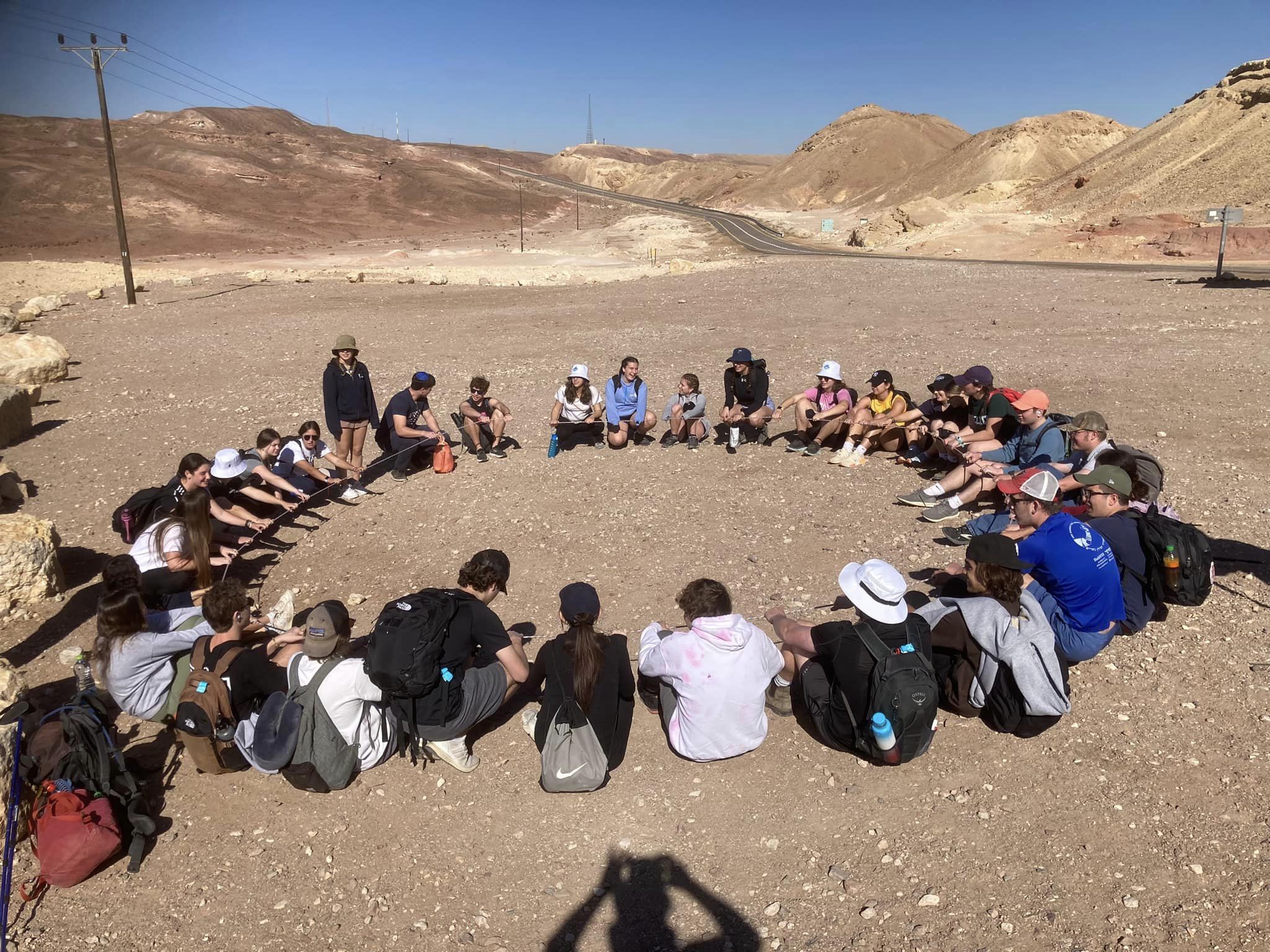
Imagine 200+ 18-year-olds from all over the world from diverse backgrounds, coming together to live, learn, and explore Israel together. This is the complex reality of a gap year in Israel. While the experience is beautiful and eye-opening for participants, this melding of worlds can be messy if not addressed properly.
The cornerstone of the Year Course mental health system is the understanding that the most dominant influence on the participants’ wellbeing is their ability to create meaningful open interactions with one another that will enhance their sense of belonging to the Year Course community. In other words – their ability to create meaningful and deep friendships while understanding healthy social boundaries. Meaningful relationships allow participants to feel comfortable expressing themselves to peers and staff when things aren’t going well, and to work through the complex feelings that arise when living far away from home. Forging these relationships is key to a happy and successful year and having this skill will have a positive effect on the rest of their lives.
The range of issues that arise range from your typical, “my friends go out without me,” to differences of opinions on the complexities of Israel, frustrations with the language and culture shock, or on occasion, dealing with true crises situations. Many people struggle to communicate how they feel and instead they prefer silent frustration. How can you forge deep bonds when you don’t know how to communicate your feelings?
Maintaining a safe space for everyone is a challenge our staff and participants deal with on a daily basis. Besides keeping people secure, a safe space also allows participants to speak openly and sincerely about the things that are bothering them. In that sense, the creation of a safe space is a key element when it comes to the mental well-being of Year Course participants. Open communication that enables staff to help and support the participants can only exist in a safe space.
Training and Preparation
Months prior to arrival on Year Course, we communicate with parents and mental health providers to understand the specific needs of our participants. Once the participants that need additional support are identified, we connect with them and their family support network upon arrival as well as recurringly throughout the program to help them nurture meaningful relationships in order to deal with complicated social situations.
Having the right professionals on board provides us with the right level of skills, support, and professionalism to ensure not only the wellbeing of our participants, but also of the staff. We recently created a new position on the leadership team for someone with formal social work training and experience working with youth in distress. This position is embedded in the earliest stages of recruiting to help vet participants for their readiness to succeed in our program.
We can’t expect our counselors and unit heads to function as professional therapists, but we have found a way to provide them with tools, a mental health “first aid kit” so that they know how to react in the most challenging circumstances. These staff members are usually the first ones the participants will speak to during or directly after a mental health crisis and should be able to react appropriately to support the participant, triage the situation, and understand when to refer to an expert for further guidance.
Training covers areas such as signs and symptoms of common and less common diagnoses, initial intervention, dealing with drugs and alcohol related situations, mandatory reporting, preventing the recurrence of similar situations, and understanding when to refer to a professional. Mental first aid in crisis situations is aimed not only at the individual participant in need, but also at their peers, who may also be in distress. When supported, peers can then function as an important support mechanism for each other.
A crucial piece of our staff preparation is to form relationships with participants that are based on trust and a sense of security. Without a safe space for participants to express themselves and share their feelings, they are less likely to consult with staff on important issues. Staff accomplish this by being as accessible as possible and conducting non-judgmental and eye-level conversations with participants whenever possible. Additionally, the Year Course has professionals facilitate group conversations and trainings regarding various topics concerning both safety and acceptance including gender equality, sexual assault, and security. These conversations keep the dialogue open between staff and participants.
We train our staff to listen to the participants, try to understand their perspective, and empower them to have a positive and effective impact on their situation. For every situation, we expect and train our staff to be there for the participants as mediators, supporters, and moderators. We learned that in some acute crisis situations where there is a need to deal with Israeli authorities or medical emergency services where our staff become the mediators between mostly Hebrew speaking caretakers and the participants. This part of mental health support is crucial when it comes to dealing with the aftereffects of some crises.
Partnering with Participants and Families
The last important element of our mental health preparedness is to create a partnership with both participants and families. Sending your 18-year-old off to Israel for a year can feel like a leap of faith. Families must have the ability to trust the participants’ abilities to make good choices when it comes to their wellbeing.
We observe and understand how hard it is for some families to hand over independence to their children with even their everyday functions, let alone a year in Israel. We try to support families by maintaining a high level of communication between them and our staff as this helps them maintain some level of healthy control over their loved ones who are so far away. We also initiate regular emails to update families about the main features of the program and respond to messages within a reasonable amount of time. This level of communication is a key element in fostering a Year Course-family partnership that aims at supporting participants to flourish and grow while on the program.
By taking these three important steps to ensure the wellbeing of all Year Course participants: Encouraging Openness, Training and Preparation, and Partnering with Participants and Parents, we are creating the conditions for our participants to experience growth and development in a healthy and supportive environment. We are actively responding to the mental health and well-being needs of each Year Course participants, with the aim of imparting healthy coping mechanisms and resiliency for success on the program and that they can take into the rest of their lives.









 write this from Rwanda on a Young Judaea alumni mission where 30 Judaeans are learning about and bearing witness to the atrocities of the Rwandan Genocide, and seeing and being inspired by the power of one person’s vision of tikun olam, Anne Heyman, z”l, Judaean and founder of the
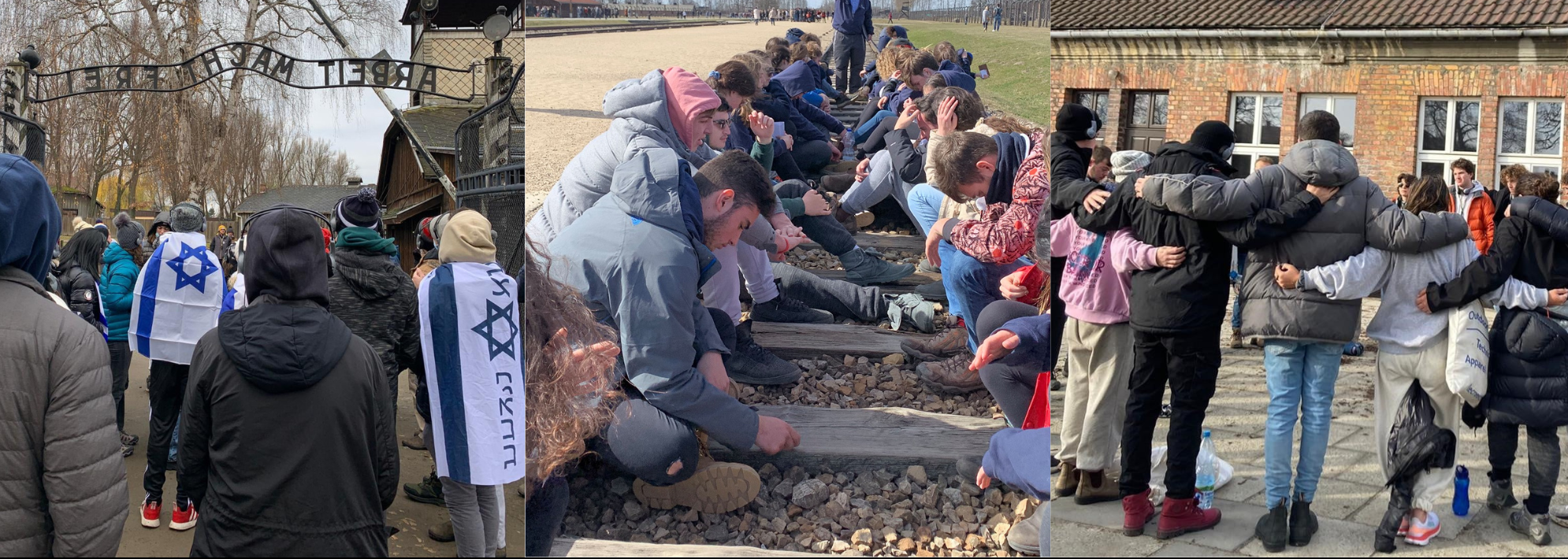
  Amidst this exploration of Jewish life in the Jewish homeland, you are going to Poland to visit a place where many Jews lived, and to the death camps where many Jews died. It can sometimes be overwhelming to come face to face with the experience of evil. We want to give you permission to feel whatever it is that you are feeling, even if your instinct is to not let your guard down because you will likely be playing your usual role of caring for others who are breaking down. You should allow yourself to be in the moment and to process what you are seeing and how it informs your view of yourself, your community, and of humanity.
 I had an amazing time at National Convention last weekend! It was an incredible opportunity for me to reconnect with friends from Young Judaea that live far away and learn about important topics of today.