Bring back that summer feeling

Bring back that summer feeling

By Adina Frydman, CEO of Young Judaea Global

As we turn the page on summer and try to hold on to the final moments of sun,  we feel the shift from pre to post Labor Day (well, at least if you are in the Northeast). For those in the South or West, you are already deeply in the routine of school.

As I head into the office in 94-degree weather, although it still feels like summer, I know that the truth is, my summer is over. For YJ campers each year, the end of summer doesn’t just signify the start of school, it means the end of camp!

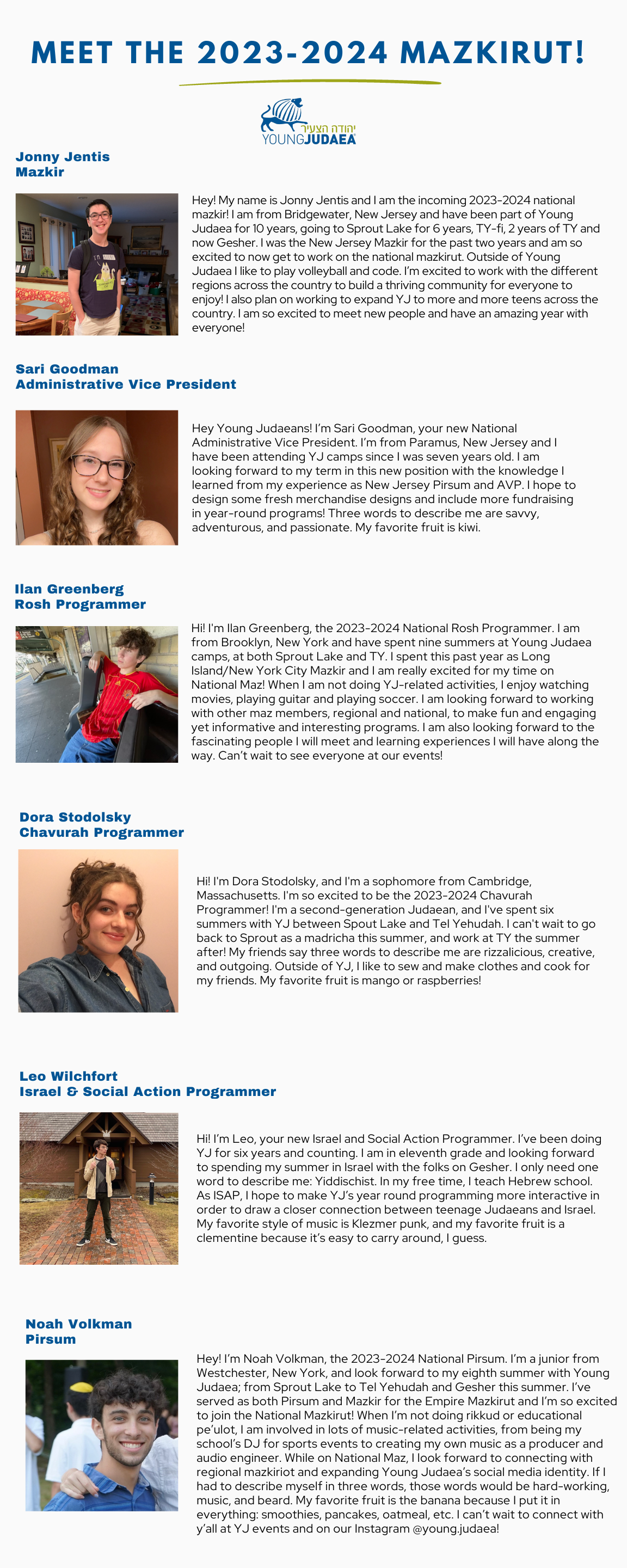
This summer, I had the pleasure of touring all seven camps and was reminded again of what is so unique and special about a Young Judaea camp. Let me tell you what I saw.

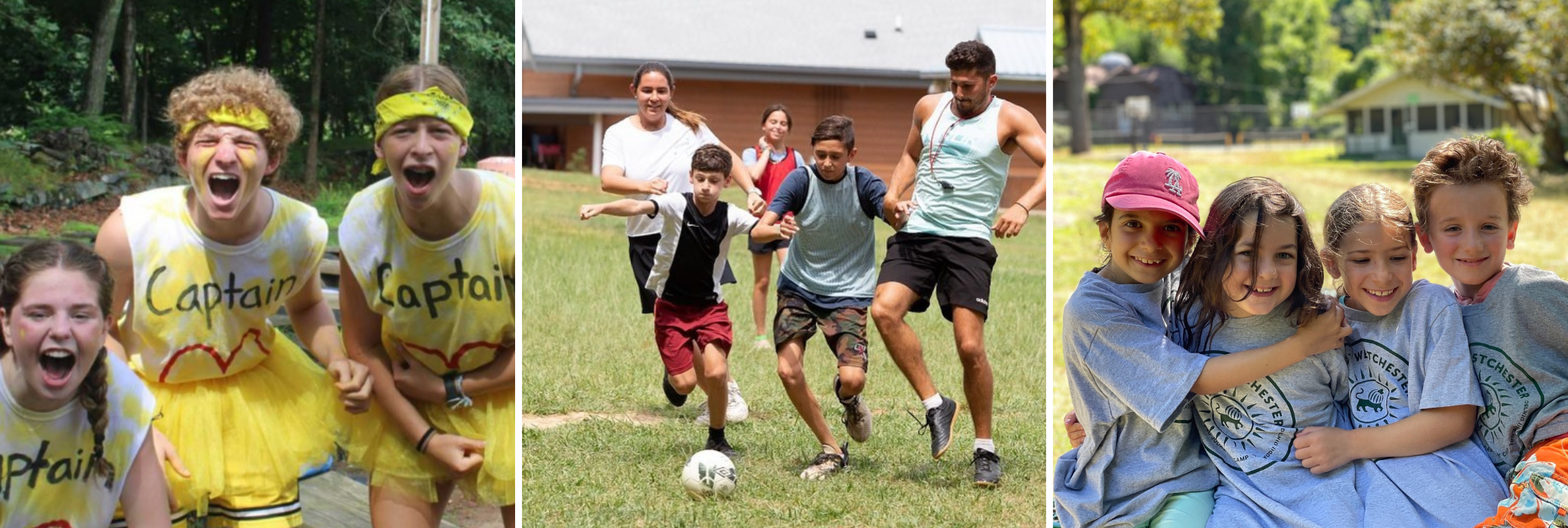
Unadulterated joy and laughter throughout the day. The playfulness of wearing pajamas all day, making string bracelets, having mud fights, bug juice, cheers and song, and of course the magic of a camp Shabbat. Not to mention the staff are sometimes sillier than the campers (to make it fun for the kids of course…)

I saw kids getting out of their comfort zone to try a new sport, meet a new friend, and challenge their existing perspectives by encountering different opinions.

At camp I witnessed incredible sportsmanship, balanced with healthy competition. While the joke is that we are all winners in Young Judaea, that is actually not true in color war, bikurim, and maccabiah. But most impressive is that the winning teams cheer on everyone else with as much enthusiasm as they cheer for their own win.

Lastly, I saw exemplary role modeling from our tzevet (camp staff). And while this applies to all staff, I am particularly talking about the young seasonal staff who would do anything to make sure that every chanich (camper) has the best experience possible: no camper left behind.

From the early morning wake up rituals to peulot laila tov (good night activities), they are the heroes that make every moment count. And it is only sweeter because they are part of a long chain of Young Judaeans passing on the traditions that their madrichim (counselors) gave to them.

These are just some of the highlights of what I saw at camp this summer. No wonder we are sad to let it go! Perhaps we can hold on to that camp feeling as we go back to our year-round lives.

As we wind up another fabulous season with over 3500 campers, I want to thank…

All the staff who gave their all this summer.

All the parents for trusting us with their kids.

All of YOU for supporting each of our camps and Young Judaea to make these magical summers a success!

See you in the summer of 2024!

Camp Registration is open already with early bird discounts – don’t wait!

Sincerely,

Adina

Seeking solace through solidarity

Seeking solace through solidarity

By Adina Frydman, CEO of Young Judaea Global

I am writing you not because I have the perfect conciliatory words, but rather because I am at a loss for words and feeling, perhaps as you are, a desperate need to be in solidarity with fellow Young Judaeans. As it slowly sinks in that this is really happening in our precious Israel, that tomorrow will be quite different than today, and that this is only the beginning of a new and ruptured Israel, I feel a deep sense of loss.

As an American Jew in particular, albeit one who occupies herself daily with the pursuit of the Zionist dream through the sacred work of our movement, I feel like a witness, a bystander to what has been happening in Israel and the reality that they/we will have to live with heretofore. Perhaps we will wake up tomorrow and reason will prevail? No, that is fantastical thinking and likely not helpful at this point.

29 weeks of sustained protests by our brothers and sisters in Israel as they took part in a living democracy, broadening the patriotic tent, bringing different factions together under one flag. For what? To what end? And what now?

Not living in Israel, it can sometimes feel easier to turn it on or off, to pay attention or to ignore the headline alerts on my phone about Israel. But I know as well as you that the ramifications of this moment will be felt by all of us, those living in Israel and those outside of Israel. There is no limit to how off the rails this can go at this moment, because without limitation and reasonableness, there will be little justice and balance.

We will all need to become Rodef Tzedek and Shalom – pursuers of justice and of peace.

In just another day, we will enter Tisha B’Av, the timing, uncanny. Whether we equate this moment to a 3rd horban, destruction of the Temple, is still too early to know. But we do know that some of the same forces that are attributed to having caused our earlier historical downfalls, are now at play too. The lack of achdut, Jewish unity and the pervasiveness of sinat chinam, baseless hatred, both are rampant, and we must all take responsibility for that.

I often find it hard to connect to this day, but this year feels different. This year, I am strangely grateful for the timing of this day. Because I feel like I need a day of personal mourning and we need a day of communal mourning. It is tempting to try to find the silver lining and to jump to the comforting words. But we will get there. Soon enough, it will be Shabbat Nachamu and we can turn to the words of the prophets to find our nechemta, our comfort. But not before going through the narrow straits of Tisha B’Av.

Whether it has been your custom to fast or to engage in the mourning practices of the day, I invite you in the 25 hours of Tisha B’Av to find time for personal reflection, to think about the importance of this moment, to feel the brokenness, and to long for a return to our people, a return to Zion, that we may merit it once again.

Hashivenu Adomai elecha v’nashuva chadesh yameinu kekedem.

YJ Alum is awarded the Luxembourg Peace Prize

YJ Alum is awarded the Luxembourg Peace Prize

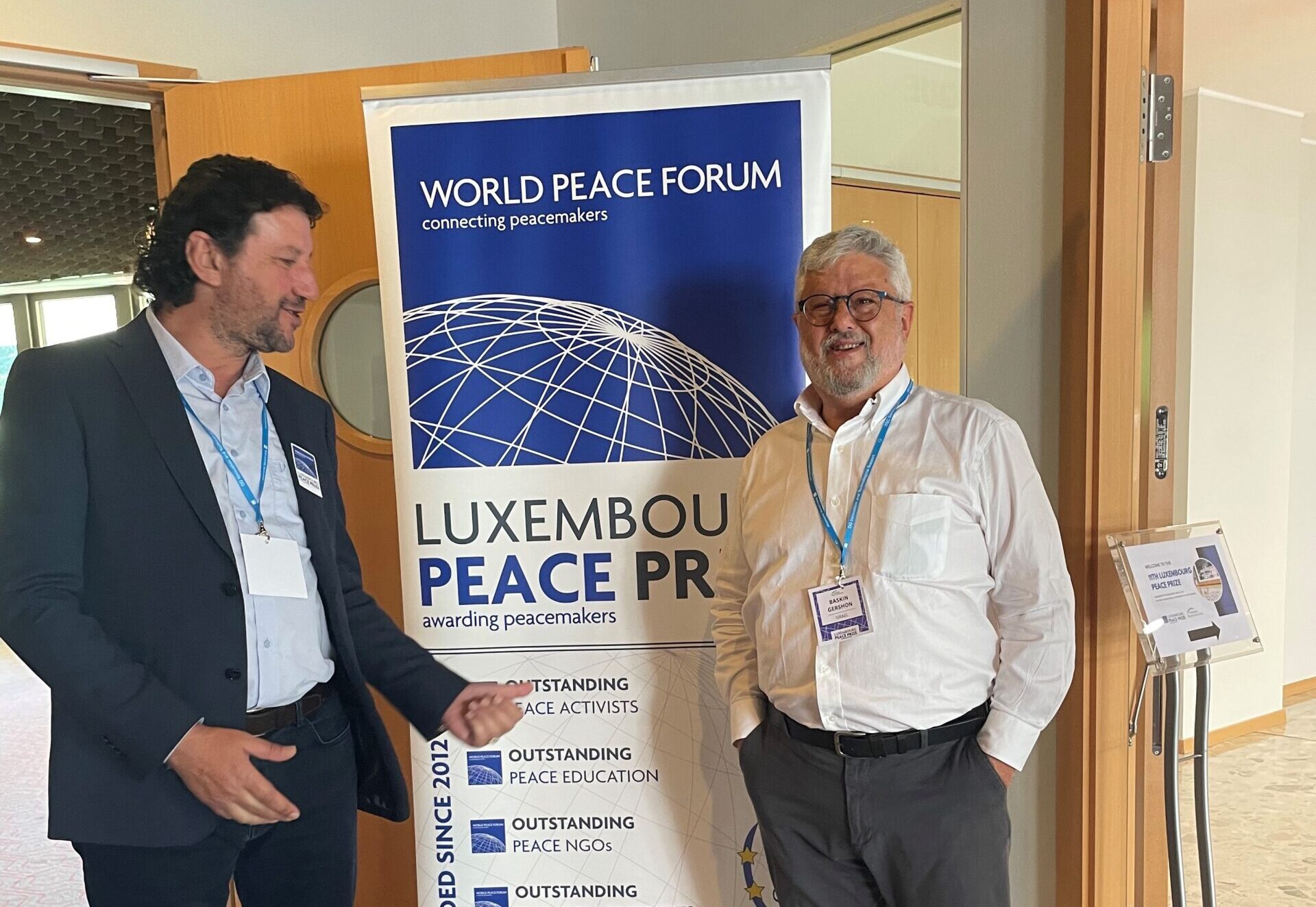
Recently, YJ alumnus Gershon Baskin, Ph.D. was awarded the “Outstanding Peace Activist” award under the Luxembourg Peace Prize for his continuing efforts for peace in Israel-Palestine. We spoke with Gershon to find out about his current efforts below!

  1. What YJ programs are you an alum of?

I joined YJ in 1970 when I was in 9th grade. I joined the Smithtown Club in Long Island.  It was a new club that year and soon turned into the one of the largest clubs on Long Island despite the relatively small number of Jews in the area. I went to Camp Tel Yehudah for my first time that summer to what was then called regular. In 10th grade I was elected to the Mazkirut of Long Island – we then adopted the name Gesher Shalom. In the summer of 1972 I went to Machon (Bet) and worked in the kitchen in order to stay in Camp. The following year I was elected Senior programmer on the mazkirut and went to MA in the summer and worked as assistant Dairy Cook.  The following year I was elected to be Mazkir Gesher Shalom. In Dec. 1973 we had national convention in Israel for the opening of Kibbutz Ketura. I worked in the kitchen the whole summer as Dairy cook I went on Year Course – section 2 in 1974-75.

After YC I worked as Dairy cook in alef.  I did my first year of University at Tulane in New Orleans and work with YJ down there.  The following year I moved back to NY to live together with our group from Year Course in a Bayit on the Upper West Side.  I was Senior Program Director for Long Island YJ.  I worked one summer as dairy cook in Sprout Lake – its first summer and my last summer in the States I was a merakez in Camp Judea Michigan (summer 1978). I made aliya in September 1978.

  1. Tell us a bit about your career.

You can read it all in my bio:

Gershon is the Israel/Palestine Director of the Holy Land Bond (www.holylandbond.com) and the Middle East Director for International Communities Organization – Middle East (ICO) https://internationalcommunities.org/

He was the person responsible for the secret direct back channel between Israel and the Hamas that successfully negotiated the release of abducted Israeli soldier Gilead Schalit.

From 2012 until 2020  served as Country Manager for Palestine in Gigawatt Global working to develop mid- and large-scale commercial solar energy projects Palestine.

From 1988 – 2011, he was the Israeli Co-Director and founder of the Israel/Palestine Center for Research and Information (IPCRI) – a joint Israeli-Palestinian public policy think- and “do”- tank located in Jerusalem.

During the Premiership of the late Yitzhak Rabin, he served as a special advisor on the Israeli- Palestinian peace process to a secret team of intelligence officers established by Mr. Rabin.

Since February 2005, he has a weekly column in the Jerusalem Post. His weekly column is also published in Arabic in the Palestinian daily newspaper AlQuds and in Hebrew on a news and opinion website D’Yoma.com.

He holds a Ph.D. in International Affairs from University of Greenwich. His dissertation was on Sovereignty and Territory in the Future of Jerusalem, parts of which were published as a book Jerusalem of Peace.

Baskin’s book In Pursuit of Peace in Israel and Palestine was published by Vanderbilt University Press.

  1. Yasher Koach on this prestigious award! We would love to know more about your current activities in making peace in Israel.

Other than being a Jerusalem Post columnist since 2005, my weekly columns now appear in Arabic and Hebrew as well.  My work is through a British based Non-governmental Organization called International Communities Organization – ICO -which is accredited by the UN and works in conflict zones with frozen or failed peace processes.  I am running 3 secret back channels between some very important Israelis and Palestinians -preparing today for tomorrow. And through the impact investment fund we created under the name The Holy Land Bond to invest in housing for Palestinians in East Jerusalem, to create possibilities for Jewish Arab integrated housing in Israel’s mixed cities, and to support Jewish Arab joint tech ventures.

  1. What if anything about Young Judaea may have led you to where you are today?

YJ taught me that moving to Israel was not a change of address, but a change of essence – our lives have to be meaningful in terms of making Israel a better place.

  1. Do you have any advice for YJ teens today on how to get involved in peace activism in Israel?

Contact me.


Meet The 2023-2024 Mazkirut!

Meet The 2023-2024 Mazkirut!

YJ Teens Regional Updates

YJ Teens Regional Updates

June 2023

EMPIRE:
So far Empire has had a fantastic year. We started 2023 with the BEST event EVER for Empire Cupcakes for a Change. We had a cupcake designing context as well as an educational program about women leaders. That event and all events to come will further create new friendships as well as make bonds between people stronger. For now, the next event is Northeast convention! We hope to see you there! Make sure to follow us on Instagram @empireyoungjudaea to be updated on events and DM us if you have any questions!

JERSEY:
Hi Young Judaea! New Jersey has had a splendid year! We started it off with the annual Northeast Kickoff in NYC’s Central Park! We had an amazing NJ turnout, and we had fun playing icebreakers and different games to really get people involved and excited. Next up for Jersey was the Pins for Presents at the North Brunswick Bowlero, where friends came to bowl and learn more about the spirit of Hanukkah. The very next day was the Shine A Light Rally, where we stood up against antisemitism and showed that we are proud of who we are. Since then, we have been hard at work, brainstorming new events and activities for Young Judaeans to participate in and have fun with, all while learning a thing or two about their faith and culture.

LINYC:
LINYC has had a fantastic year! We have been able to bring the YJ community together three times starting off with a bang with Northeast Kickoff. We hung out in Central Park, playing games and bonding. To celebrate Hanukah we had Latke Paloozah on Long Island. We had so much fun playing Chanukah themed games and attempting to make latkes. Finally, we recently had an ice skating event where old and new Young Judaeans had the opportunity to connect. Currently, the LINYC Maz is working on programming for Northeast Convention. LINYC is so excited for the future and can’t wait to continue this year’s journey.

MIDWEST:
Midwest has had a busy and exciting beginning of 2023! The Midwest Mazkirut worked diligently for months to plan an impactful Midwest Convention. During the weekend, over 40 participants came and took part in educational and engaging peulot led by their peers. The peulot focused on themes such as consent, building community, and learning from our mistakes. Also during the weekend, we had our annual Asepha in which we elected our new Mazkirut members for the upcoming 2023-2024 school year. We have so many fun ideas for the new year and can’t wait to share them with everybody!

Judaeans for Generations: An Interview between Father and Daughter

Judaeans for Generations: An Interview between Father and Daughter

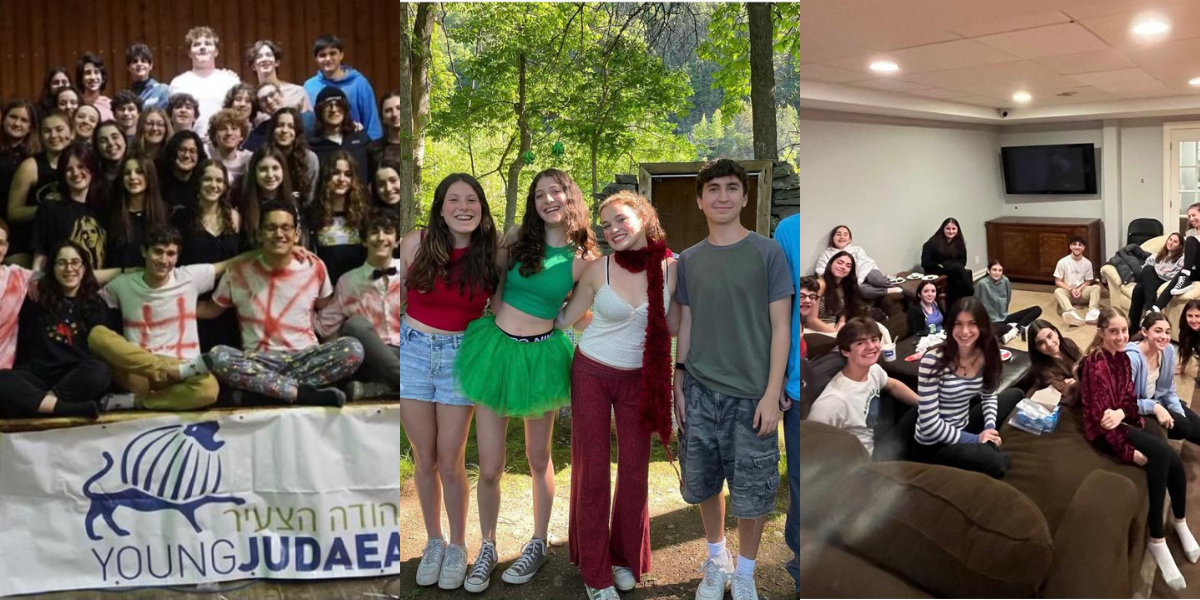
An interview between Stu Stein and Gabriella Stein

Stu Stein was a chanich at CYJ Sprout Lake and Tel  Yehudah. He has been the Kitchen Manager at Tel Yehudah since the late 80’s.

Gabriella Stein is from Long Island and was a chanicha at CYJ Sprout Lake and Tel  Yehudah. She served as the Long Island/New York City Borgrim Programmer and is the current Chavurah Programmer on National Mazkirut.

Questions for Dad: 

1. What year were you in Young Judaea/what was your participation like?

I started in camp in 1979 as an offie at Sprout Lake.  I then got to TY in 1985 (got my name on the Beit Am wall as a “meemer” as I believe you call them now). I went on Year Course in 1989-90 and I’ve worked on and off again (more on than off) at TY over the past 30 summers.

2. Were you on Maz?

Yes

3. What kept you in young Judaea?

YJ was my home, it was where my friends were it was where I went to have fun.  YJ was a lot different when I was growing up than it is now.  There was less competition from outside interests.  They didn’t really exist.  Instead, we had weekly club meetings and regular conventions and we able to spend more time with each other than the kids today can.

4. Did anyone before you do YJ?

Not in our family.  My mom was in Hadassah and that’s how we learned about it.

5. Why did you choose to send your kids to YJ and not another, bigger Jewish youth org?

That’s easy.  I never really left Young Judaea.  Gabriella was “walking” around TY before she could even walk.

6. How has YJ changed throughout the years and how do you feel about the changes?

YJ has evolved with the times.  The things YJ chooses to focus on has changed with the changes we see in society.  It focuses on the issues that matter to the teens that make up the membership.  That’s always been true about YJ.  What I’ve always loved about YJ and camp, TY, Sprout, Texas, it’s that we reinvent the place each summer.  Each person that comes to camp brings with them their own likes and dislikes and talents and plans and together we all the campers, the staff, the head staff, we all reinvent the place and no summer is ever the same as the summer before or after.  That’s pretty special.


Questions for child:

1. What is your experience in Young Judaea (junior camps, maz, etc.)?

My experience in Young Judaea began in 2013 when I started my first summer as a camper. From that summer on, I was hooked. I have been going back every year since. I even joined a few sessions of TY-fi! Last year I was on the LINYC regional mazkirut and this year I am on the National Mazkirut, and I am so grateful to have had both opportunities. Through Young Judaea I met my closest friends, connected myself to my Jewish identity, and strengthened my leadership skills.

2. What connection do you feel to YJ? Is it a strong connection?

To say that I have a strong connection to YJ would be an understatement. YJ is a huge part of my life. I couldn’t imagine myself not being connected to this organization

3. YJ has gotten smaller since your dad was in YJ, what made you stay? 

I think the fact that this smaller organization is the one I grew up with has something to do with it. Until I learned what YJ used to be like, this was just the norm for me. The main reason I continued to come back was because, as cheesy as it sounds, it became a home for me. As each summer came, there was never a “hey Gabriella, do you want to go back to camp next summer?” conversation. I stayed for the people, the environment, and because I would have cried for days if I wasn’t able to return (needless to say, the Covid summer was a rough one in the Stein house.)

4. How has YJ changed during your years? 

During my time serving on Maz and being involved in Year Round, I would say YJ has stayed fairly consistent. Most events we had a fair number in attendance. This year is where I am really starting to see things change, maybe it is just the shift in perspective from a younger camper to an older camper and now staff.

5. Do you plan on sending your kids to YJ?

Is that even a question??? Without a doubt yes. If my future husband doesn’t wish to send the kids to camp he will be the one getting sent away. And it wouldn’t be to a summer camp.

6. Favorite YJ memory?

One of my favorite stories and memories from my time in YJ is my firefly story. My friends know this story like the backs of their hands because of how often I reference it. This story takes place in my second or third year at Sprout Lake. Our counselors had arranged for us to “sneak out” one night (it was like 8pm), and they sent us out in shifts. We snuck quickly and quietly to the grass behind the BK (Beit Knesset). I don’t think I had ever felt so sneaky, and I don’t think I will ever feel that sneaky again. Our counselors told us we were there to catch fireflies. So we had fun quietly trying to catch as many of the little creatures as we could. If you have recently been to Sprout, you know that all throughout the day there are Gators driving around camp. At night, that is no exception. So, every few minutes a Gator would roll by and our counselors would quietly yell “GATOR! DOWN!” and all of us would drop to the floor. Now looking back, I don’t know why I didn’t assume all 40 of us were invisible to eye of the Gator’s driver, but that’s camp magic for you! After some firefly-catching-fun we were told to sneak back to the bunks. We crept home and made it back safely (PHEW!) As each of us were getting back into our beds one of the upper staff members charged into our bunk. We were scolded. Humiliated. I swear girls cried. Once we were at our most emotionally vulnerable, after being ripped apart for our mistake by a scary man who was probably at least 2 and half times our size, in walked HB. “Just kidding! We brought Oreos!” Everytime I tell that story it makes me want to smile. I found my home that night.

One Year Coursers Experience of Politics in Israel

One Year Coursers Experience of Politics in Israel

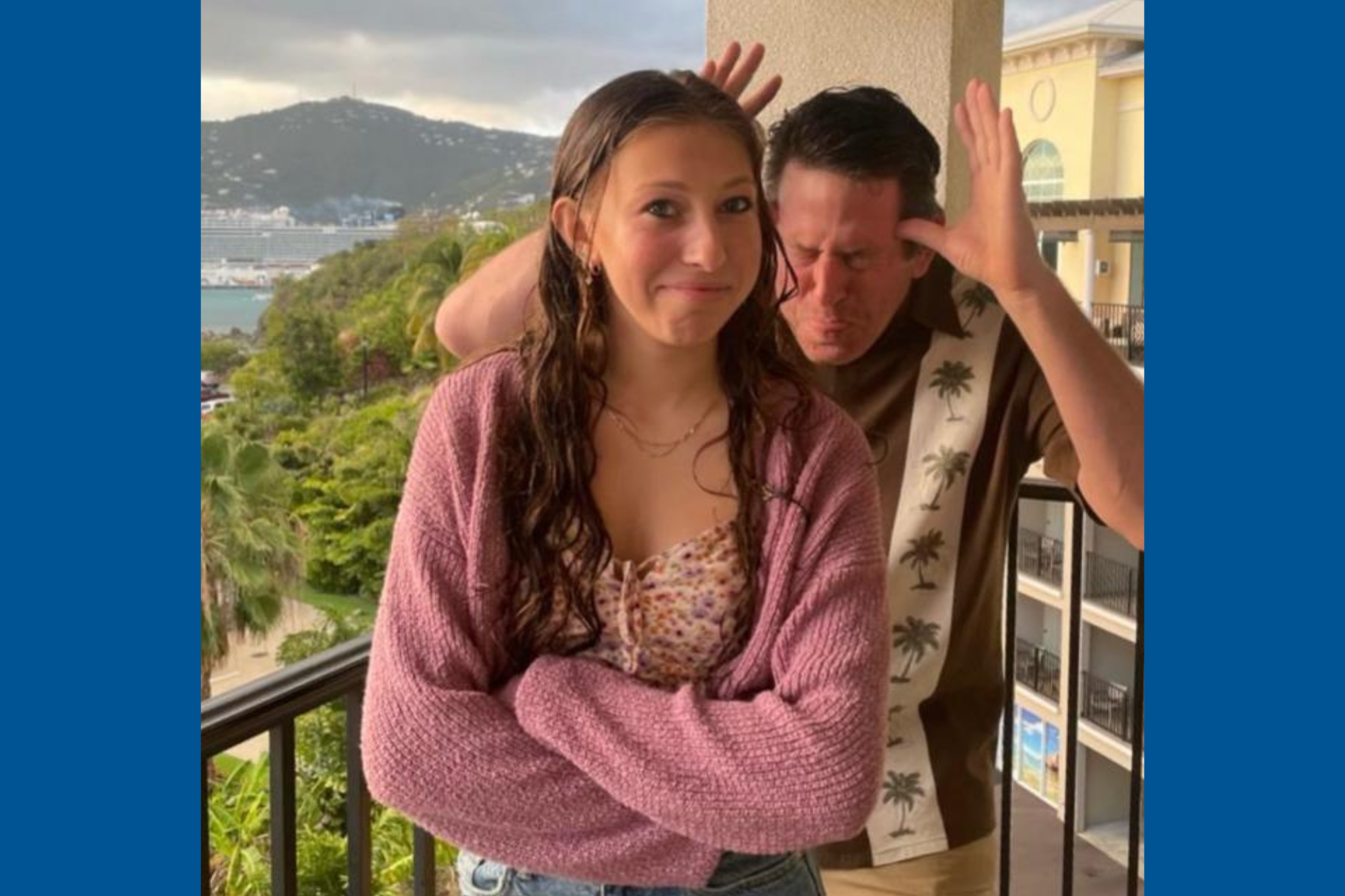
By Ilan Tauber, Year Course 2022-2023

Reflecting on my year in Israel as it comes to a close, I genuinely think I have witnessed one of the most tumultuous times in Israeli history. The year began in the last leg of the election following the collapse of Naftali Bennett’s coalition. Political posters, banners, and stickers littered the landscape everywhere you look. As I was in Jerusalem during this period, the classes at Kiryat Moriah and the weekly trips led by Rabbi Adam Drucker provided ample space to learn about the election and the major issues driving the race. Bibi formed his coalition right as we moved to Tel Aviv. The evening I moved into Beit Hillel, I was greeted by the horns and shouts of the weekly Saturday protests coming from Kaplan street, literally five minutes away.

The protests in our backyard made it so easy to participate. The peak of the protests against the judicial reforms came the night the Minister of Defense was fired for voicing support for a pause in the legislation. As my friend and I came back from our baseball game in Petah Tikvah, an enormous crowd of people took over the Ayalon highway, the major transportation artery running through Tel Aviv. Holding our baseball bags and still in uniform, we jumped the fence and climbed through the crowd onto the bonfire ridden highway. The anger and passion from the protestors was palpable, a feeling I only recognized from the American protest following the death of George Floyd.

Additionally, my internship with Member of Knesset Gilad Kariv, of the Labor party, gave me a unique perspective on the political fight from the opposition. I was lucky enough to be in the Knesset on one of the days they voted for the judicial reforms. During the vote, the MKs against the reforms all donned Israeli flags in protest, which were subsequently confiscated. A tense first day in the Knesset to say the least.

One of my more unique political experiences came over Yom HaZikaron when I attended the Joint Israeli-Palestinian Memorial Day Ceremony. The ceremony hosts Israelis and Palestinians mourning victims of the conflict, along with Israeli and Palestinian speakers advocating for peace and democracy for all. It was refreshing to hear democracy discussed not just within Israel, but also for millons of Palestinians living in the West Bank. Despite how uplifting the ceremony felt, the group of far right protesters spewing hateful and racist jeers was a reminder of how far away peace truly is. As staunchly pro-settler movements continue to expand their territory and political power within the government, I am afraid Israel is further from peace and democracy than ever before. Nevertheless, the anti-government’s continued strength provides some hope of moving in the right direction.

Overall, I am very lucky to be in Israel during this once in a lifetime political climate, and am grateful Year Course has provided the freedom to participate in the national discourse.

*Young Judaea is a diverse community representing a broad spectrum of perspectives. Chanichim are encouraged to engage in makhloket l’shem shamayim (argument for the sake of heaven). Young Judaea neither condones nor condemns the personal views expressed.

My College Essay – Jewish Pride

My College Essay – Jewish Pride

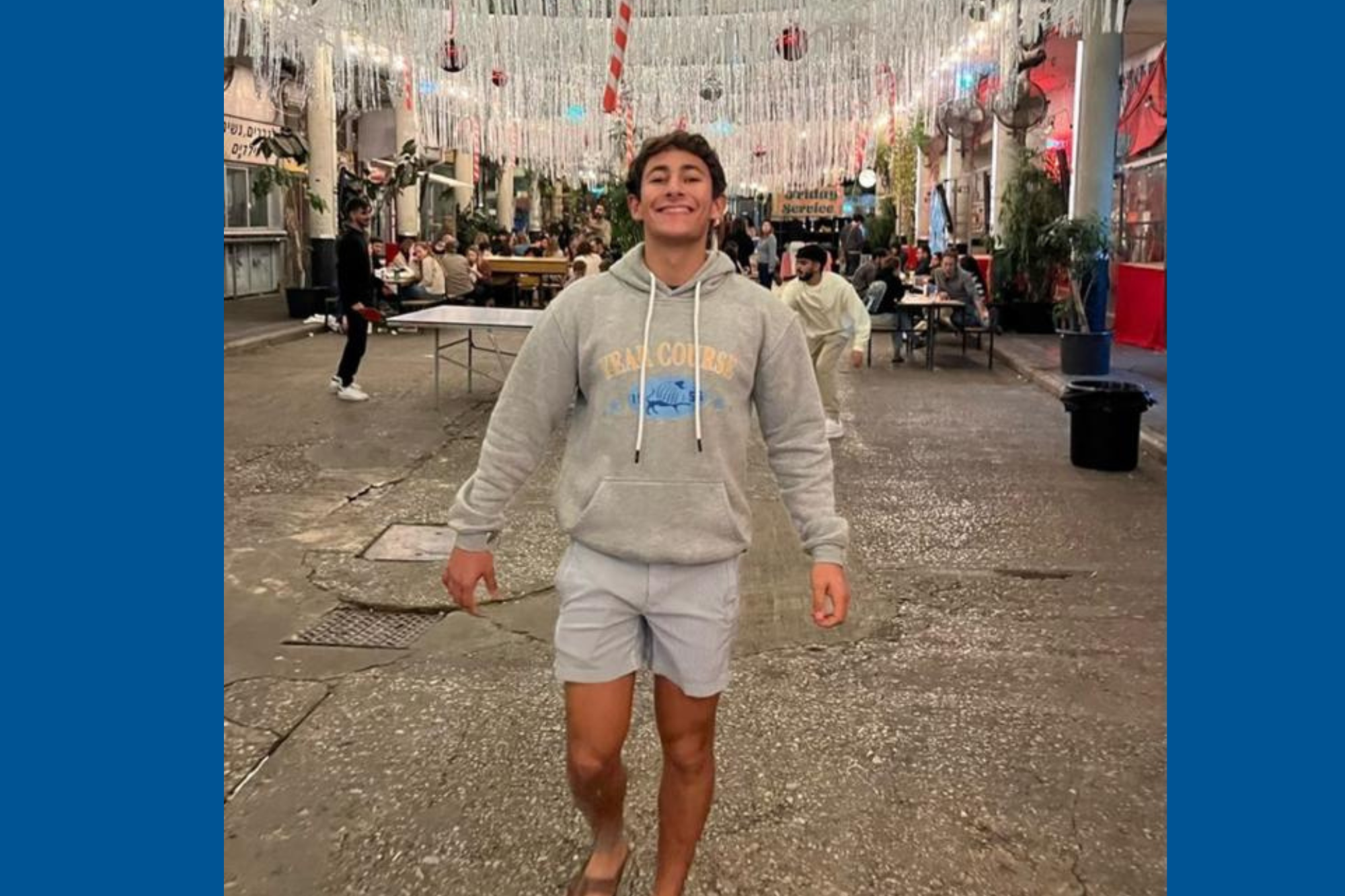
By Samara Kohn, Tel Yehudah 2021, Gesher 2022, Served on LINYC Maz and National Maz.

It was Friday and I was in Jerusalem with over 120 Jewish American teens. Everyone was dressed up in their nicest Shabbat attire. Girls in dresses, boys in button-down shirts. We had just wrapped up my favorite service of the week, Kabbalat Shabbat and it was finally time for dinner. We all sat down, did the blessing over the bread and wine, and devoured our third piece of schnitzel for that day. In the middle of our meal, the French group that was staying at our hostel sat down for their meal as well.

When my group finished eating, we started Friday night Shira. We were singing and dancing and screaming songs in Hebrew and English at the top of our lungs. The French group, who didn’t speak any English, got up and started screaming the same songs we were singing with the same tunes, but in French. They tried to be louder but could not compare to our group of Americans. Suddenly a boy from Young Judaea starts screaming the American national anthem and everyone joins in. The French then begin to scream their national anthem. When the two groups finished, the room went silent and in unison, both started to sing the Hatikvah. I stood there in awe while chanting my country’s national anthem.

The pride I felt at that moment was indescribable. Being a Jew had never felt that good. Two groups from entirely different continents gathered in our homeland with two key similarities: our pride in Israel and our love and devotion to Judaism. The satisfaction I felt to have the privilege to experience this really made me love being a Jew so much more. On the holiest night of the week, in the holiest city in the world, I began to see Judaism from a different light. Being a Jew isn’t just about gathering for prayer or following the mitzvot, being a Jew is about being a part of a community that you can find all around the world. Whether this community is in France, Israel, or on your college campus, all Jews are connected. Wherever I go I wear my Magen David (Star of David) around my neck. I refuse to wear any other piece of jewelry because when they see that star around my neck, Jews around me know they have a community right next to them.

Letter to my son upon his return from YC

Letter to my son upon his return from YC

By Adina Frydman, CEO of Young Judaea Global

Dear son,

10 months ago, you left for your gap year in Israel as a boy, but today when you walked through the gates of El Al Terminal 4 at JFK, you emerged as a man. And not in that bar mitzvah kind of boy to man way, but as a man who has started to spread his wings, and to exercise independence and freedom by making his own choices and living with those consequences.

I am sure it is strange for you to be home, (well, not quite home since we moved to a new house while you were away,) but home is where your family is, the friends you grew up with, your community.

I am sure you feel torn as you have started to lay down new roots, with connections of your choosing, and yet these roots of your origin keep pulling you back. I hope that in time you will see these as grounding roots that keep you firmly planted in who you are and let you blossom into who you are becoming, rather than as roots that hold you back.

This year you tried on different skins, all in the name of figuring out who you are. What an exciting time! I hope you realize this is a lifelong pursuit and that you should never feel that you are all set. Keep that curiosity and hunger for learning, experiences, and growth for the rest of your life. Hold on to friends that push you to grow and challenge your assumptions.

And as for Israel, I hope she didn’t disappoint you too much. I know the expectations were high (at least from me) and the reality in some ways exceeds way beyond anything we can imagine, and in other ways lets us down.

I hope you left inspired by the deep commitment of the people. A commitment to never give up on their dream and to never compromise their ideals for the sake of the dream. A complicated juxtaposition. But as Robert Walter says, we are the “connected critics.”

I hope you find yourself somewhere in that narrative as you get ready to step onto the college campus, which nowadays feels like a war zone for labeled Zionists (and whether you accept it or not, having spent a year in Israel, you may need to respond to the assumptions that come with this label.)

Year Course was not an advocacy training program, by design. However, I do hope that having spent a year in Israel exposed to multiple narratives and encountering a real place with real people that you now have a personal perspective to share, and that you have an entire community of Young Judaeans to lean on if and when it gets tough. You are not in this alone.

And while it may be tempting to disengage and ignore the noise because it’s just too complicated, hold your head up and know that you don’t need to be armed with facts and figures to be proud. You also don’t need to defend and be zealous to show your loyalty. You are no less proud or loyal by being a connected critic but find a way to band with others to work towards making it better. To be a Zionist means to dream of the Israel you want to see. Don’t settle for the status quo and don’t give up on her. Embrace an aspirational Zionism and pursue it. In Pirke Avot we learn, “While it is not our job to complete it, neither can we desist from it.”

While your Year Course may be over, you have the rest of your life to pursue it.

Love, Mami

Addressing Mental Health on a Gap Year in Israel

Addressing Mental Health on a Gap Year in Israel

Graduating high school and beginning college is a period of enormous transition and change for any 18-year-old. Graduating high school and moving to a foreign country for a year with perfect strangers? That’s a catapult into adulthood, a thrust into independence and responsibility that requires careful planning to be a success.

After 65 years of running Young Judaea Year Course, we’ve realized that to provide an exceptional year of growth in Israel for a young adult, the mental health and wellbeing of our participants must be put at the forefront of program planning. Our learning has come to bear even more acutely with the generation coming of age during a global pandemic.

Building a sensitive, professional, and sustainable mental health support system on Year Course begins with looking into the needs of our participants. Every year there has been an increase in the number of participants who need mental health support while on the program. Some are already diagnosed and treated by professionals while others need support due to the challenges of learning how to live in a foreign country with individuals they have just met. It is our suspicion that isolation and lockdowns as a result of the COVID-19 pandemic have also contributed to this increase. Perhaps there has been a loss in the ability to enter unfamiliar situations with new people and connect with one another in an open and vulnerable way. This connection is essential for a successful gap year. In addition, we’ve seen a lack of resiliency so that any minor crisis, without a healthy coping mechanism, can quickly spiral out.

One major challenge our participants face is that the mental health support system they are familiar with including family, friends, and professionals is thousands of miles away. Our aim is to assist participants in building a new support system while spending a year in Israel that enables them to be happy and thrive in an environment that demands independence and responsibility.

We have taken three important steps to ensure the wellbeing of all Year Course participants:

Encouraging Openness
Training and Preparation
Partnering with Participants and Families

Encouraging Openness

Imagine 200+ 18-year-olds from all over the world from diverse backgrounds, coming together to live, learn, and explore Israel together. This is the complex reality of a gap year in Israel. While the experience is beautiful and eye-opening for participants, this melding of worlds can be messy if not addressed properly.

The cornerstone of the Year Course mental health system is the understanding that the most dominant influence on the participants’ wellbeing is their ability to create meaningful open interactions with one another that will enhance their sense of belonging to the Year Course community. In other words – their ability to create meaningful and deep friendships while understanding healthy social boundaries. Meaningful relationships allow participants to feel comfortable expressing themselves to peers and staff when things aren’t going well, and to work through the complex feelings that arise when living far away from home. Forging these relationships is key to a happy and successful year and having this skill will have a positive effect on the rest of their lives.

The range of issues that arise range from your typical, “my friends go out without me,” to differences of opinions on the complexities of Israel, frustrations with the language and culture shock, or on occasion, dealing with true crises situations. Many people struggle to communicate how they feel and instead they prefer silent frustration. How can you forge deep bonds when you don’t know how to communicate your feelings?

Maintaining a safe space for everyone is a challenge our staff and participants deal with on a daily basis. Besides keeping people secure, a safe space also allows participants to speak openly and sincerely about the things that are bothering them. In that sense, the creation of a safe space is a key element when it comes to the mental well-being of Year Course participants. Open communication that enables staff to help and support the participants can only exist in a safe space.

Training and Preparation

Months prior to arrival on Year Course, we communicate with parents and mental health providers to understand the specific needs of our participants. Once the participants that need additional support are identified, we connect with them and their family support network upon arrival as well as recurringly throughout the program to help them nurture meaningful relationships in order to deal with complicated social situations.

Having the right professionals on board provides us with the right level of skills, support, and professionalism to ensure not only the wellbeing of our participants, but also of the staff.  We recently created a new position on the leadership team for someone with formal social work training and experience working with youth in distress. This position is embedded in the earliest stages of recruiting to help vet participants for their readiness to succeed in our program.

We can’t expect our counselors and unit heads to function as professional therapists, but we have found a way to provide them with tools, a mental health “first aid kit” so that they know how to react in the most challenging circumstances. These staff members are usually the first ones the participants will speak to during or directly after a mental health crisis and should be able to react appropriately to support the participant, triage the situation, and understand when to refer to an expert for further guidance.

Training covers areas such as signs and symptoms of common and less common diagnoses, initial intervention, dealing with drugs and alcohol related situations, mandatory reporting, preventing the recurrence of similar situations, and understanding when to refer to a professional. Mental first aid in crisis situations is aimed not only at the individual participant in need, but also at their peers, who may also be in distress. When supported, peers can then function as an important support mechanism for each other.

A crucial piece of our staff preparation is to form relationships with participants that are based on trust and a sense of security. Without a safe space for participants to express themselves and share their feelings, they are less likely to consult with staff on important issues. Staff accomplish this by being as accessible as possible and conducting non-judgmental and eye-level conversations with participants whenever possible. Additionally, the Year Course has professionals facilitate group conversations and trainings regarding various topics concerning both safety and acceptance including gender equality, sexual assault, and security. These conversations keep the dialogue open between staff and participants.

We train our staff to listen to the participants, try to understand their perspective, and empower them to have a positive and effective impact on their situation. For every situation, we expect and train our staff to be there for the participants as mediators, supporters, and moderators. We learned that in some acute crisis situations where there is a need to deal with Israeli authorities or medical emergency services where our staff become the mediators between mostly Hebrew speaking caretakers and the participants. This part of mental health support is crucial when it comes to dealing with the aftereffects of some crises.

Partnering with Participants and Families

The last important element of our mental health preparedness is to create a partnership with both participants and families. Sending your 18-year-old off to Israel for a year can feel like a leap of faith. Families must have the ability to trust the participants’ abilities to make good choices when it comes to their wellbeing.

We observe and understand how hard it is for some families to hand over independence to their children with even their everyday functions, let alone a year in Israel. We try to support families by maintaining a high level of communication between them and our staff as this helps them maintain some level of healthy control over their loved ones who are so far away. We also initiate regular emails to update families about the main features of the program and respond to messages within a reasonable amount of time. This level of communication is a key element in fostering a Year Course-family partnership that aims at supporting participants to flourish and grow while on the program.

By taking these three important steps to ensure the wellbeing of all Year Course participants: Encouraging OpennessTraining and Preparation, and Partnering with Participants and Parents, we are creating the conditions for our participants to experience growth and development in a healthy and supportive environmentWe are actively responding to the mental health and well-being needs of each Year Course participants, with the aim of imparting healthy coping mechanisms and resiliency for success on the program and that they can take into the rest of their lives.