

Category: YJ Teens
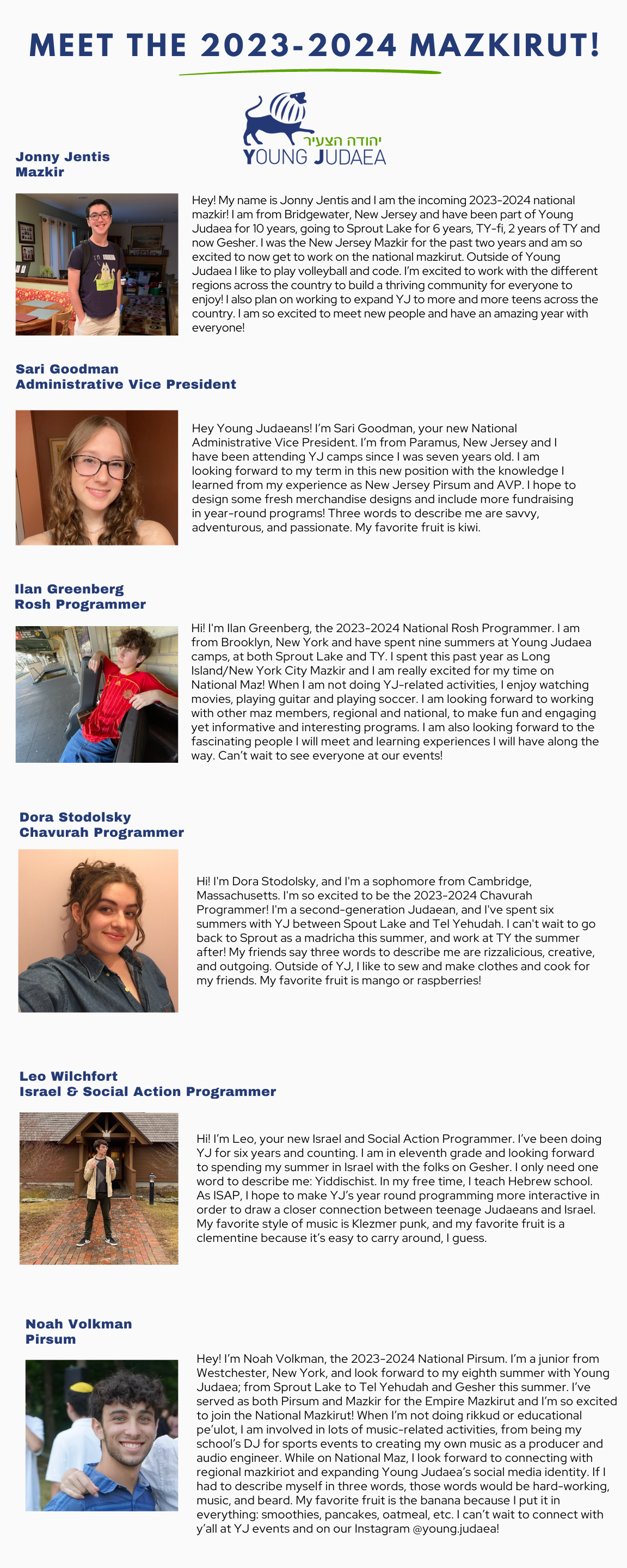
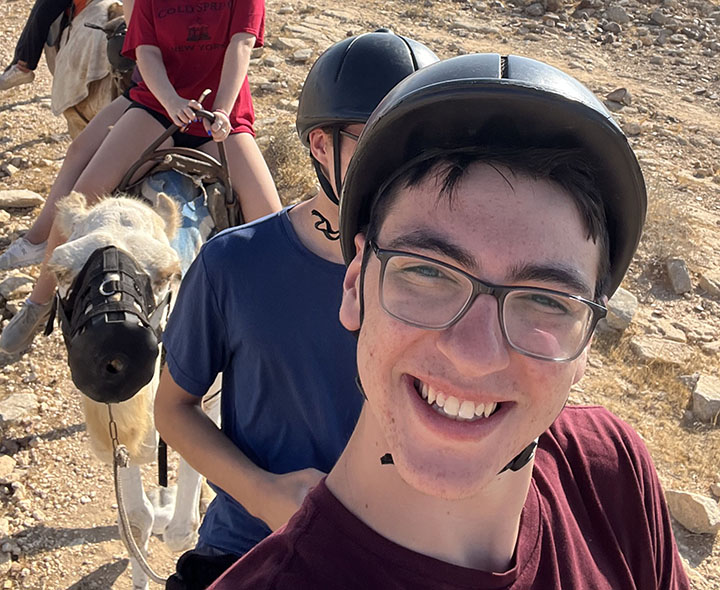
Words from our YJ National Mazkir
Shalom Chaverim,
My name is Jonathan Jentis and I am the new National Mazkir for 2023-2024. I am a High School Senior in New Jersey. Growing up, I went to Camp Sprout Lake for six years and then continued my YJ journey to Camp Tel Yehudah. Unfortunately my first year of TY was ripped away by COVID, leaving me longing for more Young Judaea. While TY-fi (virtual TY) was a fun substitute, it was not nearly enough, until I discovered the wonders of year-round YJ (now known as YJ Teens).
Instantly in love with YJ Teens, I decided to see how I could get involved in my regional chapter, but I found that, after COVID, New Jersey didn’t have a Maz (teen board). Jumping into action I contacted the LINYC (Long Island/New York City) mazkirut to find out how to create my own. I gathered a group of camp friends to set out and create something; the only problem was that none of us had ever done any year-round events and were completely lost. Bumbling around, we planned some great events including our very own Purim Party. The next year at the Northeast convention we were able to elect a full New Jersey Maz! I felt as though I had done my job but I wanted to do more to bring the YJ experience to even more people. After two years as New Jersey Mazkir, I have now made my way up to National!
Young Judaea is a place for teens to grow and discover themselves. In an ever-changing world where Judaism and all religions are fading in newer generations, Young Judaea allows young teens like myself to keep that connection.
The National Maz and I are working to create easier entry points for people into Young Judaea events. Often teens are hesitant to risk entire afternoons or weekends if they don’t know if they will enjoy it. One entry point we want to create is through fundraising for the kitchen that caught fire at Tel Yehudah this past summer by creating merchandise and donating the proceeds; this will be an easy way for teens to link together their camp and YJ experiences. Another opportunity we want to explore is Zoom events like Challah baking; this could be a calm and easy activity for everyone to join.
A goal of mine is to expand to reach teens outside of Young Judaea. Establishing a stronger YJ teens presence in places like the Southwest and Southeast would allow for more participation across the country. I am excited to continue building our already established regions like the Midwest and Northeast, and strengthen all of the regions’ connections to one another. On a more regional level, attempting to work with organizations outside of Young Judaea like JCCs and synagogues could create a steady and easy way to reach a new base of teens we would never have been able to reach before. All this is to say, throughout this year I am looking forward to working with the rest of National Maz to bring the Young Judaea experience we all know and love to more and more teens across the country!
As the song of YJ says ‘ani v’ata neshaneh et ha’olam’, you and I will change the world. I look forward to working with everyone in and out of YJ to build an even stronger and wider community!
Jonny Jentis
National Mazkir, 2023-2024
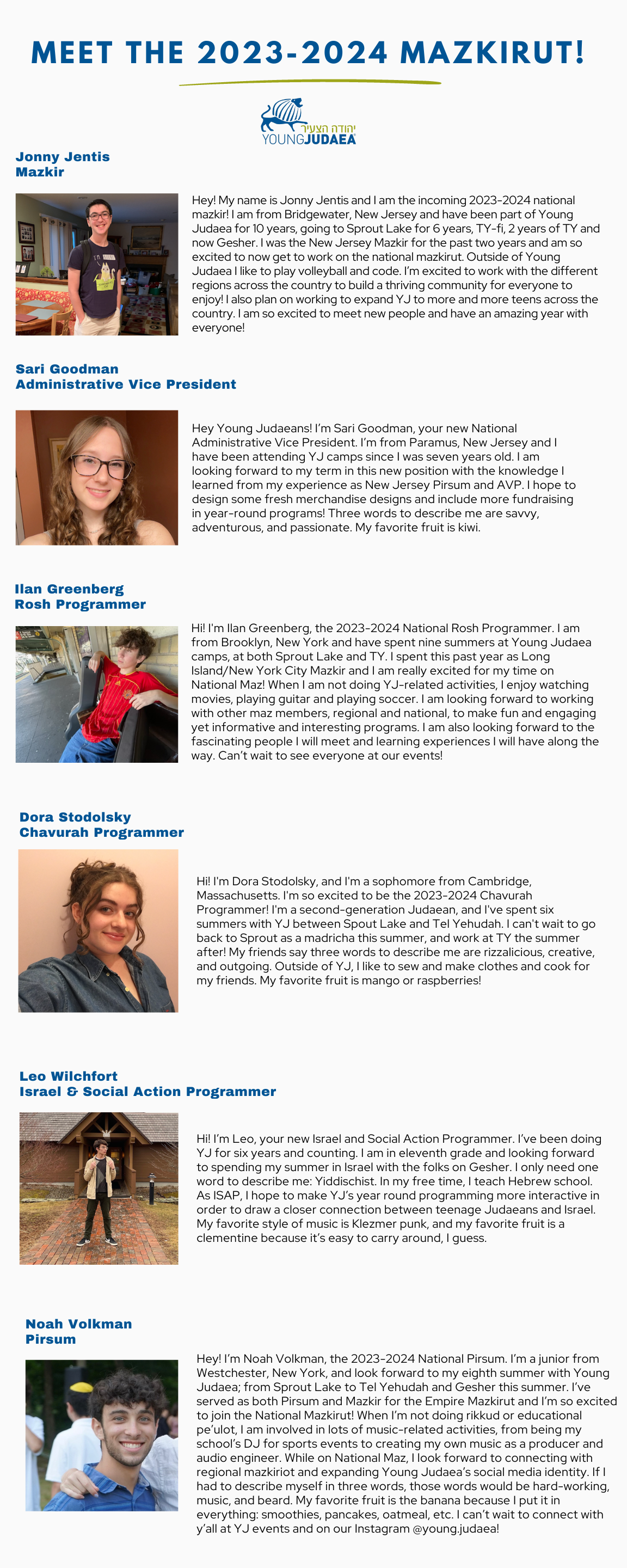
Meet The 2023-2024 Mazkirut!
YJ Teens Regional Updates
June 2023
EMPIRE:
So far Empire has had a fantastic year. We started 2023 with the BEST event EVER for Empire Cupcakes for a Change. We had a cupcake designing context as well as an educational program about women leaders. That event and all events to come will further create new friendships as well as make bonds between people stronger. For now, the next event is Northeast convention! We hope to see you there! Make sure to follow us on Instagram @empireyoungjudaea to be updated on events and DM us if you have any questions!
JERSEY:
Hi Young Judaea! New Jersey has had a splendid year! We started it off with the annual Northeast Kickoff in NYC’s Central Park! We had an amazing NJ turnout, and we had fun playing icebreakers and different games to really get people involved and excited. Next up for Jersey was the Pins for Presents at the North Brunswick Bowlero, where friends came to bowl and learn more about the spirit of Hanukkah. The very next day was the Shine A Light Rally, where we stood up against antisemitism and showed that we are proud of who we are. Since then, we have been hard at work, brainstorming new events and activities for Young Judaeans to participate in and have fun with, all while learning a thing or two about their faith and culture.
LINYC:
LINYC has had a fantastic year! We have been able to bring the YJ community together three times starting off with a bang with Northeast Kickoff. We hung out in Central Park, playing games and bonding. To celebrate Hanukah we had Latke Paloozah on Long Island. We had so much fun playing Chanukah themed games and attempting to make latkes. Finally, we recently had an ice skating event where old and new Young Judaeans had the opportunity to connect. Currently, the LINYC Maz is working on programming for Northeast Convention. LINYC is so excited for the future and can’t wait to continue this year’s journey.
MIDWEST:
Midwest has had a busy and exciting beginning of 2023! The Midwest Mazkirut worked diligently for months to plan an impactful Midwest Convention. During the weekend, over 40 participants came and took part in educational and engaging peulot led by their peers. The peulot focused on themes such as consent, building community, and learning from our mistakes. Also during the weekend, we had our annual Asepha in which we elected our new Mazkirut members for the upcoming 2023-2024 school year. We have so many fun ideas for the new year and can’t wait to share them with everybody!
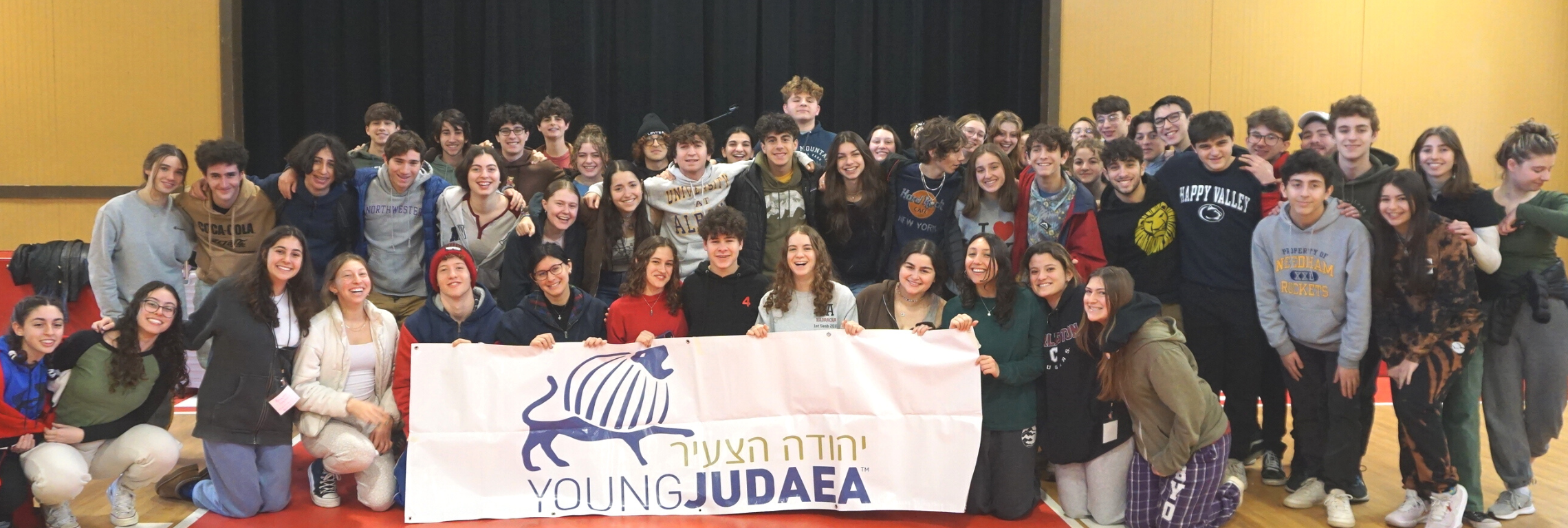
National Convention 2023: A Reflection
By Mia Finestone
 I had an amazing time at National Convention last weekend! It was an incredible opportunity for me to reconnect with friends from Young Judaea that live far away and learn about important topics of today.
We participated in activities that focused on this year’s National Initiative, Women’s Rights, including discussions about reproductive rights, consent, the wage gap, powerful women leaders, and a service project where we packaged hygiene products for those in need. This was especially meaningful to me because this summer I was a part of the Women’s Rights Tikkun Group at Tel Yehudah that proposed this year’s initiative.
Along with activities on the initiative, we also learned about how Shabbat is celebrated around the world, by creating dishes from various Jewish cultures and comparing them to the ways we celebrate personally. In discussion groups, I was able to learn from my peers’ perspectives and share my own when we talked about topics such as Israel, Anti Semitism, and the roles they play in our lives today.
Throughout the whole weekend, I felt welcomed by my Young Judaea community and was never afraid to voice my opinions or share my own experiences. At our asepha (election), it was amazing to be a part of the election process for our future National Mazkirut, and it reminded me of the larger Young Judaea movement I am a part of. It was so cool to see my friends and peers be elected into positions of leadership for the movement I love so much. I had so much fun participating in our camp rituals of Shabbat, Havdalah, and rikkud. The moments I shared with my friends who I don’t often get to see, were so special to me, and reminded me of why I love going to camp.
Next Gen Young Judaeans Unpack Yom Ha’aztmaut!
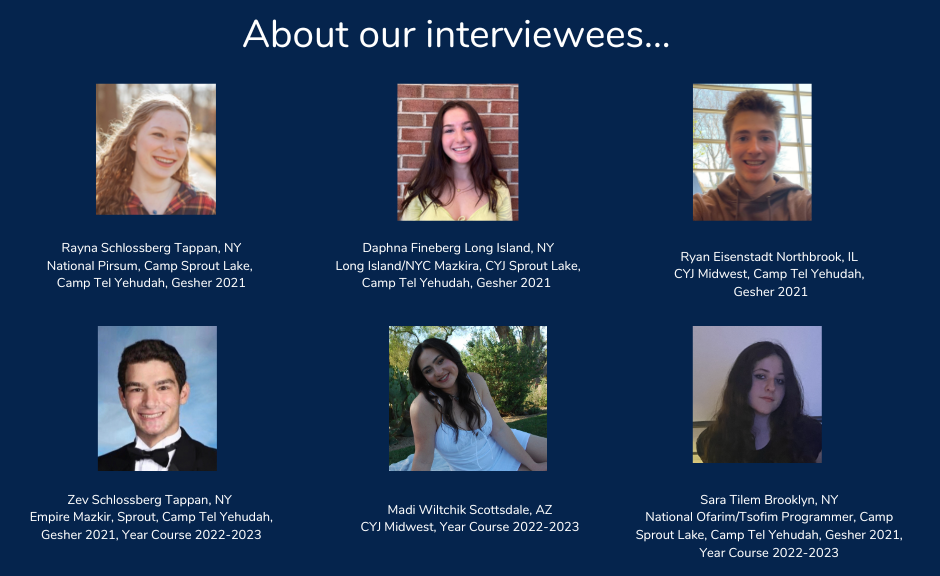
This year on Yom Ha’aztmaut, Israel is celebrating 74 years of independence! In honor of the day we reached out to six Young Judaeans who have returned from Young Judaea Gesher, or are about to head to Israel for Young Judaea Year Course, to talk Israel and Yom Ha’aztmaut!
Have you been to Israel before? How would you describe your connection to Israel?
RAYNA: Gesher was my first trip to Israel, but it was not my first connection to Israel. I have spent almost a decade strengthening my connection with Israel without once stepping foot on the ground and I think that prior connection is just as important as my first visit this past summer.
DAPHNA: I had been to Israel several times to visit family. My connection to Israel was mostly based on the family and cultural traditions that I had formed through those experiences.
RYAN: I have been to Israel before Gesher. I think my connection to Israel is strong because I’m passionate about being Jewish and am glad to be able to have Israel as a home if I would want.
SARA: I have been to Israel twice before, once with my middle school and once with Young Judaea. I think my connection to Israel has definitely strengthened over the years. Before I ever went to Israel, and even the first time I went, I felt very disconnected to it. In Israel this summer with Young Judaea, I felt that I really got to know the country and got to understand my role in the country.
MADI: I am very fortunate to have had my Bat Mitzvah in Israel in 2016, and I visited previously in 2013. I feel a very strong connection to Israel, and I am so excited to spend my next year there.
ZEV: I went to Israel this past summer and it was so amazing. After that trip, my connection grew stronger and it feels like a place I can call home.
Was there a particular experience on your Gesher trip that was particularly transformative in shaping your feelings about Israel? What was it, please describe in detail.
RAYNA: During our trip we had several guest speakers talk to us about different Israeli policies. These speakers ranged from topics on the Israeli-Palestinian conflict to Ethiopian refugees, but they all had one thing in common that opened my eyes to the people of Israel. While you could see the love for the country in the eyes, they made sure to have us understand that just because you love the country, does not mean you have to love everything the country does. This showed me that while I may not agree with every law or policy in Israel, that does not diminish the love that I have for the country.
DAPHNA: The conversation with a Jew, a Christian, and a Palestinian Arab was particularly transformative because after hearing stories and perspectives of the three individuals, I was able to form a more complete view of the dynamic between the different cultures. We heard about the difficulties of obtaining residency and citizenship for non Jewish individuals, and were able to discuss how the Israeli laws were meant to protect a Jewish state, but still presented enormous difficulties for those who were not Jewish, even if they lived within the region or within a Palestinian territory. Also, I was able to discuss the religious aspects of the issue with the Christian, particularly in response to the Palestinian Arab telling us that he did not believe Israel’s lack of right to exist was based on religious beliefs. In this conversation, the extent to which Hamas and Fatah were at odds was brought up, which was an aspect of the issue that I was aware of but not knowledgeable about.
RYAN: I was able to see in more depth how much Israel needs to protect itself from hurt. The Israeli culture built on hope and gratitude was cool to see because it is different than in America.
Were there any preconceived notions you had about Israel that were changed after your trip?
RAYNA: I never could fully understand the sense of community that Israeli culture values until I visited. The first place we stayed was Kibbutz Keturah and it was there that I got my first taste as to how strong and welcoming the Israeli community is.
DAPHNA: I had no preconceived notions that were changed. However, I was surprised by the extent of the cultural overlap that occurred, especially in the cities.
RYAN: No, I began to see Israel as an even stronger state after leaving.
What is your favorite thing/things about Israel? (this could be anything – place, food, people, culture)
RAYNA: My favorite thing about Israel is the people. Experiencing the way they all interact with one another is incredible. You can feel the community that has been built and makes everyone feel welcome, whether you understand the language or not.
DAPHNA: My favorite thing about Israel was the food. Ice cafe was delicious and I spent way too much money on an ice cafe at every stop. Also, shuk food was delicious and getting to experience the variety of different cultures through the foods at a shuk was filling and fun.
RYAN: I really liked the art and the food. The Art in Tel-Aviv was really interesting and the food everywhere was phenomenal.
SARA: I love the culture in Israel, it is very unique in my eyes. The food, markets, and Judaism draws me closer and amazes me.
MADI: There are so many things I love about Israel, but I especially love how welcoming and hospitable everyone is. Everyone treats each other like family and it is so comforting to be surrounded by warm, caring people.
ZEV: My favorite thing about Israel is the culture. It is very different than what we have here in America and it is so much fun. I also love the food and people in Israel.
Do you have plans to go back to Israel?
RAYNA: I would love to go back to Israel! My brother is going on Year Course next year and I would love to find a way for me to visit him.
DAPHNA: Currently, I do not have plans. However, I have thought about doing Year Course because I would like to experience more of Israel in a cultural sense. My family and I will also be traveling back at some point to visit relatives.
RYAN: I don’t have current plans, but I will end up back in Israel at some point.
What is the importance of celebrating Israel Independence Day in 2022? How is it different from/similar to celebrating July 4th?
RAYNA: Celebrating Yom Ha’atzmaut is more important in 2022 because we need to be reminded how precious and glorious it is that we have a country for the Jewish people. The way that American and Israeli Independence Day is viewed and celebrated are extremely different. The Fourth of July has barbeques and fireworks, but doesn’t really focus on the history of the country, while Yom Ha’atzmaut embraces and honors the history of the country.
DAPHNA: The importance of celebrating Israel Independence Day is to celebrate the fact that we have survived as a nation and as Jews. We are also celebrating the success of Israel’s autonomy as well as its accomplishments culturally, politically, and technologically.
RYAN: Israel’s freedom was fought for, not given, just like America’s. It’s important to recognize Israel Independence Day in 2022 to keep the vivid culture alive.
SARA: The importance of celebrating Israel Independence Day is to show that we did it, all of the hardships we have been through as Jews will not stop us. In addition to this, it is to celebrate unity of Jews around the world coming together to celebrate their own country. This holiday is the same as July 4th is to us Americans, it is to show that we made this country.
MADI: It is so important to celebrate Israel’s Independence because it is still a fairly new country, yet it has provided so much for Jews around the world. Having a homeland is such a special aspect of the Jewish religion, and the country itself is what many Jews feel a connection to.
ZEV: The importance of celebrating Israel Independence Day in 2022 is to show how the conflict won’t break anyone’s connection to our holy land. It is similar to the Fourth of July because we celebrate our day of independence.
How might we meaningfully mark Israel’s Independence Day in North America?
RAYNA: We meaningfully celebrate Yom Ha’atzmaut in America by celebrating it within our own Jewish communities. I’m sure it will look very different than how it does in Israel, but that does not mean it has to be any less memorable.
DAPHNA: We can mark Israel’s Independence Day by having meals that include Israeli food. We can also congregate with other Israelis to remember the community that Israel has formed and has continued to promote within the Jewish people.
RYAN: Cook Israeli food, play Israeli games, sing Israeli songs, and hang out with family while bonding over a shared love for Israel.
SARA: Meaningfully celebrating Israel Independence Day in America means joining together with your fellow American Jews and celebrating in whatever way you see fit.
MADI: One way to meaningfully celebrate Israel’s Independence Day in North America is to embrace Israeli culture through eating Israeli food and listening to Israeli music.
ZEV: We could meaningfully mark Israel’s Independence Day by having celebrations and having parades all throughout the country.
For our pre-Year Course interviewees…
What made you decide to take a gap year in Israel and what are you most looking forward to?
MADI: While attending Camp Young Judaea Midwest, many of my counselors attended Year Course, and they told us how life changing that year was for them. This past summer as a counselor at CYJ Midwest, I decided that I want to take a gap year after talking more with Year Course alumni.
SARA: I have wanted to go on Year Course since I was a young kid at camp getting put to bed with my counselors’ stories of their Israel experiences. I always felt like it was almost my duty to go on this 9-month adventure. I am most looking forward to getting to know the land and learning about the conflicts of the land.
ZEV: I decided to take a gap year because I wanted the experience of exploring and finding who I am and what I want to achieve before I get to college. I am looking forward to creating new friendships and connections during the trip.
What are you hoping to gain from this experience?
MADI: I am hoping to gain a deeper understanding of Israeli culture and embrace how special the country is. I am also excited to live in a different country to learn about myself and become more independent.
SARA: I am hoping to gain an understanding of the conflict happening in Israel. I feel like whenever I hear about the conflict it is very one-sided and I want to understand the side that I do not hear a loud voice from.
ZEV: I’m hoping to gain life experience and new skills to help me in my chosen career.

Midwest Convention 2022
On March 3-6, 50 chanichim attended Midwest Convention at Camp Nageela Midwest!
Read below for a note recapping the weekend from the Midwest Mazkirut‘s Pirsum (Communications Chair), Noa Shimshi
Thank you all for coming to convention this past weekend! The theme for convention was “better together,” showing many instances of when togetherness is important. With many activities planned focused on said theme, chanichim had the chance to expand on personal experiences, while also listening to other peoples thoughts and ideas. Besides activities, everyone had time to spend with their YJ family and focus on building strong, thoughtful relationships with each other. We really cannot thank you enough for coming, and we hope everyone had an amazing time!
Despite making countless amounts of funny jokes and unforgettable memories, one that stuck with me most was the bus ride to convention. My first convention in winter of 2019, on the bus ride to Camp Nageela Midwest, I was a little anxious about meeting so many new people. This year, the bus ride reconnected all of the bonds with my friends that I hadn’t seen since TY or even my last summer at CYJ Midwest! Although being a very small part of convention, the bus ride to Nageela is where I catch up and refocus my camp relationships with everyone.

The 2021-2022 Midwest Mazkirut (teen board) from left to right: Noa Shimshi (pirsum), Akiva Weinkle (OTP), Rafi Nagorsky (SAP), Elan Lerner (AVP logistics), Melanie Silver (advisor), Aliya Dahlin (mazkira), Raizel Landman-Feigelson (BP), Gabe Hirsch (AVP finance)
During convention, the teens participated in asepha (elections)
Congratulations to the newly elected Midwest Mazkirut for the 2022-2023 Year!

The 2022-2023 Midwest Mazkirut from left to right: Elan Lerner (mazkir), Evelyn Aizenstein (pirsum), Jonah Rosenberg (OTP), Noa Shimshi (SAP), Gabe Hirsch (AVP logistics), Rafi Nagorsky (AVP finance), Akiva Weinkle (BP)
If you want to access the pictures from the weekend, check out the Young Judaea Flickr Album for Midwest Convention 2022
To keep up with Midwest Young Judaea, like us on Facebook and follow us on Instagram
Look out for upcoming details regarding Young Judaea’s National Convention on Memorial Day Weekend at Camp Tel Yehudah!
Thank you for an amazing weekend!
Your Midwest Convention Staff,
Emma Stricker, Evan Ressel, Melanie Silver, Miriam Alexander, Tamar Lerner, and Yoni Preuss
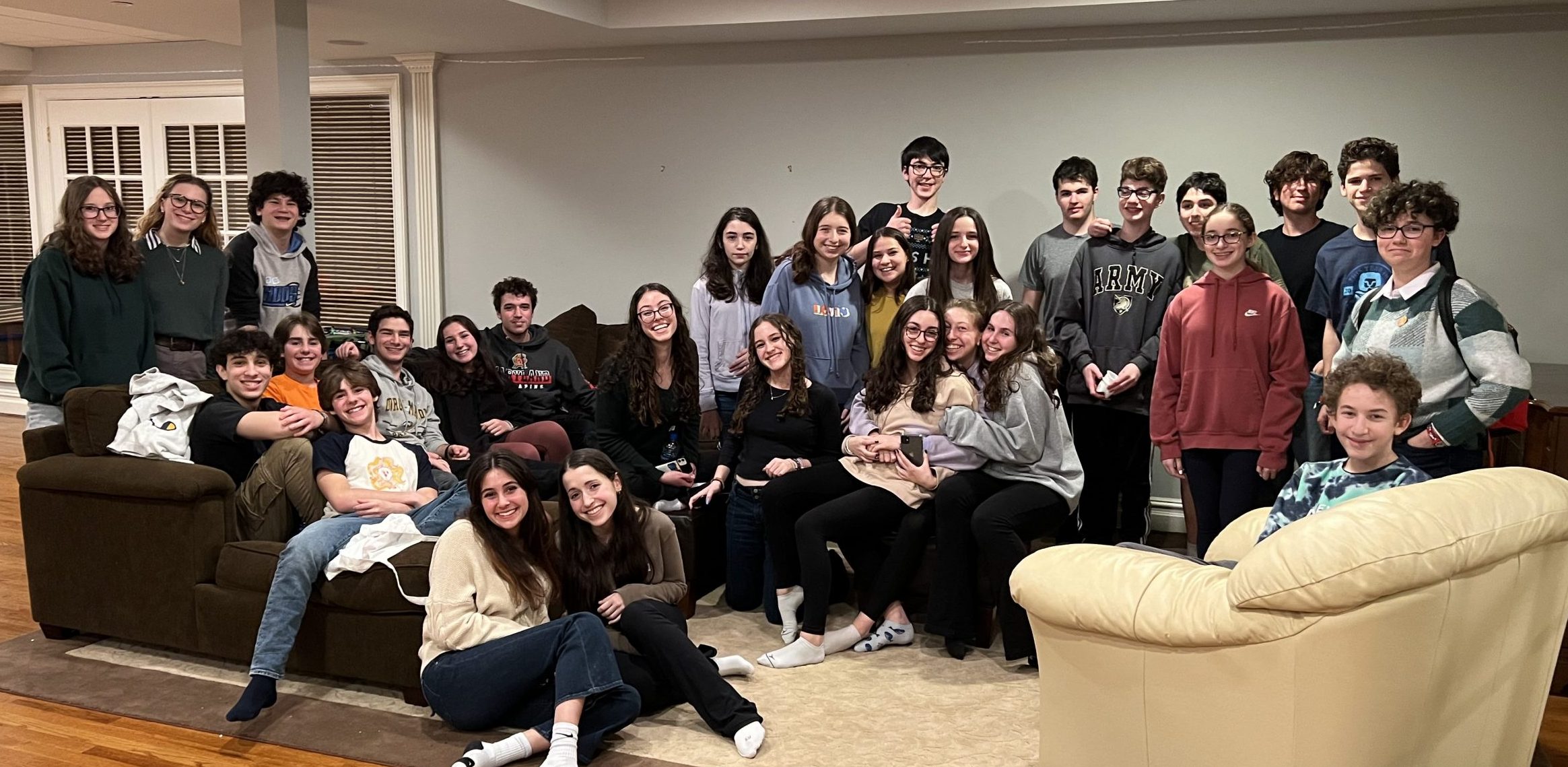
Northeast Day of Service
By Samara Kohn, LINYC Pirsum, 11th grade
 On February 27th, I, along with 25 other young Judaeans attended an event called “Day of Service”. At the event we participated in programs relating to a variety of worldly issues such as mental health, gender inequality, antisemitism, and much more. I participated in the educational station that discussed the effect of fast fashion and the materials and work that goes into making the clothing that we wear. It made me think about the clothing I own and how I don’t always need to follow the trends. Along with that I went thrifting the day before the event and after participating in this program I am sure I will be doing it again.
Half way through the event we switched to a Zoom session with an organization called Dorot. Dorot focuses on assisting elders in isolation. Each group was put into a breakout room with one of the elders and we each got to have meaningful conversations with them. On our call most of the discussion was based on Jewish topics. Our elder told us about his bar mitzvah and the hilarious yet tragic story of the cake falling on the floor. My whole group couldn’t stop laughing, including him. It meant a lot seeing that he still finds joy in something that at the time was very sad but, now he looks back and gets a good laugh out of it. My group was very engaged in the conversation and didn’t want it to end.
Overall, I had a great time at this event! It was also a plus that I got to see all of my friends and share this experience with them.
Next Gen Young Judaeans Unpack Antisemitism
This Thursday, January 27 is International Holocaust Remembrance Day. It has been nearly 80 years since the Holocaust began, and yet we are experiencing historic highs in anti-Semitic attacks throughout America and the world. Given the recent events in Colleyville, Texas, we reached out to four Young Judaea high school and college students to hear their responses to the event, and how they feel about the current state of antisemitism.
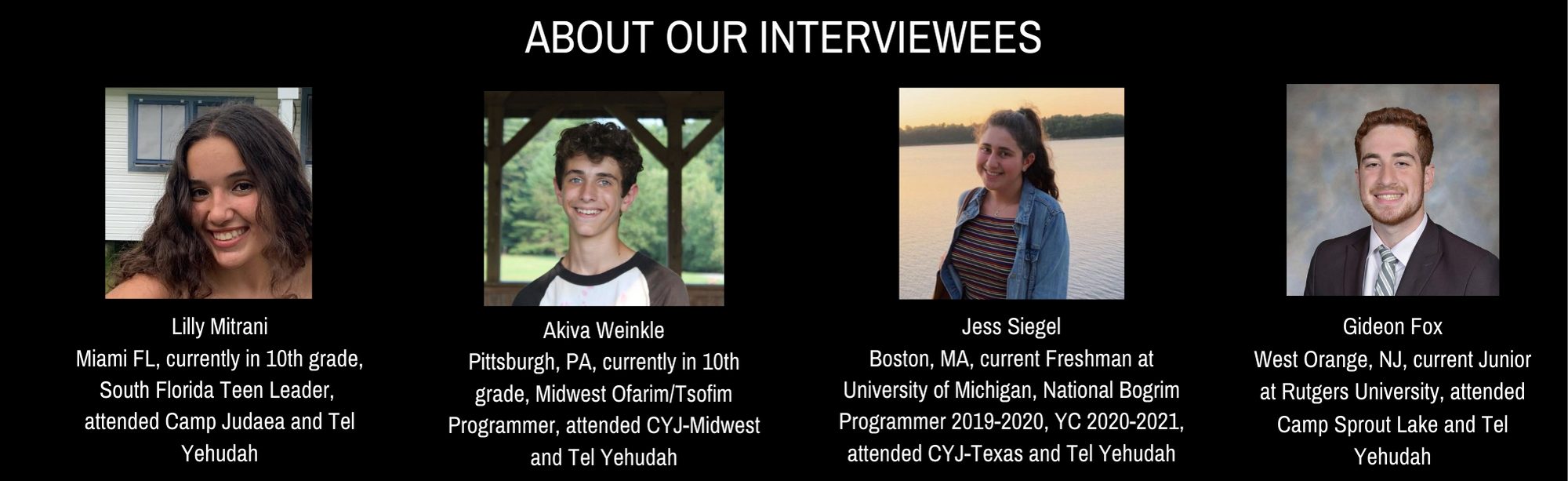
ABOUT OUR INTERVIEWEES

In the recent hostage situation at Colleyville, the FBI claimed the motive of the hostage-taker “was not specifically related to the Jewish community” leading to an uproar in response from Jewish leaders. Do you feel the incident was anti-Semitic?
LILLY: Yes, I feel that this incident was blatantly anti-Semitic. You cannot claim for this attack to have “no connection to the Jewish community” while attacking and holding them hostage in their house of worship.
AKIVA: Yes, and I believe to say this attack was not specifically targeting Jews would be to ignore the context in which this hostage situation took place.
JESS: Yes, absolutely. The hostage situation was at a synagogue during services, so I definitely consider that as a targeted act of antisemitism.
GIDEON: Yes. In an area like Colleyville it is significantly harder to scope out a synagogue, then a church or any other community gathering place. Had the terrorist wanted to carry his attack he could’ve picked anywhere but decided on a synagogue. Additionally, he claimed he was trying to free someone who blamed Israel and the US for many irrational claims.
Some feel that anti-Semitic incidents are often downplayed or misrepresented by the media. Do you agree with this?
LILLY: Yes, I feel like anti-Semitic incidents are often overlooked and not addressed by the media.
AKIVA: Yes, we are seeing it in particular with this situation where media outlets are reporting this as a “hostage” situation. Suggesting that it is not actually a hostage situation when that is exactly what it is.
JESS: Yes. I think that although it’s important to address all hateful incidents, sometimes anti-Semitic acts take the backseat to other issues or are otherwise misconstrued.
GIDEON: I think it was portrayed accurately and the media did what they could. The issue falls on society who refused to open their eyes towards antisemitism. Additionally, the response by the Jewish community has been weak as some sects refuse to acknowledge the legitimacy of Reform Judaism. It is hard to change people’s minds when we can’t figure out things ourselves
According to a 2018 survey by the Conference on Jewish Material Claims Against Germany (the Claims Conference), young Americans are displaying an alarming lack of knowledge about the Holocaust. Nearly 1-in-2 (49%) of millennials asked could not name a single extermination camp. Do you feel there is a lack of knowledge about Holocaust among your generation? Is this cause for concern?
LILLY: I do feel like there is an alarming lack of Holocaust awareness in my generation, and it is a huge cause for concern.
AKIVA: Lack of knowledge on the holocaust is an issue that is not properly addressed. We must make sure that people are well educated and informed so that they may recognize bigotry and inflammatory language in all contexts, as well as being able to spot similar developments in their early stages in the future.
JESS: There is definitely a lack of knowledge about the Holocaust among young Americans, partly due to a lack of proper, comprehensive education across our schools’ curricula. This is especially concerning because it contributes to a society in which antisemitism is normalized and deemed as less harmful or urgent than other forms of hate, as well as erases an incredibly painful piece of history for our people.
GIDEON: Yes. Unfortunately the Holocaust is often viewed as just another unfortunate event that happened during WWII. As the number of living survivors shrinks, uninformed young people will know less and less.
Jews are consistently the most targeted religious community in the U.S. making up 54.9% of all reported religious crimes last year, yet make up only 2% of the population. Why do you think this topic is not more widely discussed amongst social justice activists?
LILLY: I think that because Jews are not a visible minority the hate crimes towards us are mostly overlooked. Whether or not you are targeted doesn’t only rely on your skin color or ethnicity.
AKIVA: Often times the American Jewish community is synonymous with Israel, and it happens to be that many of the activists are staunchly anti-Israel. Therefore leading to a situation where fighting antisemitism in America is seen as supporting Israel.
JESS: Again, antisemitism is normalized and deemed as less harmful or urgent than other forms of hate in our society. That being said, hate is hate. Social justice activists might not consider all religious crimes as equal if they are not educated properly on the history of antisemitism, or if they are desensitized to it themselves. Also, many people simply might not know Jewish people, and are therefore less inclined to care. This does not excuse or justify the issue, but it a potential explanation.
GIDEON: I feel as if the subject of Israel diverts attention. Some may feel as if condemning anti-Semitism puts them on one side of the Israel argument which is not true.
During May 2021’s conflict between Israel and Hamas, the (ADL) tracked a 75% spike in antisemitic incidents in the U.S. Do you feel that hostility towards Israel and hatred of Jews are closely intertwined?
LILLY: Yes, people directly relate the conflicts in Israel to Jews and constantly blame Jews for the actions and decisions of Israeli leaders.
AKIVA: As I mentioned previously it seems that the media and activists alike have linked American Jewry and the actions of the Israeli government. While this is a cause for lack of support for the American Jewish community it is also used as justification for anti-Semitic acts, by saying it is for Palestinian rights.
JESS: Yes. I think a lot of Americans equate being Jewish with being a staunch supporter of Israel and all of its actions, so they channel any hostility towards Israel/its supporters to Jews in general. This is a major problem because not all American Jews share the same opinions on Israel, and it is very possible to support Israel’s right to exist while still being critical of the Israeli government.
GIDEON: Sometimes yes and other times no. When it becomes ok to disparage Israel it becomes ok to hurt Jews. Other times I feel as if people can draw a line.
Do you feel there is a generational difference in how you think about antisemitism and how your parents/grandparents think about it?
LILLY: Yes, the older generations like my parents and grandparents have felt a different type of anti-Semitism then I have. More of the anti-Semitism today comes through more in a form of hatred and hostility towards Israel. Today anti-Semitism is heavily spread through “social activists” and misinformation on social media platforms.
AKIVA: Yes, my view on antisemitism focuses less on stereotypes that were common in spreading anti-Semitic propaganda in the past and more focused on broad statements that have strong underlying anti-Semitic feels to them. Also, to me being critical of the Israeli government is not something that immediately signals antisemitism while to my grandparents it does.
JESS: I feel like there’s a generational difference in how I think about antisemitism versus how older members of my family think about it because they are just closer to the events of the Holocaust and have direct relationships with people who lived during that time. Although it’s still an issue I care deeply about and think about a lot, there’s more of an emotional connection for my grandparents’ generation because they knew more survivors personally.
GIDEON: I think my grandparents felt like it would all go away after we got Israel. Now it’s a different type of hatred.
What do you think your generation can do to help combat the rise in antisemitism?
LILLY: Education, and awareness about the hatred that Jews face on a day-to-day basis.
AKIVA: I feel that one of the strongest ways to combat antisemitism is through building and strengthening your own Jewish identity so that when you face antisemitism it does not takedown your identity as a Jew.
JESS: We need to first educate ourselves, then educate others. Also, I think it’s important to make addressing antisemitism an ongoing conversation. There will always be antisemitism and there will always be work to be done, but that also means we should not shy away from being proud Jews and talking about our identities and histories.
GIDEON: Education. People want to learn about the issues and will be tempted to change their minds if they see the truth.
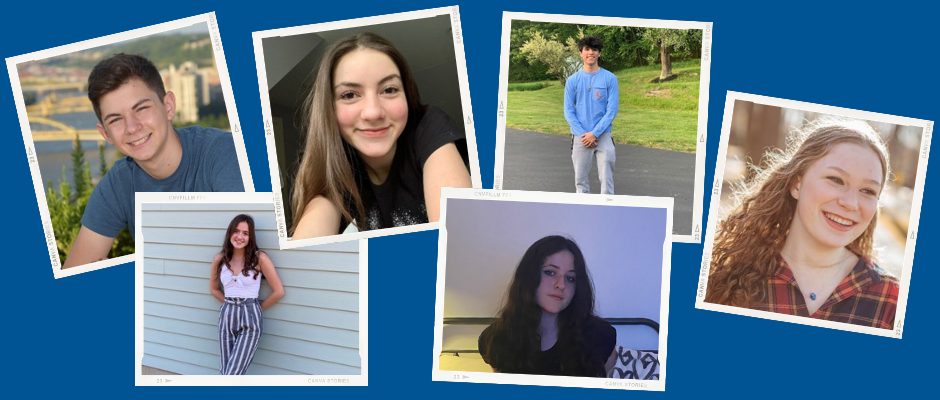
Meet the 2021-2022 National Mazkirut!
We are proud to announce the 2021-2022 National Mazkirut (National Teen Leadership Board)!
These teens were elected at this year’s Virtual National Convention April 22nd-25th, 2021. The National Mazkirut is the principal leadership body of Yehudah Hatzair. They will plan and implement exciting programs throughout the year to engage existing Judaean’s and recruit new ones! We can’t wait to see what this group has in store for Year-Round Programming 21-22!
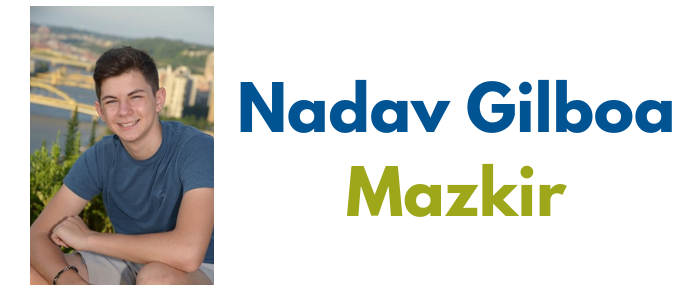
Hi! I’m Nadav Gilboa, and I’m from Pittsburgh, PA. I spent 7 years at CYJ Midwest and one at Camp Tel Yehudah (thanks, pandemic). This summer I’ll be a CIT at Camp Sprout Lake. Last year I was AVP Logistics Midwest YJ and have been involved in year-round YJ for 10 years! I like pretty much any game I can play with my friends, from Ultimate to soccer to basketball, as well as board games, and just chilling out with some Netflix. I ran for National Mazkirut with the goal of reinvigorating our movement after a hard pandemic, as well as redefining the roles of our most senior teen leadership in year-round planning of our events, and I am really looking forward to seeing many of my fellow young Judeans at upcoming conventions. I am excited to help Young Judaea make this next year the absolute best it can be, and I can’t wait to get started!
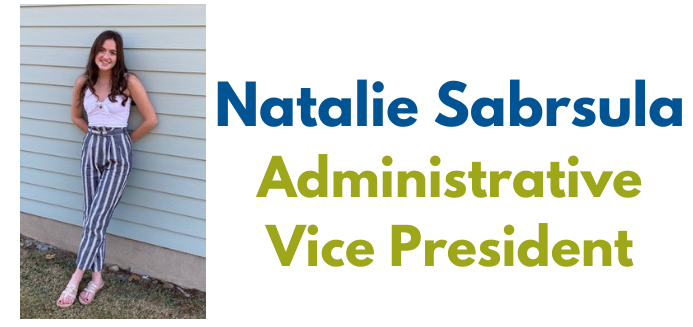
Shalom YJ! My name is Natalie Sabrsula and I’m from LaGrangeville, NY. I love playing tennis, making friendship bracelets, and traveling. I’ve been a part of Young Judaea for about 8 years now, attending Camp Sprout Lake, Camp Tel Yehudah, and participating in Year-Round YJ. I was on the Empire Mazkirut for the last 2 years, first as the Ofarim-Tsofim Programmer, and then as the Administrative Vice President (AVP). Now I’m super excited to be the National AVP this coming year where I am hoping to implement a new outreach program to get new teens involved in YJ! I look forward to working with my fellow National Mazkirut members and the regional Mazkiruyot to continue to connect with other Judaeans through our zoom events, and hopefully in-person events soon too!
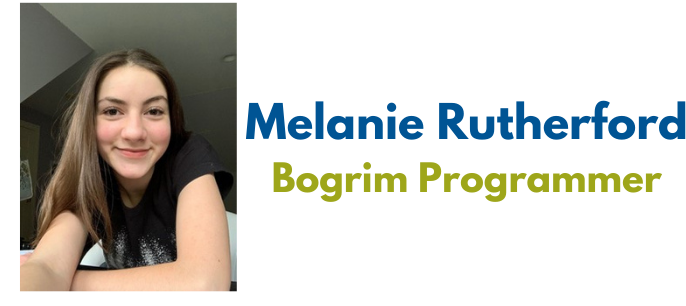
Hi! I’m Melanie Rutherford, the 2021-2022 National Bogrim Programmer! I’ve been going to Young Judaea camps since the summer of 2015 and this summer I’ll be going on the Gesher Complete trip. I have met some of my absolute best friends through Young Judaea, and it’s what got me involved in Mazkirut. I’ve been on maz for the last 2 years, first as Empire’s Social Action Programmer and again as Empire’s Bogrim Programmer. In my spare time I love to dance, listen to music, and do art projects. I’m so excited to bring my past experiences to the national stage and continue planning and running YJ events for everyone to enjoy. I hope to see you all back in person!
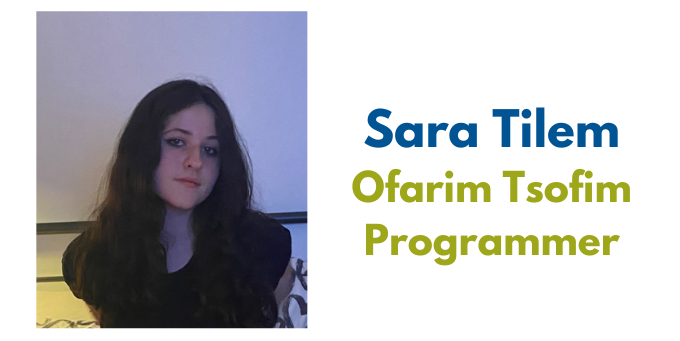
Hello! I’m Sara Tilem and I am a junior from Brooklyn, New York. I have been involved with Young Judaea since I was 11 years old at my first summer at Sprout Lake. I never knew going to a summer camp would change my life the way it has. In my free time, you can find me shopping, babysitting, hanging out with friends, or going to a concert. I am so excited to be the National Ofarim-Tsofim Programmer and inspire kids to be the future leaders of Young Judaea!
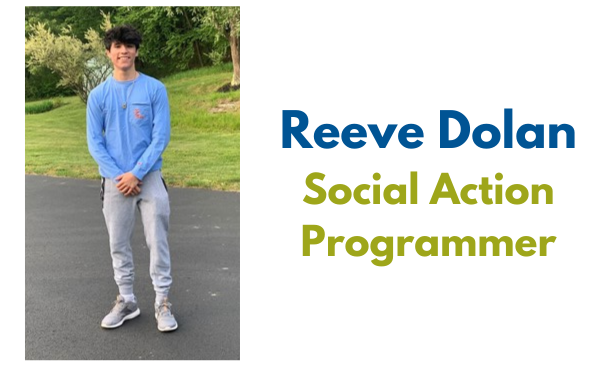
Howdy y’all I’m Reeve Dolan, I’m from Cleburne, Texas and I’m currently a Senior at The Oakridge school in Arlington Texas. YJ has always been an outlet for me to express myself in the Jewish world. Whether it’s discussing pressing issues in today’s world that has to do with my religion, or just being able to meet other Jewish teens who are just like me from around the world. This movement has transformed me into a more confident and proud Jew and it’s equipped me with the knowledge to better my understanding of the Jewish religion and Israel. This is my first time sitting on a National or regional board within Young Judaea, but that does not make me any less eager to be an outstanding Social action program for the National Mazkirut of 2021-2022. Besides being active within YJ I also like to wrestle and watch football, always rooting on the Packers. I can’t wait for YJ to be back in session and hopefully we can all return in person to attend every and all events this upcoming year!
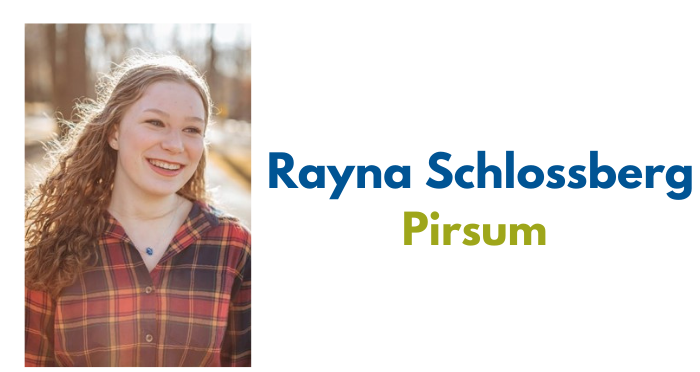
Shalom! I’m Rayna Schlossberg and I am this coming year’s National Pirsum and I am from Rockland County New York. I have spent eight summers with Young Judaea and couldn’t imagine being a part of a closer and more welcoming community. I love drawing flowers and taking hikes in the woods as well as hanging out with my friends. I am thrilled to aid in the transition from zoom to in-person events this coming year!