Siyur Series 6: The Church of the Holy Sepulchre

Siyur Series 6: The Church of the Holy Sepulchre

by Adam Nielander and Wyatt Meckler, Year Course Participants

This week’s siyur to the Church of the Holy Sepulchre on Young Judaea Year Course in Israel highlighted for us an important part of Jerusalem’s history with which we have otherwise little connection. In Christianty it is believed that this church was built upon the place where Jesus was crucified, buried and subsequently ressurected.

Upon entering the church and going up a set of steep steps, we stood in front of a large rock in the shape of a skull, known as golgotha. This area is the most densely-decorated areas of the church, and one that clearly reflects the different sects of Christianity that lay claim to the church and the sacred ground on which it was considered to have been built.  There are those who consider all of Jerusalem to be a tense city, but the truth is that nothing can compare to the atmosphere at this basilica. Administration of the church is divided tenuously among Eastern Orthodox, Greek Orthodox, Armenian, and Roman Catholic control, and there is a feeling of tight control over their areas. Aside from strict schedules for religious services, there is also tight control over who can approach certain areas in the church, and when.

Tomb of Jesus from Above

We saw the Aedicula of the Holy Sepulchre,  which was surrounded by a huge line of people wanting to see Jesus’ tomb. We passed the rock where Jesus was laid upon after being crucified, where now pilgrims kneel down and sometimes pour water, then squeegee it up, and bring it back to their churches. We also went to the many different parts of the Church for different sects of and origins of Christianity, including the the ‘basement’ featuring Queen Helen’s tomb, and the small cave with several 1st century tombs once contolled by the Syrian Orthodox Church, who no longer have a presence in Jerusalem.

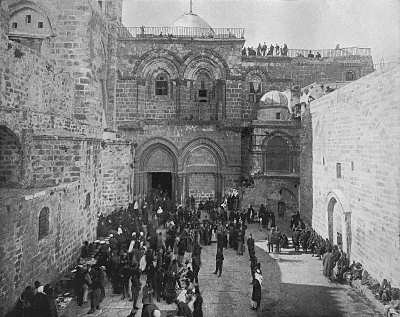
The Church in the Early 1900s

Right after visiting the Church of the Holy Sepulchre, we went to a more modern church closeby. It was very cool seeing the contrast between the very old  and traditional atmosphere at the Church of the Holy Sepulchre, to the newer church where they hold events and concerts, playing off the church’s good acoustics.

Later in the day we had to opportunity to listen to a nun, Sister Rita, talk about Christianity, her personal beliefs, and how she ended up where she is in her life. We were very lucky to have this experience because we were able to learn about the life of a sister who devoted herself to Christianity. She had moved from Canada to Jerusalem, and though religiously we are different, there was something similar in our stories of traveling from North America to Israel.

It’s fascinating to know that the roots of Christianity came from Judaism. At  the end of the day, we were very happy to get to experience Christianity in a new way we had never seen.


Siyur Series 5: The Jerusalem Corridor

Siyur Series 5: The Jerusalem Corridor

by Eduardo “Lalo” Fainsod, Year Course Participant

The name Shlomo Glenzer stuck with me all throughout our guided hike along Highway 1, the main road between Tel Aviv and Jerusalem.  In 1934, Shlomo made Aliyah from Poland, a decision that likely saved his life from the Nazis, but he fell in battle during the War of Independence in 1948 at just 20 years old.  Ascending our last incline of the day, we stopped just off the road at a kibbutz cemetary dedicated to Israeli soldiers who lost their lives during the War of Independence, many of whom were Survivors who had made Aliyah from Europe after the Holocaust.

It was very moving to see these graves with the names of dozens of young men and women who gave their lives defending the newly established State of Israel. We continued on our path in the beautiful forest of the Judaean Hills – hills that would not have been in Israel were it not for these same soldiers. We joked, sang and played word games during the hike, but I do not think anyone kept their minds off these names that we saw in the cemetary.

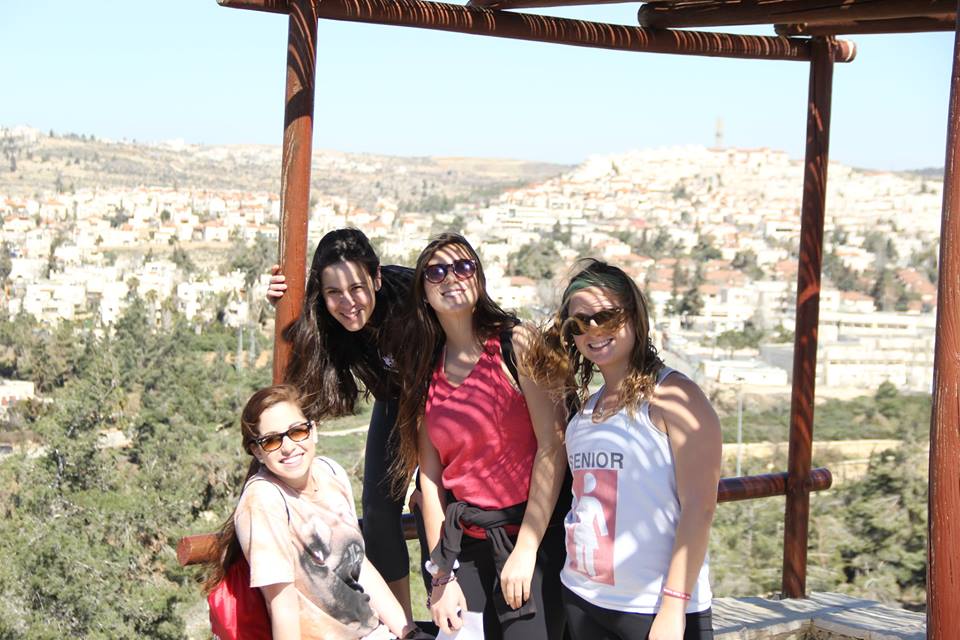
During our hike in the Judean Hills

Earlier in the day, Rabbi Rob explained that this part of the highway was strategically important for Israel because it was the only way to bring supplies to Jerusalem, which was under siege.  The IDF sent convoys of trucks with supplies to Jerusalem along this route, which winds up a valley towards Jerusalem.  However, the road was impassable as it was routinely strafed by Arab forces in the villages surrounding the road, who opened fire on the Jewish convoys and killed many brave drivers and guards. Once more I thought of Shlomo Genzler.

We visited a battle site along the highway called Castel.  In April of 1948 the Palmach’s Harel Brigade, led by Yitzhak Rabin, attacked Castel hoping to open the road and reduce the danger to Jewish convoys.

It was impressive to walk through the Arab trenches that Yitzhak Rabin and the Harel brigade overtook during the battle.  We had a beautiful 360-degree view of the highway and surrounding trees and hills.  Far off in the East was Jerusalem with its beautiful Chord Bridge plainly visible.  In between was a mix of Arab and Jewish villages, some of which are built over former villages that were destroyed in the war. Now, more than 65 years later, the area looks remarkable; a picturesque location for a family picnic.  It is hard to imagine the Israel that Shlomo Genzler came to, built, fought for, and died for without the light-rail crossing over the bridge, without the Jewish villages, without the construction below expanding Highway 1 from four to six lanes, and without many of the forests planted since.

I have been in Israel many times before, mostly on educational trips.  I have visited most of the tourist sites in the country. I have climbed Masada, floated in the Dead Sea, swam in the Galilee, snorkeled in the Red Sea, and played on the beaches of the Mediterranean.  I have prayed at the Kotel, walked in the Baha’i gardens, and eaten hummus at all of the best places.  However, this was the first siyur that we have done during Year Course that is completely new for me. I enjoyed the educational value of the trip and the beautiful hikes that we did.  A nice view will make anything better.

Still, 20-year-old Shlomo Glenzer, who made aliyah in 1934 from Poland and died in battle in 1948, will not be a name I forget for a long time.

Diary from Rwanda

Diary from Rwanda

The following Journal entries from Sarah Braginsky and Bess Brown should give you an idea of some of the activities that the Year Course participants have been doing in Rwanda in the past week.

From Sarah Braginsky

Day 3:

Today was our first day of service. In the morning we were split into four small groups to work on the farm, in the kitchen, on our bridge project, and in the storage room. On the farm Bess, Yoni and Natalie helped shuck corn alongside other workers who taught them the proper technique. Stephanie, Michelle and I worked in the kitchen cutting up a ton of vegetables.  We even surprised the workers by how fast we worked. I guess working in the kitchen at Camp Tel Yehuda paid off.  Ben, Adam and Anouska worked on our bridge project. We are making a bridge over the water trench so that cars can pass over.  To do this we need to mix a lot of cement, so far today they carried the sand for the cement we’ll be making.  In the meantime Sydney and James counted supplies in the storage room. In the middle of our shifts the kitchen provided us with a fresh fruit salad and samosas as a snack.  It was a nice break.
In the afternoon we spent time at the ASYV science center. The kids’ ranged from finding the voltage of solar panels, to designing their own websites, and thinking of new ways of making energy.  The science center is an amazing place, one that most people probably wouldn’t imagine when they think of education in Rwanda.
Every week the village has a debate. They start by debating within their families and then continue in the larger groups.  Today we were able to sit in on a debate about the effect of Colonialism in Africa.  My host family’s conclusion surprised me a little. While I assumed that they would place some blame on Colonialism for causing poverty in Africa, they felt that they learned useful things from the Colonialists that can help them advance socio-economically.

Day 4:

Today was an unintentional chance for some serious group bonding. We woke up and did our morning service. In the afternoon, it started to pour. There was thunder and lightning and buckets of rain. We participated in after school activities in the arts center while we waited for the rain to stop, but when the rain stopped, the power went out. It was dark out and difficult to see so we used our phones as flashlights to guide us back to the guest house. Being stuck in our lounge with only improvised phone-flashlights provided us an opportunity to get closer to one another. I think that after this experience we will start to form a more close friendship within our group.

From Bess Brown

Day 5:


Today, we went to the Kigali Memorial Museum. The museum talks about how the genocide in Rwanda began, what happened during the genocide and how Rwanda was able to recover from the horrors that their country endured.  This museum is unique because it doesn’t just cover the genocide in Rwanda, but also provides information about the genocides in Cambodia, the Balkans, Armenia, and the Holocaust. It points out all of these awful tragedies that occurred and asks why no one did enough to stop them. The whole museum is a dim lit maze but you exit into multiple gardens all honoring a different group affected in the genocide, like the light at the end of the tunnel.


After the museum we went to an authentic Rwandan restaurant. It was basically an all you can eat buffet with one catch: you can pile your plate with as much food as you want but once you sit down, you can’t go back up again. It was a nice change from the routine of rice, potatoes, and beans for lunch and dinner. Once we had eaten all that we could handle, we headed over to the Kigali market.


We had all been to the shuks in Tel Aviv and Jerusalem but we had never seen a market like this. It’s not just in one straight line, but hundreds of different rows and aisles. Picture a Costco with no walls and aisles 10 times as small. On one side of the market you could find food and on the other side you could find clothes, trinkets and fabrics. Everyone there was pushing their goods aggressively – and of course at double the price for tourists. The Israeli in me came out and I started bargaining with every shop owner just as aggressively as they were selling. The group piled back into the bus and excitedly showed each off what we had bought. People came back with a variety of necklaces and bracelets, woven bowls and place mats, fabrics, fruit, and even a giant spoon.

After returning to the village and taking a short rest we gathered together and had a Kabbalat Shabbat service. We then all went to the amphitheater for village time. There’s really nothing in America like it but it’s something similar to a performance and assembly combined. There were about 10 different performances including singing, cartoons, sketches, and rapping. Its HIV awareness week and so all of the performances had something to do with HIV awareness. It was all done in KinyeRwanda, Rwanda’s official local language.  Luckily the girl next to me helped translate what was going on. The final performance was the Dream Boys, a popular group in Rwanda. Look them up on Youtube they’re awesome!


Day 6:

We woke up bright and early at 5 am for the Muchaka Muchaka which is a run (but more like a jog) that the village does every Saturday morning. I was pretty nervous because I was expecting it to be a fast paced run but the jog was slow enough and I was able to fast walk alongside them for part of the run.  We were all pretty tired after the run but right after breakfast we went out of the village to do some community service. I was expecting it to be a short walk but it was about an hour outside of the village by foot.  By the time we got there we were all pretty exhausted but the kids jumped right in and began working. We shoveled away at the hillside in order to make a wider road. After about an hour and a half we were finished but instead of going back we went to what I was told was a meeting with the other group. There was definitely a cultural barrier because the “meeting spot” was in the middle of a village and there was a district meeting taking place. Basically all of the workers of the Rabona area gathered around and discussed what was going on in the village. I had a translator explained what was going on more-or-less. The meeting went on for a while and once it was over we all began the long walk back. We were all tired, burnt and thirsty and it was good to finally get back.

In the afternoon there was a soccer game against a team from outside the village. I don’t understand much soccer but it was really cool to see so many people from the village supporting the ASYV team. Although we lost, the kids were super spirited the whole game.

This evening was the announcing of Miss Rwanda and one of the contestants is a graduate of ASYV! The kids have all been super excited about it; they’re constantly on the computers voting over and over again for her. They’re broadcasting the show in the dining tonight so we will all find out who the winner will be. Keep your fingers crossed for us!

A Woman, and a Judaean, at the Wall

A Woman, and a Judaean, at the Wall

 Women of the Wall is a Jewish organization seeking gender equality at the Western Wall that leads monthly Rosh Hodesh services for the new Jewish month in which women read from the Torah and lead prayers at the Western Wall.  The group is currently nearing a compromise deal with the Israeli government that will ensure an egalitarian space in the plaza at the Kotel.  Because of her involvement in the issue last year, we asked Year Course 2012-2013 alumna Frances Lasday to write some reflections on her experience engaging in the issues of egalitarian Judaism and pluralism.  We encourage you to write your own comments and thoughts in response as Young Judaea is a movement that encourages dialogue, discussion, and even disagreement.  How do you define pluralism?  What is your ideal solution to this issue?

I grew up in Young Judaea surrounded by different political opinions, ideas about Israel, and religious practices.  Through that lens I learned, along with my peers, to struggle with pluralism.  To me this is what it means to be a part of a diverse Jewish community – fostering and discussing difference, not simply tolerating it silently.  Last year while I participated on Young Judaea Year Course, I began to explore this issue through my interest in Women of the Wall and participated in their Rosh Hodesh services.

To me, Jewish religious pluralism means living in a more tolerant society. If we spend time appreciating and accepting, and legitimizing our differences within our own community, we will not only grow stronger as a group, but we will become more empathetic to others outside of our own communities. A part of being human is being afraid of the unknown, but if we learn to accept differences within ourselves, we are far more likely to accept people who are seemingly more different. Pluralism also means attempting to create compromise, and forces us to encounter things that make us uncomfortable.

I think that it is a common misconception that pluralism is the attempt to make everybody happy. This is simply not possible, we are too varied and too many, and as the saying goes –  when there are two Jews, there are three opinions. However, it is through the struggle and the attempt to reach compromise that we grow as people. After all, “Israel” means “to struggle with G-d,” and we, the people of Israel, cannot grow when we are not challenged. I wish mazal tov to the Women of the Wall and the Israeli government for coming close to an agreement, and I hope that over time we will continue to struggle, together, to create a stronger and more empathetic people so we can slowly but surely make the world a better place.

Why I Went to Rwanda

Why I Went to Rwanda

by Sydney Solomon, Year Course Participant

Today I had the rare opportunity to sleep in. Since most of the children are at religious services until twelve, my day started late and not in the usual busy fashion. I woke up, ate breakfast and attempted to do my laundry. Here in the village laundry is done by hand. So I turned up my music, sat in the sun and proceeded to wash my clothes in a basin filled with water and detergent. I cannot promise that my clothes are really clean, but at least I tried.

Today we did not have a formal schedule, giving me the opportunity to simply sit down and talk with the children. I was having a pleasant conversation with Funny, one of the girls from the village, about fun things such as favorite styles and music. During a pause in our conversation, she asked me a sudden but not unexpected question, “Do you have both parents?”

I have been asked this question several times before in the village and it has always made me feel uncomfortable. While I have the good fortune to answer yes to this question, I know that the majority of the children in the village are not that privileged. When I answer yes to her question, silence follows. I realize then that maybe she is not even asking me a question but instead making a statement. Perhaps hidden behind her question are experiences that I cannot understand.

I later asked Coralie, a friend I made in the village, why I am always asked this difficult and personal question. She responded simply “It is just a topic of conversation.” During my childhood I could safely assume that most of my classmates had parents and asking this question would not bring about a weighty conversation. However, the children in this village have experienced a much different and harsher reality. Most of the children in the village do not have both parents and this question is the beginning of a long and challenging conversation.

I do not know exactly why I decided to hop on a plane and come to Rwanda and volunteer at Agohozo Shalom Youth Village. Perhaps it was a sudden surge of curiosity about a country I had learned about but never seen coupled with an altruistic urge to help people. However, I now have a sharper perspective of why I am here. I am not only here to see Rwanda and help the children, but also to learn and grow from my experiences here and with the children. In these three weeks, I do hope to help the village as much as I can, even if it is in a small However, it is the children that have taught me an important value that sometimes in the ease of my upbringing I forget: Tikkun Olam. Repairing the world should be a value ingrained in our society so that this startling question –  “Do you have both parents?” –  does not become an easy conversation starter.

Siyur Series 4 – The Underground Prisoners’ Museum

Siyur Series 4 – The Underground Prisoners’ Museum

by Brittany Herzenberg, Year Course Participant

Several weeks ago, our Zionism class headed to downtown Jerusalem for a tour of the Underground Prisoners Museum.

The building, which originally served as a women’s dormitory in the famous Russian Compound, was converted into a prison during the British Mandate. The British initially imprisoned both Jews and Arabs together, but separated them once conflict arose. During the War of Independence, the Haganah, the Irgun, and Lechi, the three main underground Jewish paramilitary groups, captured the Russian Compound. The building itself served multiple uses over the years, and in 1991 the prison was converted into a museum to commemorate prisoners from these underground movements.

museumIn the museum, Rabbi Kahn gave us a tour of the cells, synagogue, courtyards, and kitchen. A part of the tour that stood out to me the most was the Prisoners and Detainees of Bethlehem exhibit, honoring the women who fought in the Haganah and other underground groups. It was amazing to see that the women were just as daring as the men in their acts of rebellion. We watched a video that explained the hardships the women faced in the prison, and through it all, how passionate they remained for the cause. After Israel gained independence from the British, most of the detained women joined Israel’s army and continued fighting for their beliefs.
At the end of our tour we sat down with Zippy, our guest speaker that afternoon. Born and raised in New York, Zippy was also just 18 years old when she came to then-Palestine for the year. The difference between us is that while we arrived in August 2013, Zippy arrived in 1947, just several months before Israel’s fight for independence began. Telling us personal stories of what life was like in the ‘settlement’, or Yishuv as the Jews called Mandatory British Palestine, Zippy described how she was invited to join the Haganah and fought for Israel’s independence. An aspiring journalist, Zippy wrote down all of her experiences, primarily in letters she sent back to her family in the United States. Decades later, she found the letters in her mother’s house and compiled a book, Letters from Jerusalem: 1947-1948. It was amazing to hear a first hand account from someone who came to Israel with similar intentions as us, during an incredible point in history.museum2

Visiting this museum made me truly realize what a remarkable city I’m living in. It’s amazing that such history – that of the British Prison and Zippy’s own experiences – just north of Ben-Yehuda street, a bustling area where now we stop to grab falafel.

Snapshot from Year Course’s First Week in Rwanda

Snapshot from Year Course’s First Week in Rwanda

by Stephanie Blitzer, Year Course Participant


On Sunday, day one of our 3-week journey in Rwanda had finally arrived.  Our group of 11 left our apartments at 8p.m. and got to Ben Gurion airport ready and excited to board the first of two flights to take us to Rwanda. I had been waiting since March 2013 to go to Rwanda, however my dream of volunteering in Africa has been a four-year-old wish, finally coming true on Year Course.

(more…)

Siyur Post #3: Baka to The Old City By Josh Less

Siyur Post #3: Baka to The Old City By Josh Less

On Thursday January 23, 2014, our Zionism class took a siyur (tour) walking from our neighborhood of Baka to the Old City. Along the way we stopped at a number of historic locations to learn about the local history.

Stop 1: Beit Ar El
Our first stop was actually inside Beit Ar El, the Year Course campus. We looked at a sewage system that predates the State of Israel – a time when Baka, which means “The Valley” in Arabic, was primarily Arab. In the 1930’s and before Beit Ar El was a part of the neighborhood and the buildings that we now use as dorms and classrooms were the homes and businesses of Arabs. Walking out of the campus it was explained that the streets of the neighborhood are named after the 12 tribes of Israel. I found it fascinating that the neighborhood I’m living in has a layout that is the foundation of the jewish people.
Stop 2: First Intifada Memorial

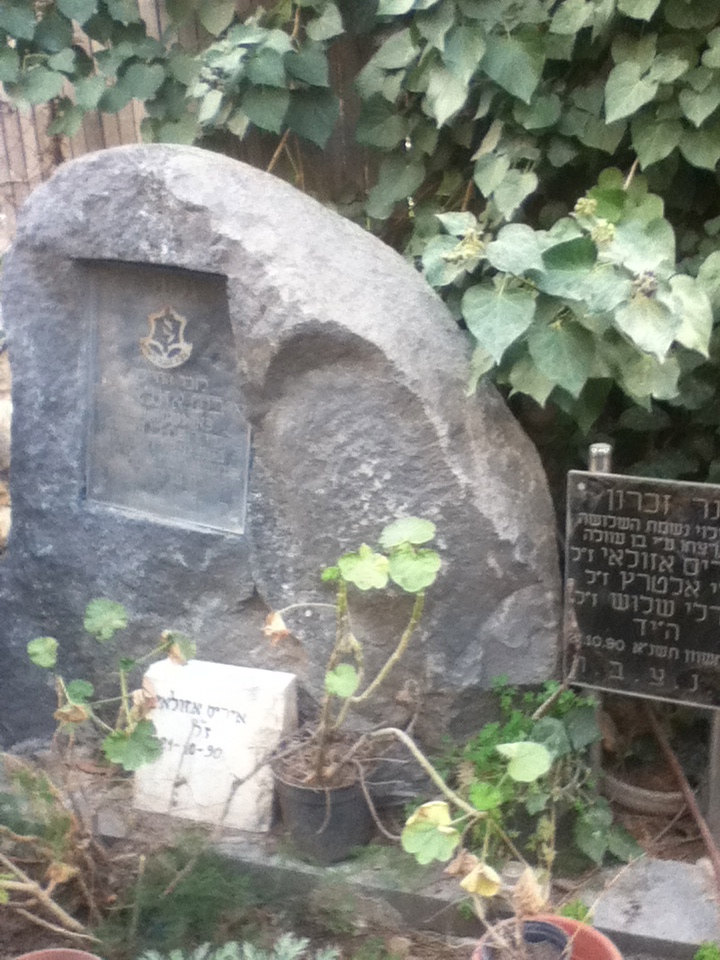
The memorial from an attack during the First Intifada

The next stop was a memorial of a 19 year old Jewish girl who was killed in our neighborhood, by a Palestinian in the First Intifada. When we were there, I felt insecurity knowing that this girl was shot less than 10 minutes from the place that I now call home. Rabbi Rob asked us whether we thought that this 19 year old soldier, who was in uniform, a legitimate target in the eyes of a Palestinian. My natural instinct was that she was absolutely not a legitimate target. However,after some thinking I began to understand the Palestinian perspective as well. Given the unstable circumstances at this time I can see how a Palestinian might have thought of this off duty as a target or threat simply because of her uniform. This isn’t to say that I think the attack was at all justified, but I will say that it was an useful exercise to empathize with an action that I found unfathomable at first, if only for the sake of seeking understanding.


Stop 3: Gan Ha’Paamon and Moshava HaGermanit (picture to be added)

IMG_0546

I continued to think about this conundrum as we exited Baka on a path covering the old Ottoman train tracks that Theodore Herzel rode on his trip to Israel in 1898. Soon we found ourselves at Gan Ha’Paamon (The Bell Park) on the edge of Moshava HaGermanit (The German Colony). The neighborhood, which is now one of the hubs of “Anglo,” or English speaking, life in Jerusalem, is named after a group of German Templars, Christian Zionists, led by Christoff Hoffman, a charismatic pastor, who settled the area in the nineteenth and early twentieth centuries. This group was expelled by the British during World War II because of their suspected German allegiance.

Getting closer to the Old City, we talked about Christian Zionism and its origins. Hoffman’s group were among the first to settle outside of the Old City. The first neighborhoods went up in the 1860s. Beforehand there was a curfew meaning that if you weren’t inside the locked gates on time you would be left in the wilderness for the night. This is hard to believe considering that more than 550,00 of Jerusalem’s 600,000 residents live outside of the Ottoman walls.

Stop 4: Mishkanot Sha’ananim

The first of the neighborhoods in the New City was Mishkenot Shaananim, which roughly translates to “tranquil abodes.” The neighborhood was founded by Moses Montefiore, a Jewish philanthropist from London. The neighborhood was funded by Judah Touro, a Jew from New Orleans, and was meant to help the poor of Jerusal

em. Montefiore was revolutionary. The idea of expanding outside of the old borders of Jerusalem changed the character of the city in a profound way.

Stop 5: Yemin Moshe

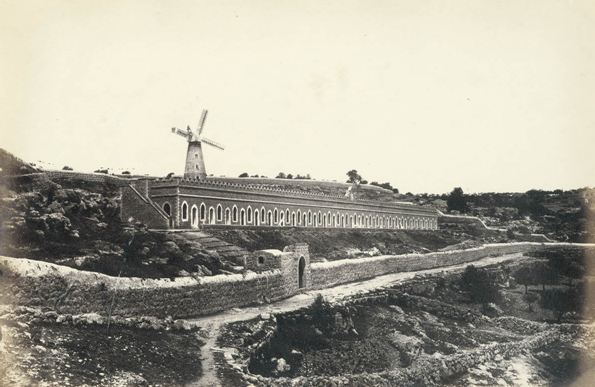
A picture of the Montefiore Mill from the 19th century

Next on our tour we walked around a very beautiful neighborhood called Yemin Moshe, which is named after Montefiore. The neighborhood was initially founded in 1891 as an artist colony using funds from Montefiore’s will. We learned that today most of the neighborhood is owned by wealthy Americans and Europeans live who use the property as vacation homes. The property is expensive and under-utilized which is ironic considering that the iconic Windmill in Yemin Moshe was built to provide poor Jews with cheap flour. I was jealous to know that people own these houses but rarely use them. It was so beautiful.
(picture to be added)

Stop 6: Mamila

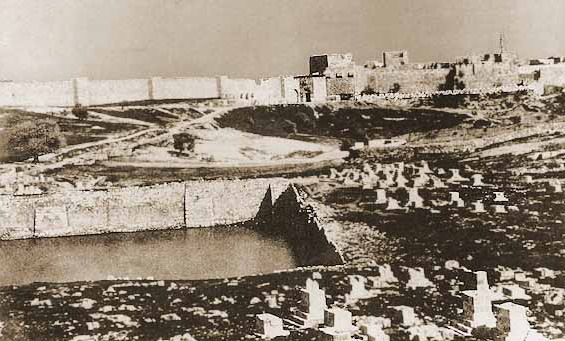
A picture of the Mamilla Pool from the 19th century

The last stop on our tour was a Mamila pool that used to be an ancient Roman reservoir. The area is part of the Mamila neighborhood that was a mixed Jewish Arab neighborhood adjacent to the Old City that got a major facelift when the Mamila Mall, an upscale shopping center, was finished in 2007. Next to the pool was a Muslim cemetery, attesting to the neighborhood’s multi-cultural past. I’m sure to most people it looks like a gross area with ugly water in comparison with the fancy stores nearby, but I thought that it was pretty cool. After seeing the pool we ended our Siyur with delicious tea from a cafe in the neighborhood. Ultimately, in a city like Jerusalem with a long, shared, complex history even walking a couple of miles requires looking at old and complicated questions.

Siyur Series Post #2: Mt. Herzl and the Herzl Museum by Ariel Freed

Siyur Series Post #2: Mt. Herzl and the Herzl Museum by Ariel Freed

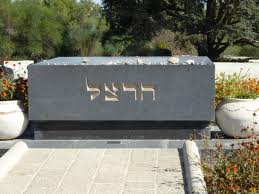
Herzl

In early January our class went on a siyur to Mt. Herzl, Israel’s official state cemetery. I have been to Mt. Herzl many times, both with my family and Young Judaea’s Machon, and had very defined expectations. What I remember from my past experiences is going to see the graves of pioneers, prime ministers and paratroopers. I remember discussing Herzl’s vision of a Jewish State to shelter us from European hatred, and feeling warm and fuzzy about the whole thing. I was quite surprised when Rabbi Rob, our teacher, began discussing Ahad Ha’am, the as-of-yet unfamiliar (to me) stalwart of Cultural Zionism. We talked about modern Israel’s cultural, political, and religious aspects, debating how the current state embodied Herzl’s vision, Ahad Ha’am’s vision, and things that neither had anticipated.

After our discussion, we headed to the Herzl museum, which I found more engaging, although it certainly generated some cognitive dissonance. Looking back on the other times I had been to this museum, I don’t think I ever really paid much attention. However, this time I looked at the exhibits critically and was surprised to find that I already knew much of what I heard and saw. I found myself thinking that the information had been oversimplified and had skipped over important nuances. What I found disappointing is that I couldn’t learn any more from the material. It was too watered down.

Museum

In our discussion afterwards, Rabbi Rob told us that the museum was targeted at Israeli high schoolers that don’t know much about Israel’s history. I found it odd that my classmates and I, who grew up in the diaspora, knew more about the history of Israel than those living here. It saddened me that they needed such a simplified narrative that only scratches the surface to learn about their history, even if the narrative is important. I realized that I need to look to other venues to deepen my knowledge. I guess my Jewish education worked.

Siyur Series Post #1: A Tour Through Jerusalem’s Crypts and Tombs By Evan Dolgow

Siyur Series Post #1: A Tour Through Jerusalem’s Crypts and Tombs By Evan Dolgow

Over the next few months we will be posting occasional blogs written by students in Rabbi Rob Kahn’s classes “City of Faith” and “Ideology.”  In our first installment, Evan Dolgow writes about a class tour to numerous burial sites in Jerusalem that represent the diversity and power of the city.

 What can I say? Starting from the foundation of Jerusalem to exploring Jewish history through archaeology was phenomenal. Our group, led by Rabbi Rob Kahn, began the exploration at a fountain on the edge of Yemin Moshe. Even though I have ignorantly passed that fountain over a dozen times in my life, little did I know the meaning was so significant.

(The fountain at Yemin Moshe.)

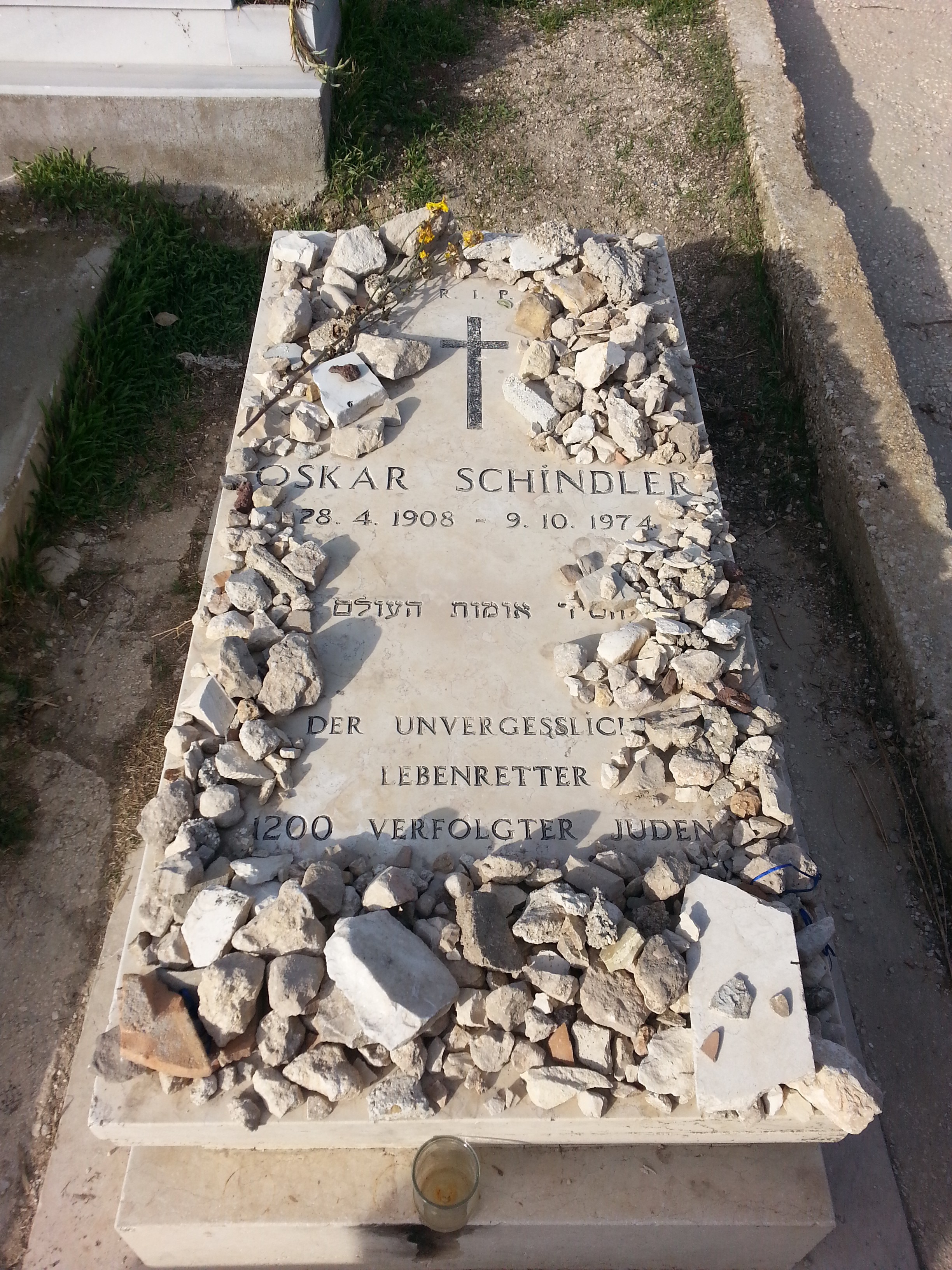
(Oskar Schindlers grave. We all added rocks as respect and spoke about how he became a recognized righteous gentile.)

The fountain structure is composed of three main water spouts. The spouts are stacked three levels high, which slowly point to a dove at the top of the structure. The three spouts represent the three main religions of Jerusalem: Judaism, Islam, and Christianity. The spouts point to a brass dove portraying the coexistence and that efforts towards peace should persist. What a way to start the day! We then made our way to a number of other sites in Jerusalem including a centuries old first-temple burial cave, Oskar Schindler‘s grave, David’s tomb, the room of the last supper, and finally, the Church of the Holy Sepulcher and the Virgin Mary’s burial crypt.

Sounds exhausting but with enough energy we kept on moving! We discussed how the sites represented something bigger than the physical aspects, something bigger than all of us. These sites represent the magnificence of coexisting religions, especially in the holy land of Israel. While we paused for a few moments overlooking a view covering the Jewish section of Jerusalem to the Muslim section of East Jerusalem, I realized something very important; politics play a key role in the land feud to the deep seeded hatred amongst all the religions. Removing the political factor, I saw three peaceful sections living in each others presence. Although not always the friendliest towards one another, this was no pre-1967! I glanced back at history and tried to imagine the battle ground and guaranteed, what I saw yesterday was no battleground! Remember, at the end of the day Israel is only 65 years old. In any book, that’s a country just starting to walk.


Walking through Jerusalem’s streets of history really proves that peace is underway. Whether land is given up or unilateral actions are taken, people are people and everyone is innately attracted to peace. From the old Jewish cemeteries to watching an Ethiopian Christian ceremony in front of Mary’s tomb, I truly believe that peace is possible. After all, Jerusalem is no longer a war zone.

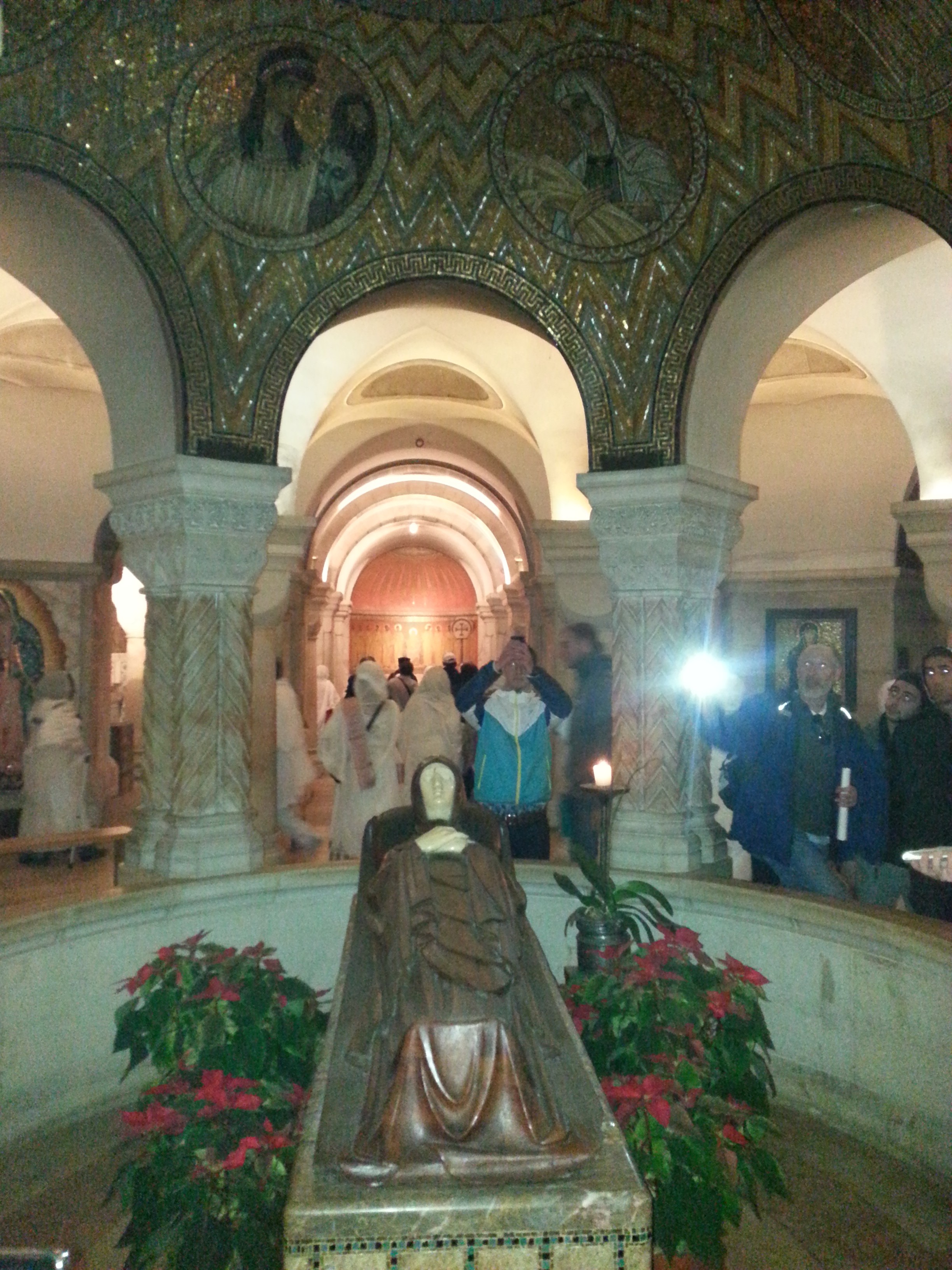
Virgin Mary's Tomb

(Ethiopian ceremony at Virgin Mary’s tomb. They were very nice and loved to talk once a few of us began to speak with them.)