I Came for a Gap Year. I Stayed for a War

I Came for a Gap Year. I Stayed for a War

By Ayelet Medjuck-Bruckner, Year Course 2025-26

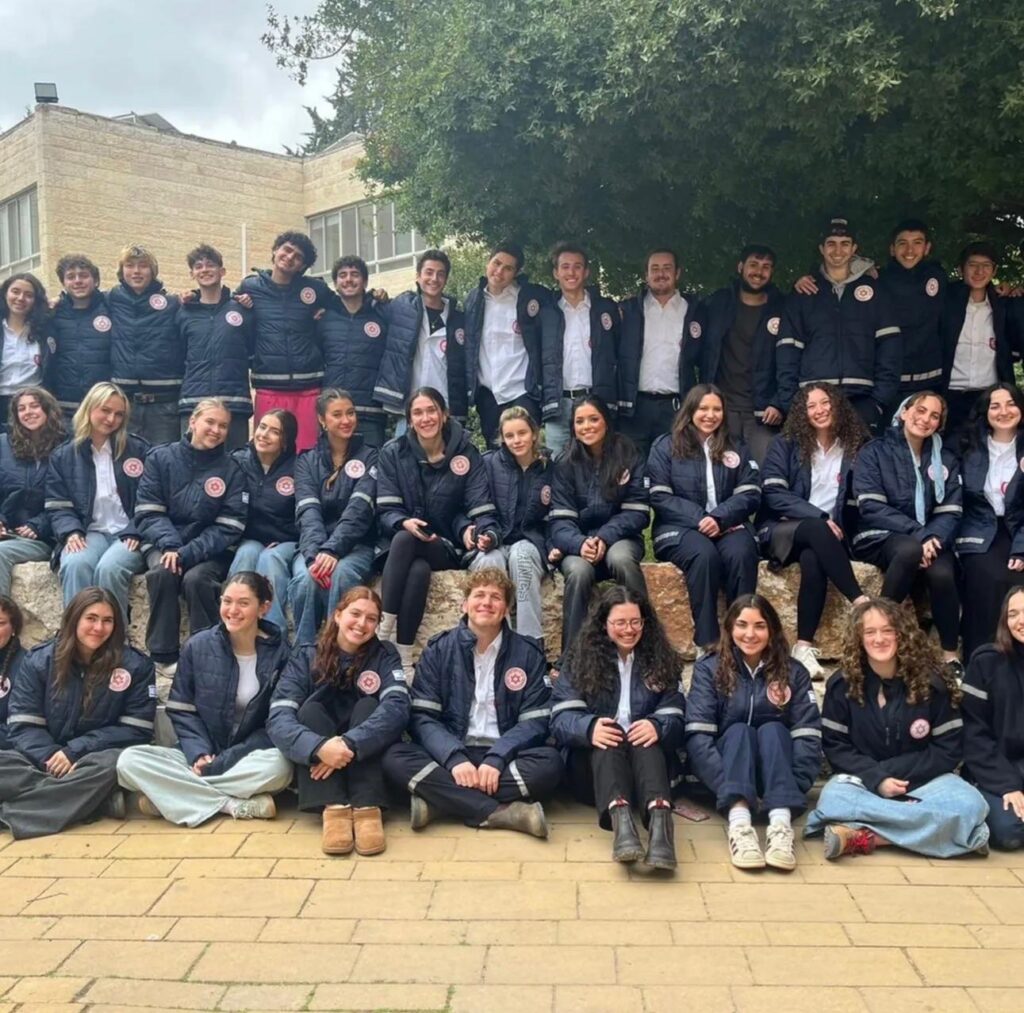
I hadn’t spent most of my time running to bomb shelters until a week ago, but five weeks of war has still changed everything. In February, I was volunteering with Magen David Adom as a certified first responder, riding in the back of ambulances in Tel Aviv, building a routine. When the war started, that stopped. No more shifts. No more normal schedule.

War isn’t just about sirens. It’s about learning how to adjust to a reality that keeps changing.

At the beginning of my gap year in Israel, I remember asking if there was a miklat in the bathroom. I meant miklachat–a shower. Everyone laughed. I didn’t really understand the difference then. Now I do. Now I know exactly where the nearest miklat is wherever I go. 

At around 8:30 in the morning on February 28th, I woke up to the sound of a siren. I had slept through the initial Home Front Command warning. Now our instructions were stark: “Enter the protected space. Time: one and a half minutes.”

“Is this real?” I asked my roommate.

We grabbed whatever we could and ran. Phone, water bottle, book. Our counselor was yelling, “This is serious– go, go!”

We squeezed into the shelter, everyone still in pajamas. I was fully awake. It felt like being slapped in the face and then forced to sprint.

Later, we were told to pack. Twenty minutes. One suitcase. “One week.”

I knew it wouldn’t be one week.

As I rolled my suitcase towards the chartered bus, people were sitting at cafes, walking their dogs, and talking with friends. It felt surreal. Almost like a joke–a group of American teenagers rushing through the streets of Tel Aviv with suitcases, while life around us looked completely normal. At first, I didn’t understand them. But after weeks of war I now see things differently. It’s the resilience that I’ve heard so much about and now I’m seeing it first-hand.

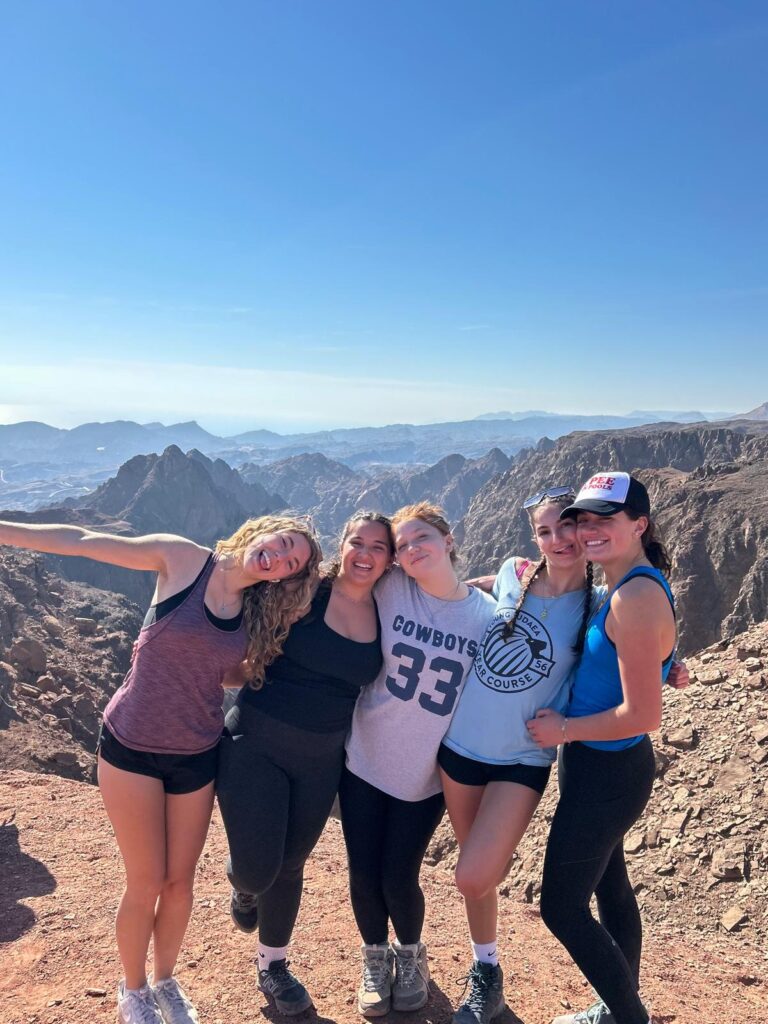
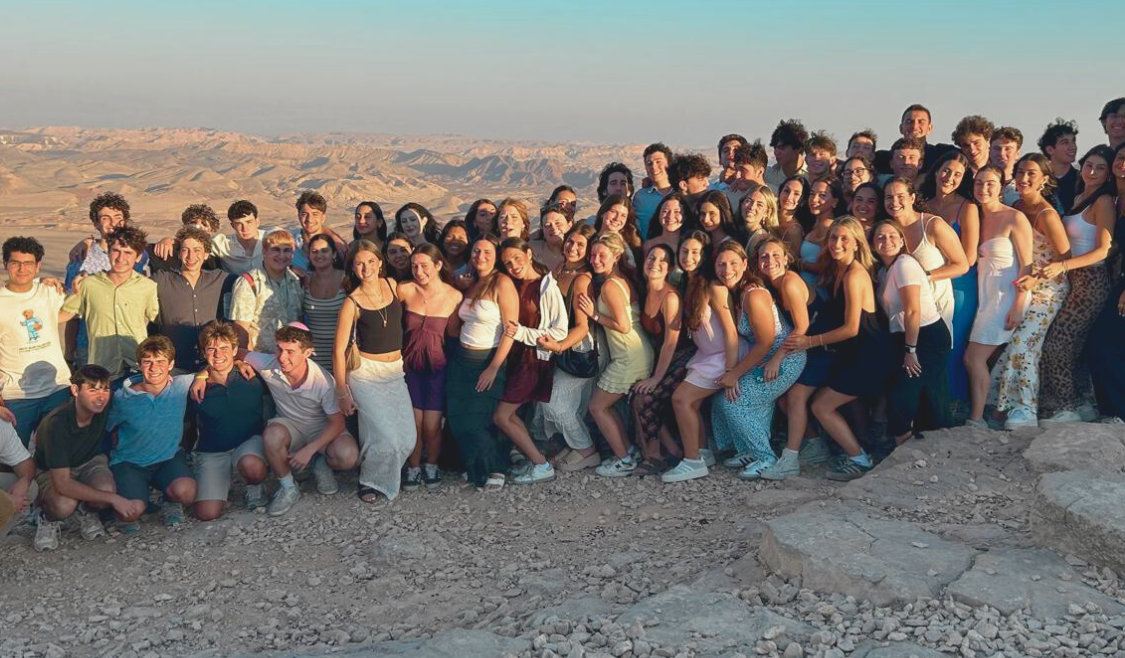
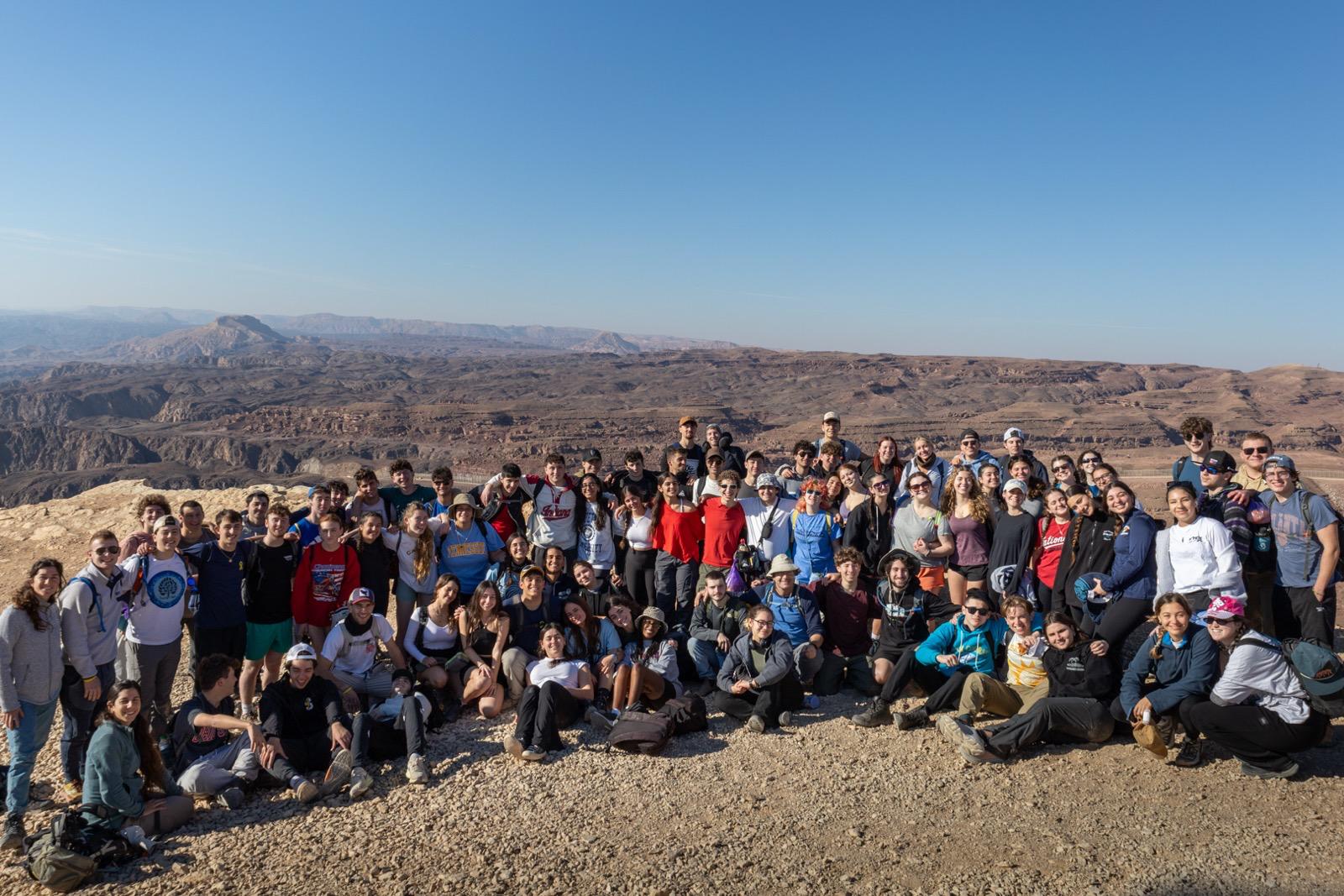
We were evacuated to Kibbutz Ketura near Eilat, a kibbutz that was founded decades ago by passionate members of our very own movement, Young Judaea. Not completely without sirens but far enough from the barrage. Far enough from our dorm near the Kiryah (IDF Headquarters) in Tel Aviv where nearby streets were blown up by a ballistic missile in the earliest days of the war. 

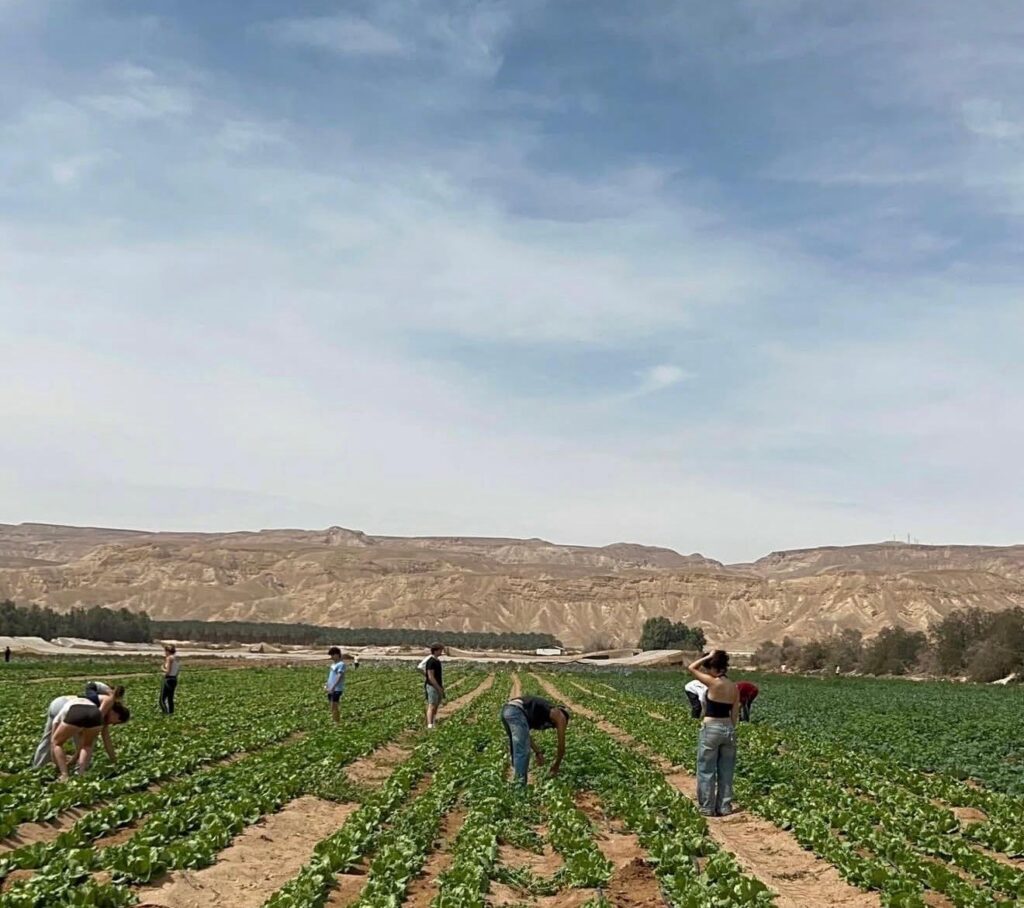
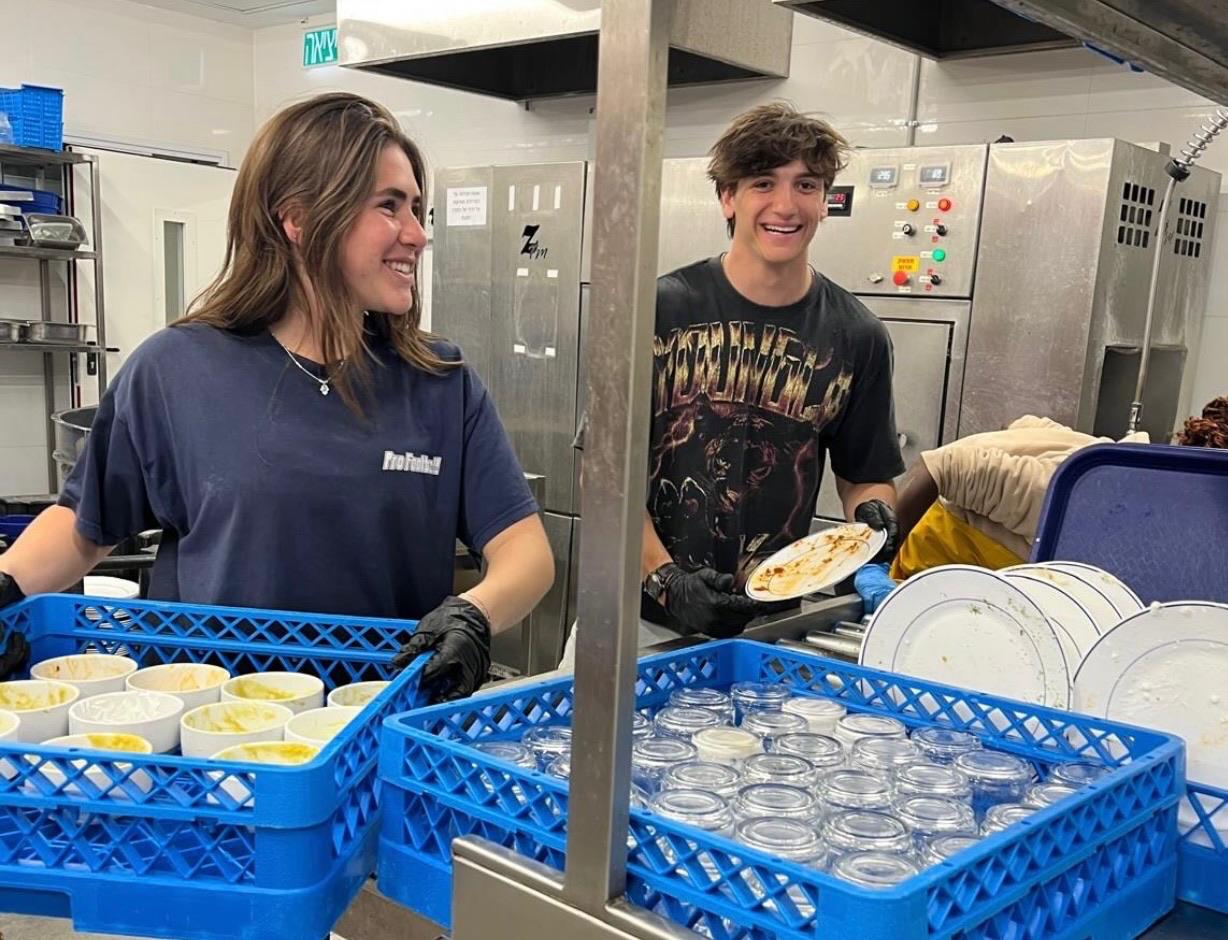
In Ketura we were safe and the people there welcomed us with open arms, plates of cookies, and sweet sticky dates. We unpacked, unsure how long we would stay. Days filled with random activities, meals together, volunteering in the kitchen, engaging with people in the special needs program, and filling sandbags for security. We were trying to create some kind of structure for our time there and also be useful. Life didn’t stop–it just looked different.

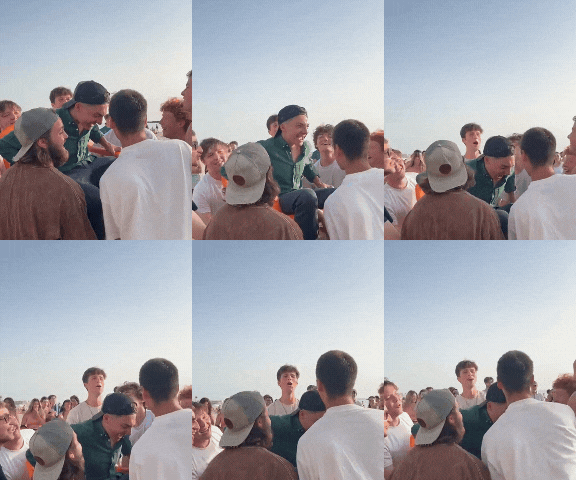
And somehow, a lot of it was funny. Not actually funny. But we laughed. We laughed when a friend ran to the safe room in a towel from the shower. We laughed at how absurd everything felt. Sometimes it was real laughter, and sometimes it felt like the only possible response. Laughter was the perfect release, helping us cope and make things feel normal.

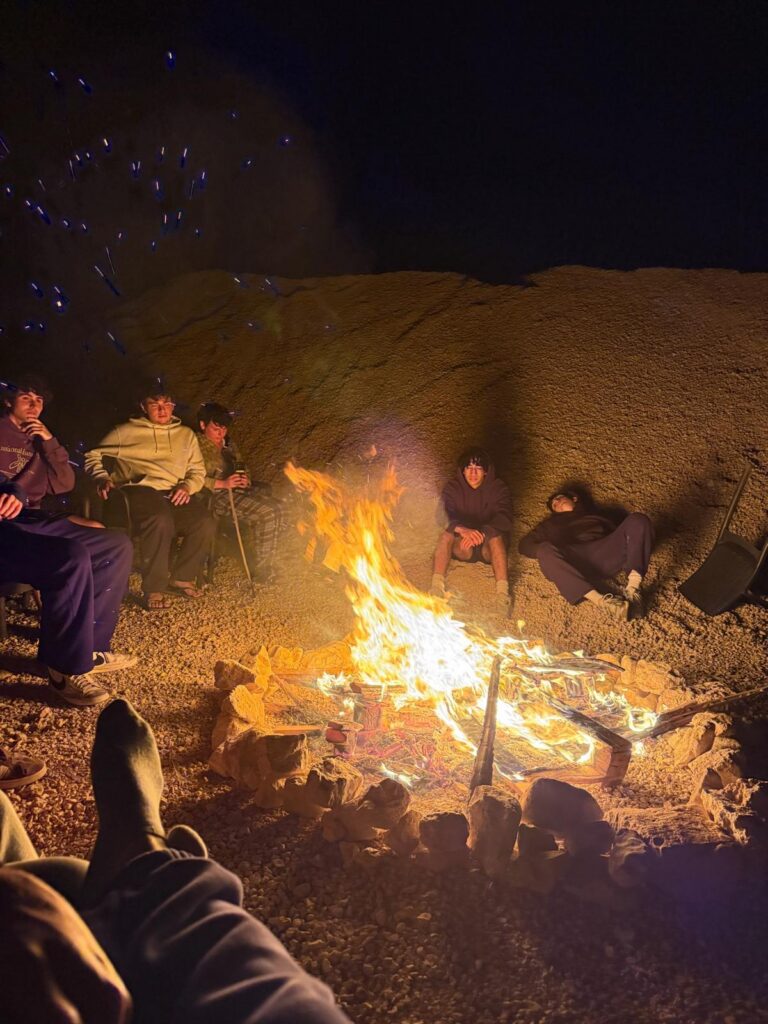
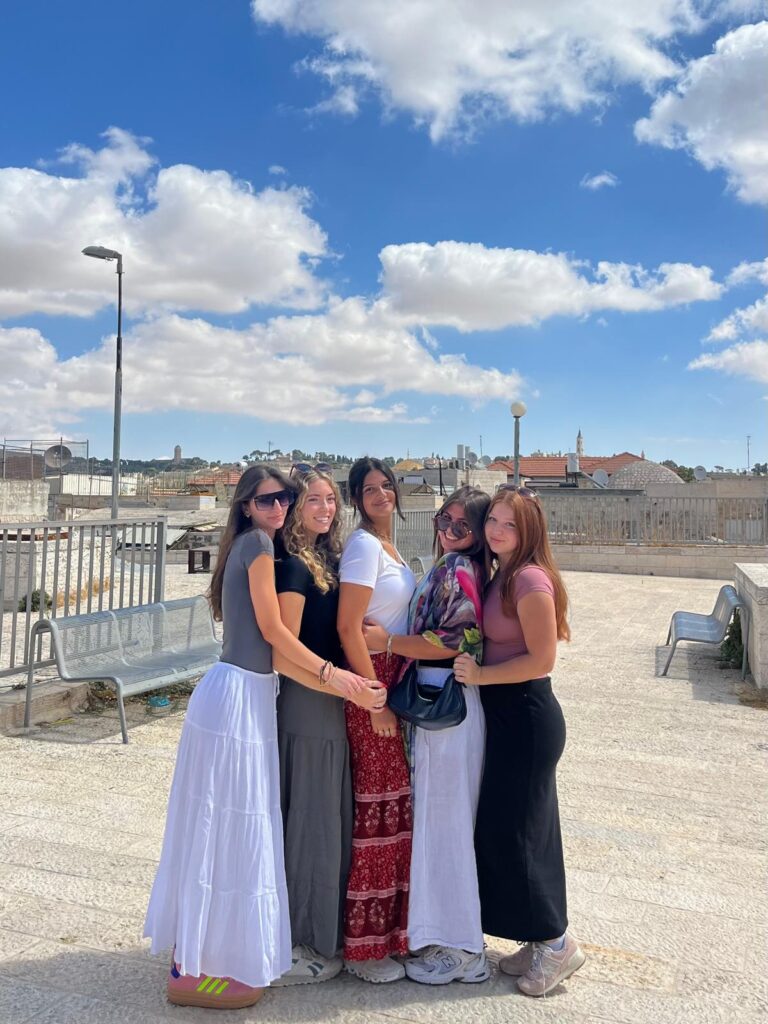
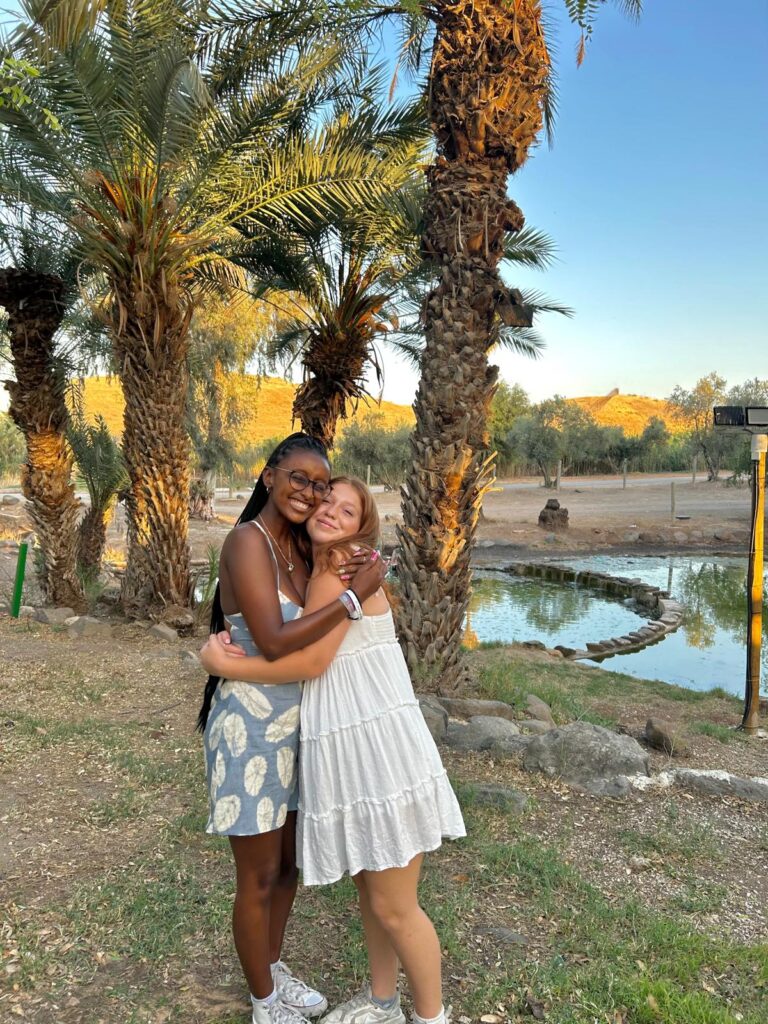
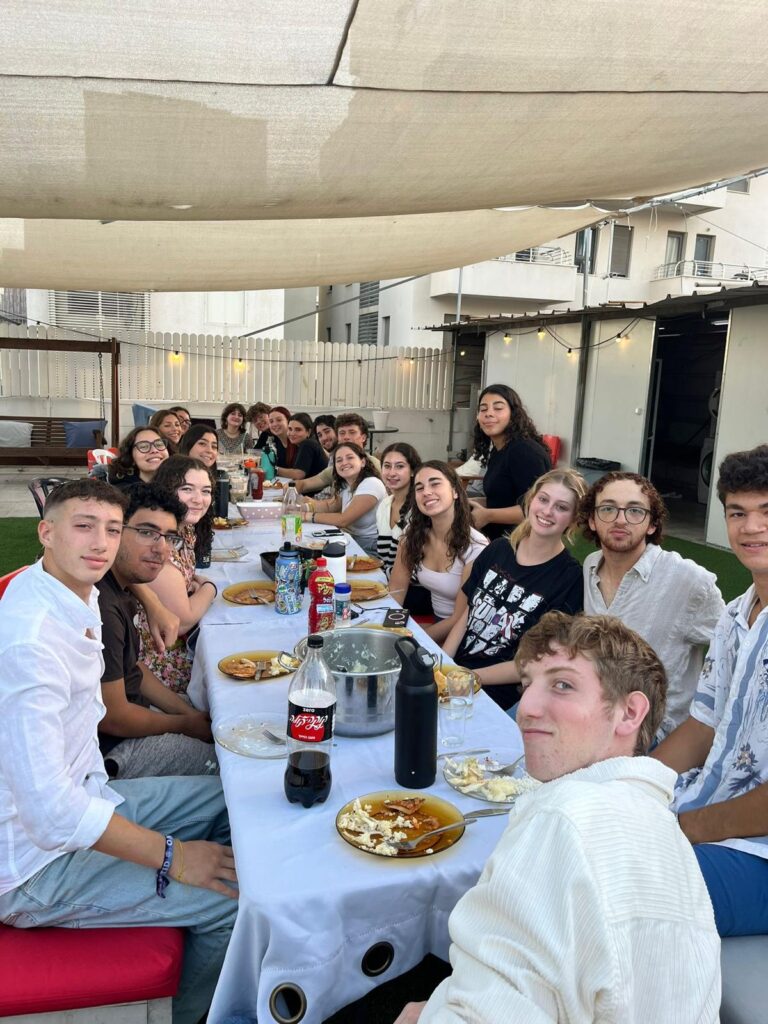
We adapted quickly. Six people in a room because that’s what was available. Sharing clothes, especially for Shabbat. I lent out skirts and dresses to girls who hadn’t packed enough. We sat together when we were sad. We cried together. We hugged each other in silence. We celebrated when our friend committed to her college for next year and for birthdays we bought cakes and balloons from the kibbutz makolet (store). At night, we sat around bonfires, listening to music, talking, laughing. For a few hours, it could feel like nothing else existed. We forced each other to get out of bed, to go on walks, to move, to keep going. It wasn’t just about passing time. It was about taking care of each other.

Through everything, life kept happening in strange ways. I was in the gym in Eilat when a siren went off so I ran into a bomb shelter with a group of sweaty strangers. A few minutes later, I was having a conversation with a random girl who gave me her nail technician’s phone number. 

Life just… continued. 

On the kibbutz, I found meaningful ways to grow. I prayed every day. I led Kabbalat Shabbat for the entire kibbutz community. I leyned Torah for the first time since my Bat Mitzvah. And then I even leyned again the next week. It has felt incredible to step up in these ways and connect with my Judaism more deeply during this time. 

I met people I never would have met otherwise. I practiced fire spinning with someone on the kibbutz who lent me his spinning staff. I spent Shabbat afternoons talking with new people who quickly felt familiar. Several other overseas programs also spent time in Ketura during these weeks, so we all played a lot of Jewish geography and on Purim we came together to read and hear megillah.

In the middle of all of this, my grandfather passed away in New York–and it was impossible for me to fly home for his funeral. I had known this moment was coming, but hearing about it so far from home felt unreal. Everything stopped. My friends sat with me, hugged me, and didn’t try to fix anything. This togetherness got me through.

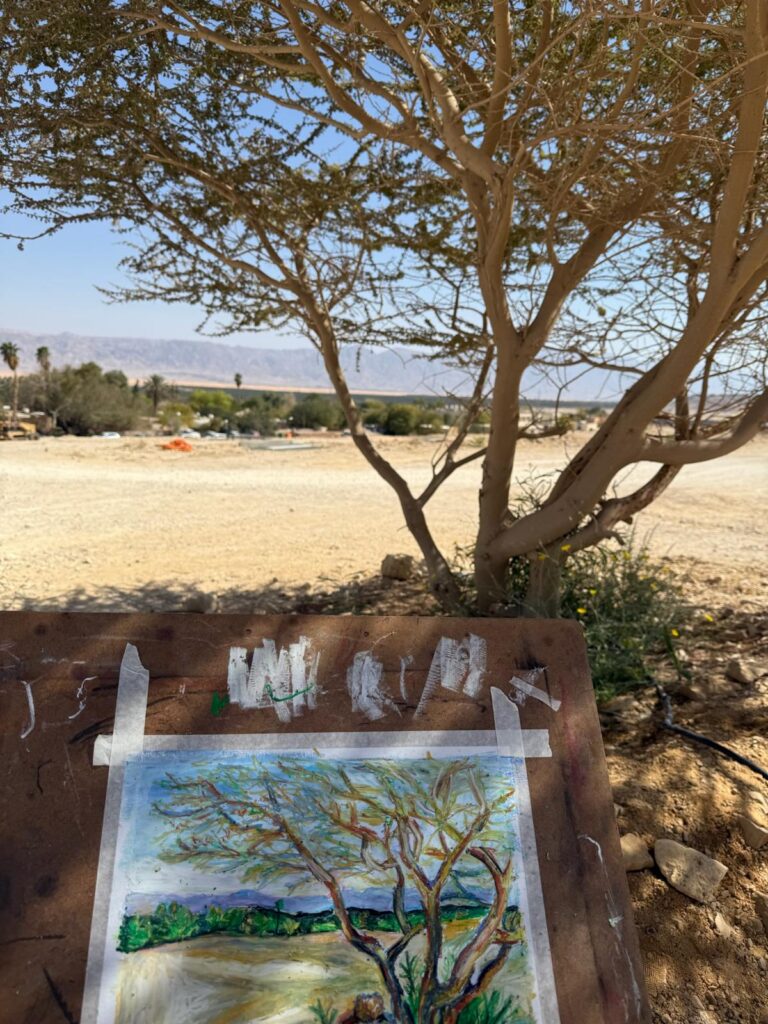
After that first week on the kibbutz, I realized I had to be proactive. It would have been easy to shut down, to feel stuck in the uncertainty of war. But I needed to take care of myself– physically, emotionally, mentally. Art helped with that. I painted for hours, sitting quietly with the mountains and trees. It gave me space to think, to process, to reconnect. I committed to spending more time moving my body and running loops of the perimeter of the kibbutz.

Now I’m thinking a lot about what my next few weeks will look like. We left Ketura and returned to Tel Aviv, despite the ongoing war. Now I am in the cycle of frequent sirens and shelters. Some of us dispersed to family and friends throughout Israel for Pesach, some of my friends figured out ways to go abroad to visit but hope to return to Israel as soon as possible. I almost didn’t get to Jerusalem for Seder when I was delayed by four sirens in two hours and a cancelled train. Throughout the country, Seder night was disrupted by countless sirens. Everyone is navigating uncertainty in real time.

I really hope my Magen David Adom internship starts up again soon. Most of all, I am eternally grateful for the tireless efforts of all Year Course staff. They have worked incredibly hard to keep us feeling safe and engaged with programming, obviously all year long but especially now – even as they juggle the complexities and challenges of war with their own families. All of their backup plans have backup plans, and that has really mattered lately.

This experience is exposing me to a reality I hadn’t fully understood before:

People who can’t just leave.

Families adjusting overnight, night after night.

Showers and sleep frequently interrupted by sirens.

Peers serving in the IDF.

People called up to the reserves. 

Lives put on hold–or completely changed. 

I came to Israel as someone choosing to be here for one year. That choice feels different now.

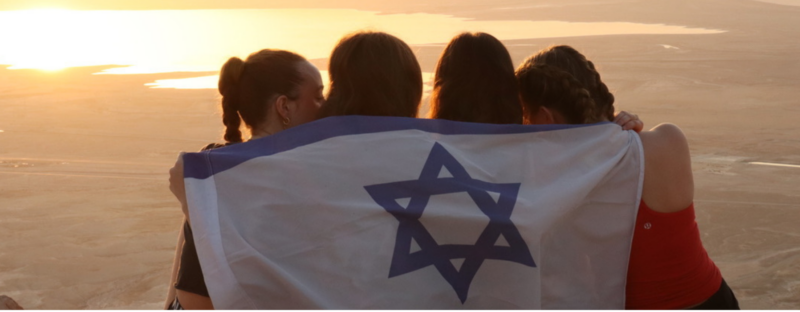
What is staying with me throughout this war isn’t the fear, or even the uncertainty.  It’s the way people show up for each other. 

The way friends become family.

The way strangers become familiar.

The way life continues, even while we are still figuring out how to make it all make sense.

The way public space and personal space are jumbled together. Because in Israel, especially in moments like this, being together isn’t optional.

It’s everything.
Alumni Spotlight: Howie Rodenstein

Alumni Spotlight: Howie Rodenstein

When did Young Judaea first become part of your life?

I joined in high school, and it quickly became the focus of my life. I went to Tel Yehudah, did Year Course, and even volunteered on a moshav during the Yom Kippur War. Those experiences shaped my connection to Israel and Zionism.

How did your involvement continue after Year Course?

In college at Brandeis, I stayed active in YJ—leading clubs in Newton, working at Tel Yehudah (where I met my wife), and helping start a garin to Kibbutz Ketura. YJ gave me real responsibility early on. Everything was peer-led, and we learned by doing.

What inspired you to start the Israel Ride?

Years later, my old YJ friend David Lehrer was leading the Arava Institute. I had gotten into biking and thought—why not create a ride to raise money for the Arava? It felt very YJ to support Israel, peace, and the environment. The first year we had 30 riders; soon it was over 100. In 20 years, the Ride has brought more than 2,000 riders and raised millions. In many ways, organizing it felt just like running a YJ pe’ulah.

How do you see the impact of Young Judaea on your life today?

YJ taught me as much about leadership as anything else I’ve ever done—including school. I learned how to communicate, involve people in discussion, and hold multiple perspectives while working toward a shared purpose. YJ gave me mission and responsibility, and it’s why I’ve devoted so much of my life to nonprofit work, education, and Israel.

Why are you serving on the Young Judaea board today, and as treasurer?

Now more than ever, a Zionist youth movement is essential in America. For YJ to thrive, it needs strong, year-round activity to complete the circle. I joined the board, and took on the role of treasurer, to help make that happen and ensure YJ continues shaping the next generation the way it shaped me.

Howie’s YJ History: Mazkirut New England, Tel Yehudah camper and staff, Year Course 1972-73, YJ Club Madrich, Machon and Chavurat Yisrael, Madrich MA and Merakez

Confidence on Campus: What Year Course Taught Me

Confidence on Campus: What Year Course Taught Me

By Aviva Schonbrun, Year Course 2024-2025

My name is Aviva Schonbrun and I was on Year Course 2024-2025.

Today was my college orientation. I didn’t know anyone and was really nervous about meeting new people. Part of that anxiety came from not knowing what to say if someone asked me about my past year. I was honestly scared to mention Israel to the wrong person.

I made my first friend at the campus Starbucks, and while we chatted, I followed her on Instagram. I then noticed she had just posted a congratulations message for the new mayor of New York City (someone who’s openly anti-Zionist and antisemitic). I immediately got nervous. I obviously didn’t know where she stood on Israel, but I took it as a bad sign.

Eventually, she asked about my gap year, but instead of freezing up, I confidently said Israel. Surprisingly, she said “That’s so cool” We walked to the next meeting together, and I decided to open up to her about my hesitation to share where I had spent the year, and told her I had been relieved by her response.

Then she said, “ Honestly, I don’t really even know much about what’s going on right now, are you able to explain? All I’ve heard is Israel bombs Gaza.”

I know this stuff comes up on college campuses, but I definitely wasn’t expecting to have this conversation within my very first hour there, but after this year, I felt a sense of responsibility to share what I’ve learned.

I tried to explain briefly the history and nuance of the Israeli-Palestinian conflict and then October 7th. She kept asking questions and we talked for another 30 minutes while we waited in line. I did my best to use what I’ve learned this year- listening to her perspective and filling in the gaps with what she didn’t know.

At the end, she thanked me for teaching her and I felt a sense of accomplishment and pride. I’m incredibly grateful to Year Course for giving me the confidence and the educational tools to engage in these tough conversations, and hopefully make a difference. Thank you for everything this past year. I miss it so much!

Learn More About Year Course

YJ Israel Update

YJ Israel Update

Dear Young Judaea Family,

This has been a difficult week as the war between Israel and Iran continues to unfold. We are heartbroken by the loss of life, the daily fear and disruption, and the displacement of so many. Our thoughts are especially with our Young Judaea alumni and staff in Israel—we are praying for your safety and strength.

We are all standing a little taller, prouder, and more resolute because of Israel’s courageous efforts on behalf of the Jewish people and the world. At YJ Camps, the expression of Zionism is palpable as campers sing “Am Yisrael Chai” at the top of their lungs.

At Young Judaea, our first priority is the well-being of our participants. This includes those currently in Israel on our Amirim and Onward Israel programs, and soon, additional cohorts from Onward Israel and Gesher, our teen summer program.

With safety as our top priority, we adapt as necessary to keep participants safe and engaged in a meaningful program. If you are directly responsible for a participant and have questions about how current events may impact your program or camp, please refer to the regular updates from our Israel team for the most accurate information.

In North America, our summer camps are standing together—supporting each other and our Israeli campers and staff, all of whom are deeply affected by the events in Israel. Israelis already at camp are balancing the difficulty of being far from home while still creating joyful and meaningful summers for our campers. For our Israeli campers and staff whose flights have been grounded, we eagerly await your arrival. You long to be at camp, and our camps count on you.

With decades of experience, Young Judaea is no stranger to navigating crisis. With steady leadership, dedicated staff, and a clear purpose, we respond swiftly and as a unified movement in moments like these.

Thank you for being part of our resilient Young Judaea community. We will continue to show up—for Israel, and for one another.

Oseh Shalom Bimromav, Hu Ya’aseh Shalom Aleinu, V’al Kol Yisrael, V’al Kol Yoshvei Tevel

Adina Frydman
CEO Young Judaea Global


YJ Seder Companion

YJ Seder Companion

To supplement your seder this year, our Central Shaliach, Amit Castel has written a special Seder Companion to add more meaning to your table.

Download and Print the Companion

Embracing our differences on Year Course

Embracing our differences on Year Course

By Sidney Parker, Year Course 2024-2025

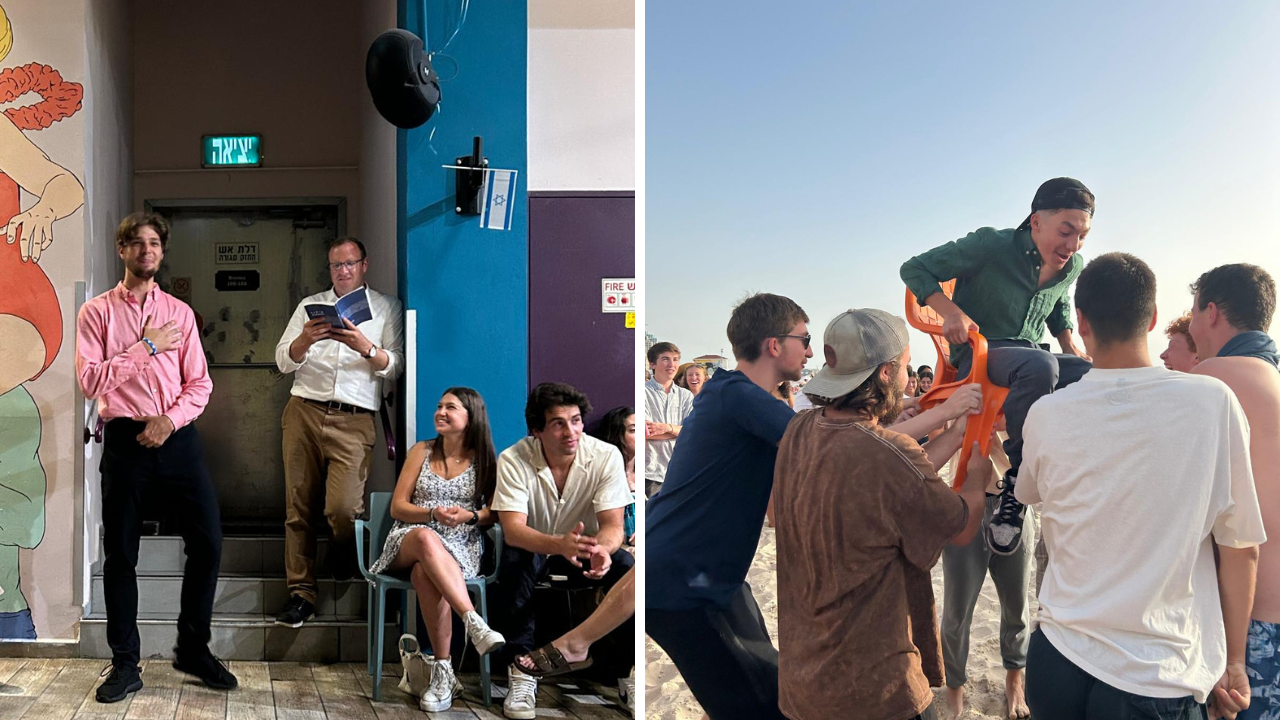
Young Judaea Year Course has given me a chance to engage with all kinds of people and have meaningful discussions in my own time. While we have structured classes and guest speakers meant to spark conversation, I find that the real learning often takes place outside of those defined spaces—whether it’s during our day hikes, at lunch, or in between classes.

Year Course is full of people with different opinions, and we’re all eager to share them. For instance, two of my friends are at opposite ends of the political spectrum—one is extremely left-wing, the other deeply right-wing. Every conversation they have about politics ends in a heated debate, with each throwing sources and ethical arguments at each other. Despite their differences, they are two of the closest people I know. They’ve chosen to room together and spend time together regularly. Even though neither of them has changed their political views, they coexist peacefully.

There’s also a religious divide. Some students go out daily to wrap tefillin, wear prayer shawls, and pray, while others, like me, get excited to grab cheeseburgers with friends who also don’t keep kosher. What’s amazing is that everyone here has sought out Rabbi Adam, our educational director, to learn more about Judaism on their own terms and have open, honest conversations with an expert about Jewish perspectives. Year Course gives me the freedom to grow and learn as a person, knowing that no one will judge me while I explore new ideas and navigate my own beliefs.

Throughout the program, I’ve had the opportunity to engage with people from all walks of life and consider perspectives different from my own—all without fear of offending anyone or ruining relationships. At the end of the day, we all share meals together and sleep under the same roof. No difference in opinion could ever break the bonds we’ve built over the course of this year.

Year Course Through My Eyes: An Israeli Scout’s Journey

Year Course Through My Eyes: An Israeli Scout’s Journey

Shalom ,

I’m Itay, and I wanted to share a bit about my Year Course experience with you.

I’m sure you’ve heard a million things about what goes on during Year Course, but I wanted to give you a fresh perspective—straight from an Israeli Scout (aka the best part of the program).

I’m part of Garin Atid, a group of Tzofim (Israeli Scouts) on Year Course. And if you ask me, we’re definitely one of the best things Year Course has to offer. There are a ton of gap year programs in Israel, but Year Course is one of the only ones where Israelis and participants from abroad actually live together and become best friends for life.

Israelis my age have the option to do a year of service before we draft into the IDF, and every year, the most amazing people (aka me 😎) get to join this program. We spend the year with Americans, Canadians, and Brits, learning from each other and figuring out life together.

The relationship between the Israelis and Americans on the program is a special one because it’s a relationship from which we learn a lot. It has something more to it than a regular friendship.

I get to show my new friends around my home in Israel, correct their Hebrew when they are ordering food, and teach them how to argue with the waiter to get extra tahina for free. In return, they teach me all about life in America. So far, I’ve learned some very important things, like:

✅ What a fraternity is (still a little confused, not gonna lie)                                     
✅ Where I can find the best Pizza when I come visit the States
✅ That Thanksgiving without turkey is basically a crime

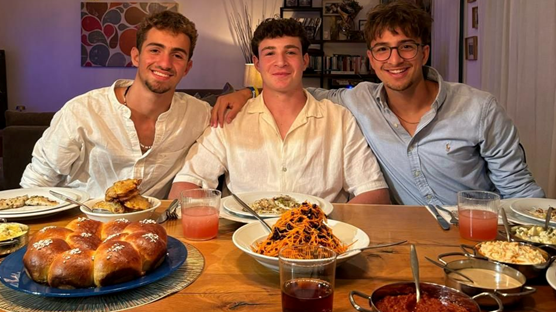
One of my favorite experiences on Year Course so far was when my best friends from the program came to stay with my family for Shabbat. It was so funny watching them enjoy a real Israeli Shabbat dinner. It’s loud, there’s way too much food, and the chaos is all new for them. It meant so much to me that they came to spend time with my family, and now they know they have family in Israel for life.

In my opinion, I think being on the program makes the experience much more authentically Israeli. As they hear the songs we love, visit the places we enjoy, and get to know Israel in an authentic and real way, we get to help our friends live their dream Israeli life.

Year Course has already been one of the best experiences. Meeting my friends for life and seeing Israel through their eyes has been so special. I can’t wait to see what the rest of the year brings!

Shabbat Shalom!
Itay the Israeli Scout

Flatmates again, 53 years later

Flatmates again, 53 years later

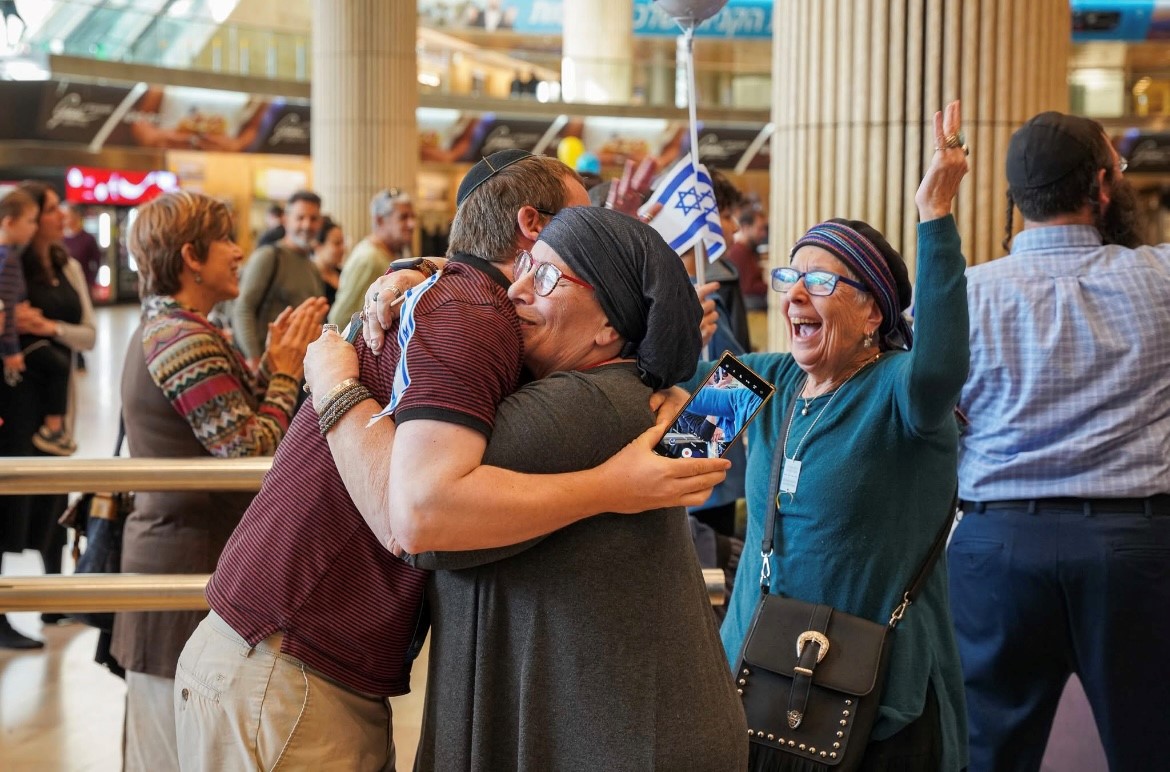
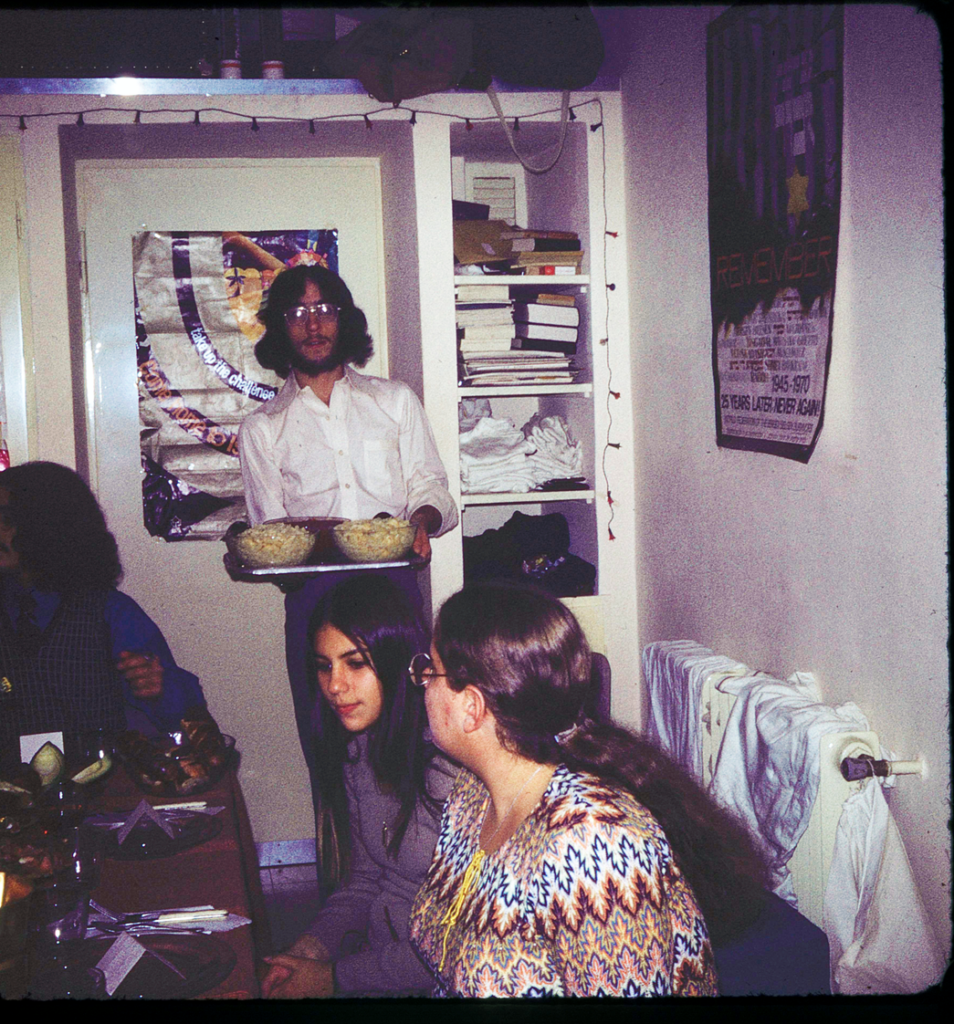
We recently spoke with Cyndi Schoenbrun and Chanale Hidegkuti (Lipsky), lifelong Young Judaeans and alumni of Year Course 1971-1972. Cyndi and Chana are now flatmates in Israel following Cyndi’s recent Aliyah! The two had a lot to say on growing up in the movement, memories of Year Course, recent reunions, and what it means to live in Israel now.

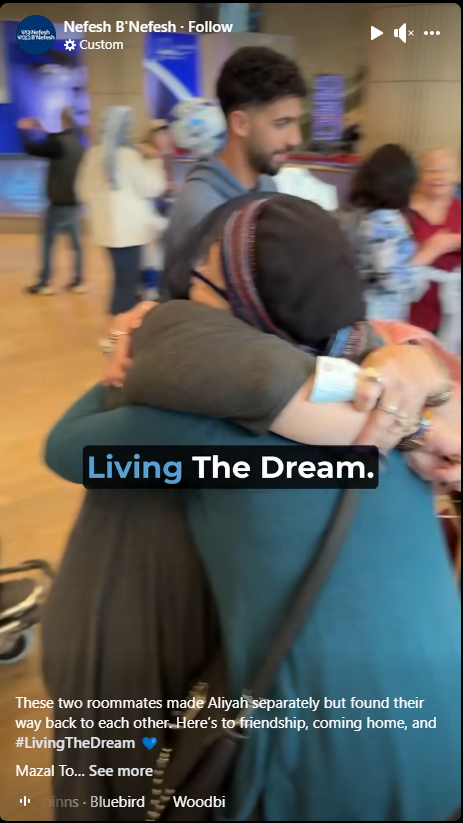
Watch a video of Cyndi and Chana reuniting at the airport when Cyndi made Aliyah!

Tell us a bit about your YJ history.

Cyndi: I was active in my region in Eastern Pennsylvania and Philadelphia as a teen. I went to camp Tel Yehudah only in 10th and 11th grade before going on Year Course. After Year Course I went away to a small town college in the middle of PA with barely any Jews, let alone Young Judaeans, and after I graduated and returned to the Philadelphia area, the first thing I wanted to do was get a job in my profession and get involved with YJ in some capacity. A friend of ours from Year Course was the Senior Advisor and I got a job running a club. Two years later I got married to the EPA Regional Director!

Chana: I’m from Cincinnati, Ohio originally. And I was in the Cincinnati chug. We were so lucky we had HUC there. So we had a continual, contingent of well educated folks. And then I went to Camp Tel Yehudah I went for regular and I went for MA, and then we went on Year Course, which was THE bomb. We loved it! I worked for the movement before and after as a chug leader, and I was on the International Executive Board for programming, I was in Hamagshimim, and I worked at camp.


When did you start having Year Course reunions?

Cyndi: Chana and I were friendly on Year Course, there were 80 of us, but nothing really happened until we had our first reunion outside of Washington D.C.

Chana: I used to fly to California for work, and one time instead of staying in a hotel I stayed with a friend from our Year Course. We decided to try and find every person from our Year Course, and we did. We found all but one. Some are in Israel, some in America, but it was wonderful (that first reunion we had).

Cyndi: That was when people started getting more in touch with each other on a wide ranging basis. and then it came time to begin planning our 50th reunion. And that was when you and I (Cyndi and Chana) started to work together. We planned the reunion along with eight people. It was originally supposed to be in Israel, but because of COVID was on Zoom. We ended up having two reunions that way.

Nefesh B’Nefesh Shared a Video of Chana and Cyndi reuniting at the airport. Click here to watch.

Tell us about Aliyah.

Chana: I made Aliyah in 2019. And, that was, an experience. I learned a lot. And then just about the time that Cyndi was thinking of coming, I was finding an apartment for two. And the intention was, when you come, we’ll be the two. We have a little two bedroom apartment, very cozy, very nice. On a clear day, you can see the Dead Sea and Jordan, we are on the Green Line. Since Cyndi came in and from that point on, it’s been a matter of accommodating to being Israeli.

We’re learning a lot and we’re getting around. We’re being part of the community. Life is good!

Impact of YJ

Chana: We are still in contact with our chevrei and we’re old. Did we mention we’re really old? But, you know, we visit Young Judeans who have been here (in Israel) forever, our madrichim and our chevrei, and our life is involved in part, with people who have been Young Judeans, in other years.

I’ll tell you one cute story. The first week I got here Friday night, we went to a new shul, I asked someone, “שהוא בית הכנסת האמריקאי” And finally I get to this, big shul and there’s stairways up and there was a greeter at the door, and he looks at me and he says, “Hillary Lipsky, Young Judaea Year Course ’71-’72!” I said, how could you possibly know that? He said, “Kobi Ableman, Young Judaea Year Course ‘74-’75 come inside and meet your chevrei!”

So at that moment we were connected with, at least a decade of olim from Young Judaea.

Chana: We are your we are your quintessential Young Judaean chevrei. We have Young Judaeans living all around us (in Israel).

Chana: Let me clarify. Young Judaea was the most consequential, important moment of my entire life.

Cyndi: Me too.

Chana: Mel Reisfield would speak at camp. You know, you would measure your development in the movement by how many times you had heard his sicha. He got up one time in the moadon and he said, “There has not been a time in history where Jewish people could live three generations, in a civilized society. For those of you in the room who are Ashkenazi, do the math. It’s you.”

So when you see that ugly anti-Semitism pop up, do not tarry. It didn’t work so well the last time. Soon as you see it, if you’re not already in Israel, get up and get yourself to Israel. So, for me, it’s like a an electrode in the brain. And then I’m looking around in my world and I saw it, and that electrode came alive. And I reached out to Nefesh B’Nefesh I did everything I needed to do so we could be here.

Both: It’s really okay with us specifically if you find a Young Judaean  and who’s questioning how their life could be in Israel. Please, connect them with us.

What’s a memory that sticks out from your time on Year Course?

Cyndi: We were the last full Year Course before it split up into different sections. We had ulpan each day for about four hours. I still didn’t speak a comprehensible Hebrew but one of the things that amazed me was how I still was able to get around. And it was because of Young Judaea that I felt comfortable being in Israel. I didn’t feel that it was going to take me seven out of the ten months to acclimate to the country. And, I remember getting a really bad sunburn when we were at Caesarea on the beach area.

Chana: In those days, we couldn’t pack suitcases and take them. We were allowed one suitcase so most of our clothing and all came in trunks and on a ship. Trunks, trunks, can you imagine that? It was delayed and two months later it finally arrived. And that night you would thought everybody was going for their senior prom.

We were all dressed and I remember that first Friday night…I always had this background of connecting to Judaism. And they took us that Friday night to the Kotel. Even now, I’m still getting choked up just remembering it. It was like the culmination of everything that we had experienced through Young Judaea, through being in camp, and, I won’t say that was the only big memory, but it was just really incredible.

Chana: You got to know people from everywhere on Year Course. And we all had the same thing at the core. And that’s what made it a cohesive group. You didn’t necessarily hang around with all 73 or 78 other people, but there was a something of a cohesiveness. Young Judaea gave us that reason and purpose and that mission.

Chanale (front of photo) on Year Course 1971-72
Cyndi at Gadna on Year Course 1971-72
James and Andrew’s Jewish Journey

James and Andrew’s Jewish Journey

By Rabbi Adam Drucker, Director of Education for Young Judaea

After deciding to stay in Israel following October 7, James Shmurak and Andrew Leibovitch found their connection to their Jewish identity growing exponentially. Their original purpose for coming to Israel was to take time to discover who they were and to explore their identities. However, lacking a strong connection to a Jewish community in the U.S., neither of them had the opportunity to formally celebrate their Bar Mitzvah or grapple with their Jewish identity.

Both had heard about the highly popular program “Road Trip with the Rabbi” and decided to give it a try. Throughout the trip, they developed a strong bond with our Director of Education, Rabbi Adam. They marked the conclusion of this chapter in their Jewish journey by celebrating their Bnei Mitzvah in Israel. On the final Shabbat of the program, James and Andrew received Aliyot, expressing their joy at learning to recite the necessary prayers, and celebrated this special occasion with their Year Course family.

Learn More about Young Judaea Year Course!

Reflections of my Time in Poland while on Year Course

Reflections of my Time in Poland while on Year Course

By Sigal Waisman Bierman, Year Course 2024-2025

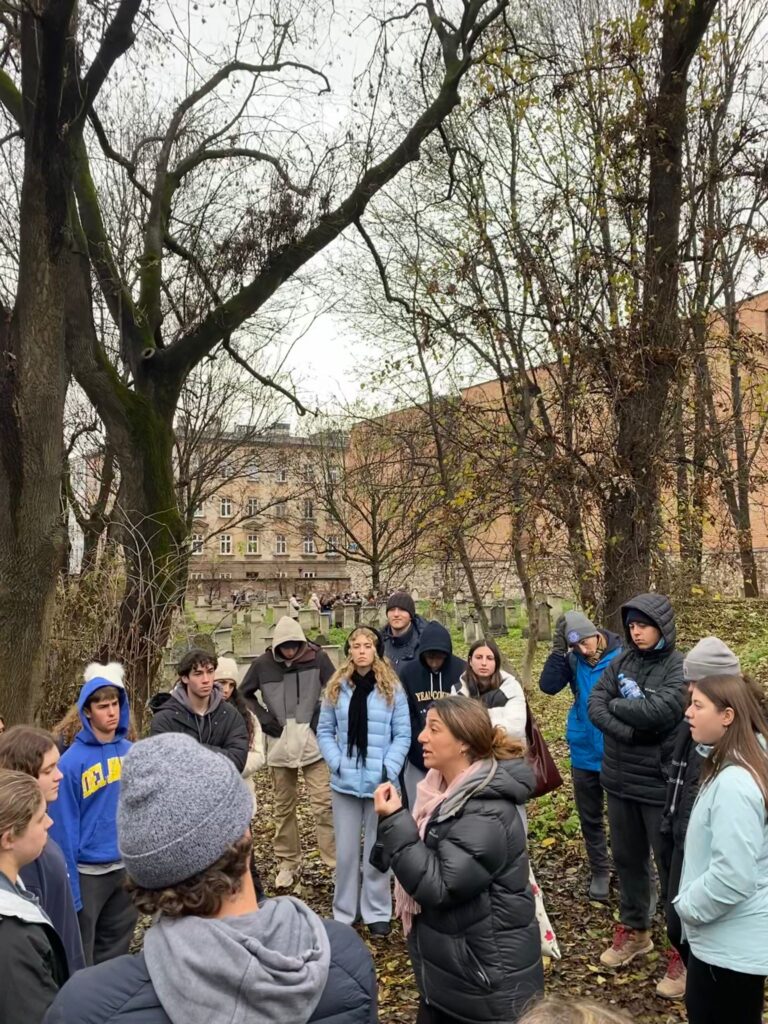
Standing here in Poland, a place where history weighs so heavily in the air, I find myself wrestling with thoughts I didn’t expect. Before this trip, I thought that being here would make it easier to picture what the Jews of Eastern Europe went through. But even walking through the camps, surrounded by evidence of their suffering, I find that it’s still hard—impossible, even—to fully grasp. Without seeing the faces of the victims or hearing every individual story, everything risks becoming generalized.

I wondered, at what point do people become numbers? And is our way of learning about mass casualties—focusing on scale—doing more harm than good?


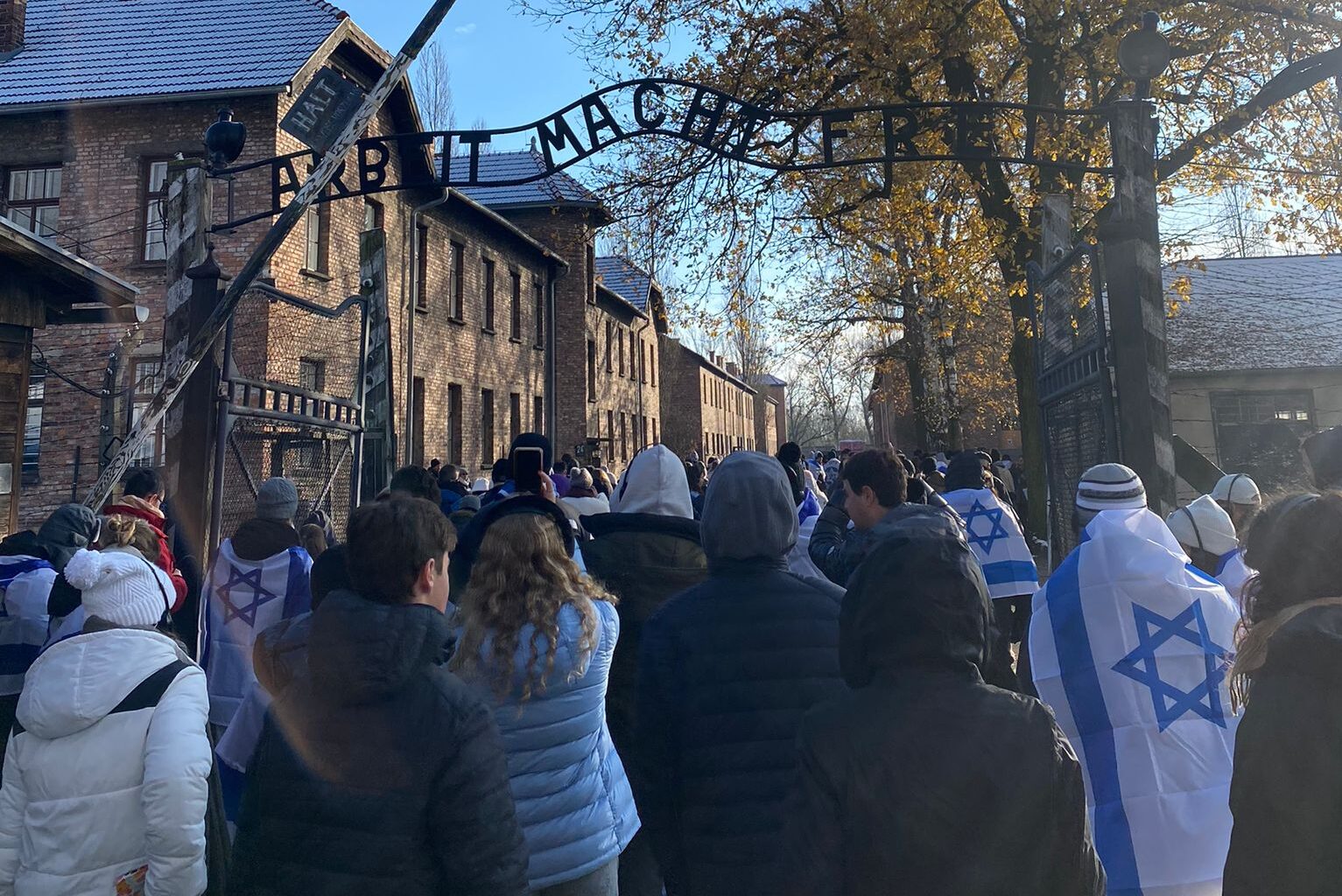
This question followed me to Auschwitz. That day I learned that Auschwitz is a museum, and I know many of my peers felt differently about that. Personally, I had no idea what to expect. At first, I was angry. The thought of it being treated like a museum felt disrespectful, like it was turning unimaginable pain into a display, making the Holocaust a “past” instead of a living, searing memory. Some aspects still frustrate me, like what our guide Miriam pointed out about the entrance tickets—printed with your name and “ticket to Auschwitz.” How could that not feel jarring, when so many Jews had similar tickets, but theirs led to death and suffering instead of an educational tour?


But as I walked through the museum, something shifted. Seeing the photographs, the videos, and the artifacts brought me closer to people’s realities. Sometimes more than other locations where things have been destroyed, becoming empty fields with small plaques. I realized those artifacts weren’t just relics; they were connections to lives stolen too soon. They gave me a glimpse of individuals, not just numbers. Each different shade of hair color. Each individual key to family homes. Each unique shoe encompasses fashion sense. As hard as it was to see, it was also impactful in a way I didn’t expect.


My biggest realization reminded me of something we experienced just a few weeks ago, when we volunteered at the Gaza envelope. That day, we were supposed to help the farmers by cutting weeds and clearing fields after October 7. Instead, most of us ended up back at a small shack, singing, dancing, and laughing together. At the time, I felt guilty, thinking we weren’t doing enough—thinking we should’ve been out there working harder, helping in a more concrete way.

At the end of the day, the farmer came to speak with us. I expected him to be upset, to reprimand us for slacking off. Instead, he thanked us. He said our joy, our laughter, our unity as young Jews thriving and bringing light to a place scarred by horror was more meaningful than any work we could’ve done. It was the light we brought that mattered most.


And isn’t that exactly what we’re doing here? Of course, we’ve come to learn—to witness, to mourn, to try to understand. But above all, the fact that we are here, together, as young Jews thriving in a place that once symbolized unimaginable darkness for our people, is the greatest mission we could have. It’s the ultimate act of defiance against the hate and evil that tried to destroy us.

The true victory of the Jewish people isn’t just survival. It’s our unity, our joy, and our love for life. Being here, walking these grounds, and sharing these moments together—it’s the greatest revenge we could ever take against the darkness of the past. We are here, bringing light to a place that once knew only darkness. And in doing so, we honor the memory of those who were lost in the most meaningful way possible: by continuing to live, love, and thrive.