Remembering Mel Reisfield This Shabbat

Remembering Mel Reisfield This Shabbat

David Weinstein
Director, Camp Tel Yehudah
Chug Yo-Ya 1978

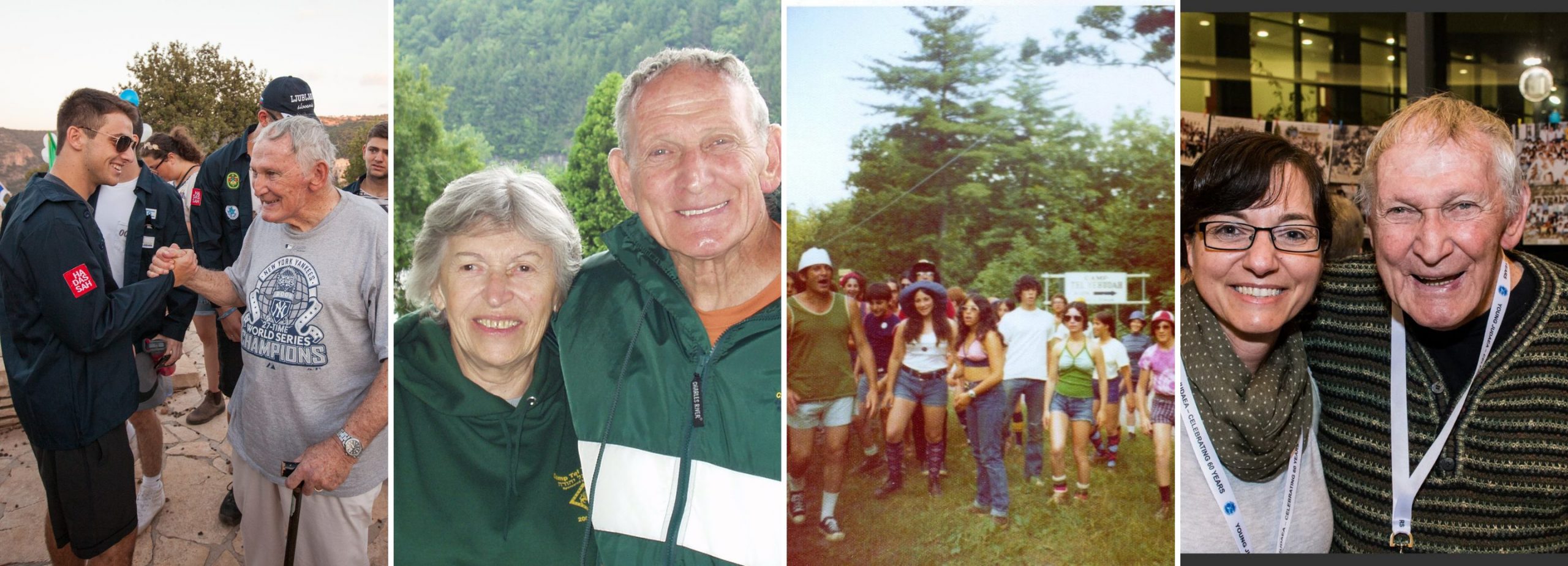
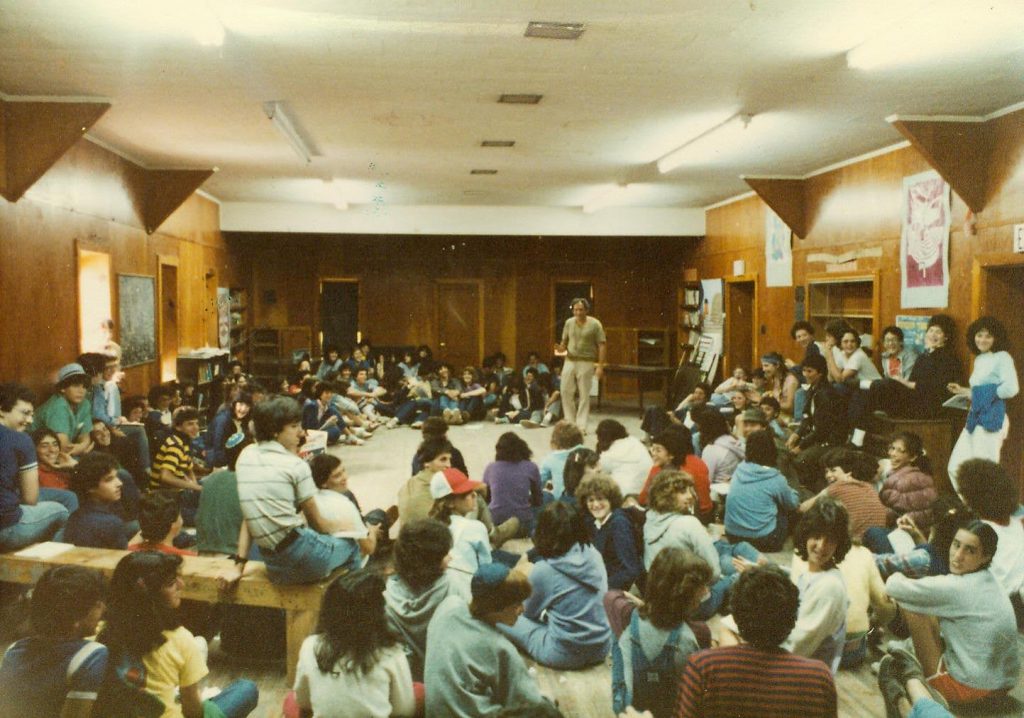
Growing up in New Jersey Young Judaea and attending Tel Yehudah in the 1970s and 80’s, I was raised on Mel Reisfield. In Alumim. I took copious pages of notes in those little spiral notebooks while sitting on the floor of the Machon moadon as Mel taught us about the moral code the Jewish people introduced to the world.  We learned about “not holding back the wages of the worker” and “not to put a stumbling block in front of the blind.” At 13 years old, this was our introduction to social justice and social activism.  And he taught us a love of Jewish history, Jewish peoplehood and Israel.  His sichot were bombastic, passionate, irreverent and unforgettable to this day.

These days I am often baffled when I hear so many Jews talk about a tension or dichotomy between loving Israel (people, land and state) and caring about the rest of the world, as if we can only contain one of these truths at a time.  That’s not what we learned from Mel and in Young Judaea.

In his speech at Tel Yehudah for the 100th anniversary of Young Judaea, Mel said:

“We are inner directed Soviet Jewry, Ethiopian Jewry. But we’re outer directed also. We care about others. And when those people came to me and said Mel, look at what you guys are doing. You’re activists. Social Action. Can you help us? This is the March of Dimes. There are kids with Polio….How are we going to get more people to give us money?  This is before the vaccine for polio. How about a walkathon? One of the first walkathons in the history of walkathons….Started by the Young Judaeans from this camp, Tel Yehudah.”

In these times, may we take Mel’s strength and wisdom to be both inner and outer directed.
Kate Nachman
Director of Year Course

In the zoom waiting room at Mel’s funeral, it did not say “please wait for host” it said, (translated from Hebrew) “wait to be let into the classroom by the teacher.” Among his many contributions to Young Judaea both in the US and Israel, Mel led field trips and taught Hebrew classes on Year Course. He would have approved of the waiting room message being in Hebrew and would have loved for his funeral to be considered a classroom. It is just like him to not let even death be a reason to miss a teachable moment.

It was never quiet in Mel’s classroom. Between his boisterous teaching style and the inevitable laughter around the occasionally unorthodox vocabulary in both his Hebrew and other classes, students not in his classes were frequently jealous of those who got to learn with Mel. I once snuck in to Mel’s Hebrew class to watch him teach.  I’d heard him drop some words my mother didn’t like on the occasional field trip and I’d been told it was mild in comparison to his Hebrew classes. My Hebrew wasn’t quite good enough back then but I had to know what all the fuss was about. He let me stay there for about half an hour before sending me back to my own classroom. I definitely learned some new words.

If the classroom was quiet it probably meant that Mel was out back on the basketball court. Winning more often than not and teaching life lessons, Zionism and Hebrew in those moments as well. Mel walked back and forth from his home in French Hill to Beit Riklis every day and did not indulge the occasional bouts of laziness from the students. Throughout his teaching career with Year Course he expected his students and colleagues to show up prepared with a firm handshake, a thick skin, and a curious mind. In return he was always ready with an invitation to dinner in his home, a provocative question, and an off-color joke.

Long after retiring, when we’d ask Mel to tell his story to incoming Year Coursers, be honored at a ceremony of some kind, or even if he was available for a friendly visit, he was always willing.  The price of his participation in the educational or social visit?  A meal out at his favorite Jerusalem restaurant, Dolphin Yam, where a lesson in pluralism was waiting for anyone who might raise an eyebrow at the choice.

Words like “giant” and “legend” are not too big, they are too small to truly capture the influence that Mel had as an educator and mentor to so many of us in Young Judaea both in Israel and abroad. Those of us like Moshik Toledano, Adam Jenshil and myself who were his students or his colleagues (or both), Joel Srebrenick who grew up at TY and then Young Judaea Israel with Mel as an influence, Orit Segal who taught Hebrew on the same faculty with him, we all strive to carry his legacy forward.

Mike Berman
YJG Board Chair

On Wednesday I attended Mel Reisfield’s funeral in Jerusalem.  It was difficult and emotional for everyone to say goodbye to Mel.  Were it not for COVID restrictions, there would have been hundreds joining me in paying our last respects.  I felt like I was a Shaliach Tzibur for the entire Young Judaea Community.

The outpouring of condolences and sadness at the funeral and in our community conveys how deeply indebted we all are to Mel.  He was a giant and had a profound impact on thousands of young people over decades of dedicated work as an educator, leader and activist.  He was a role model for all of us.  The last gift that we can give to Mel is our resolve to continue on his path of working for Clal Yisrael, Zionism and Tikun Olam.  We are his life’s work.  May he live on through our continued dedication, hard work and accomplishments.  I am quite certain that he would be pleased and thank us for this this gift…and then he would shout a profanity, punch someone in the arm, and get back to work.

Yehi Zichro Baruch יהי זכרו ברוך
Update from the Board President

Update from the Board President

September 16, 2020
27 Elul, 5780
Dear Young Judaea Community,
As summer ends and we approach a new year, we all take stock of what has happened since last Rosh Hashanah. While there have been difficult moments, we’re moving through these hurdles with hope, excitement, and success.
Young Judaea, like many other organizations, faced huge challenges due to the Covid-19 pandemic. Our summer camps made the difficult decision to close for the summer of 2020, and as a result nearly 3,000 campers were unable to enjoy a summer with their best friends engaging with the Young Judaea values that can only be instilled at camp. Summer programs in Israel – Machon for our teenage Judaeans and Onward and Amirim for young adults – were cancelled or moved online, preventing more than 1,000 participants from experiencing Israel first-hand.
Despite these difficulties, Young Judaea leadership, staff, and alumni rose to the task and turned challenge into success.
Programmatically:
  • The seven Young Judaea camps ran a wide array of innovative, virtual programming to keep kids connected throughout the summer. To learn more about the creative and courageous ways in which the camps responded to the pandemic and their exciting plans for summer 2021 please click here.
  • Year-Round Young Judaea programming pivoted to virtual activities bringing together Judaean teens from across the country.
  • Young Judaea alumni and families reconnected in monumental fashion through Chaverim Online, a platform connecting thousands of Judaeans around the world through engaging virtual content.
  • Young Judaea Year Course welcomed 225 participants to Israel just twelve days ago – the largest group since Young Judaea became independent from Hadassah – kicking off a year of personal growth and unforgettable Jewish experiences.
Financially:
  • Our initial emergency campaign has already raised 90% of the goal set for December 2020.
  • Families across Young Judaea camps donated just over $900,000 of tuition paid and many families rolled over their camp tuition to summer 2021, thereby reducing the financial impact of Covid-19.
Thanks to everyone’s hard work and generosity, Young Judaea is weathering the Covid-19 storm and we are now poised to thrive over the coming months and years.
As we celebrate all the accomplishments of the past year and the promise of the next, I am thrilled to announce the hiring of Adina Frydman as CEO of Young Judaea Global. Most recently, as a member of senior management at UJA-Federation of New York and having worked with, synagogues, camps, and day schools for the past 18 years, Adina brings forward-thinking creativity, courage and spirit to leading Young Judaea Global forward. Her Judaean experiences as a member of the Florida regional chapter of HaMagshimim as well as a madricha at Camp Tel Yehudah give her personal knowledge of the powerful impact of Young Judaea. Her dedication to building Jewish identity, inspiring love of Israel, and catalyzing change in the world reflects the proud legacy of our movement.
Adina starts her new role on October 12th and is excited to engage a new generation of families, teens, and young adults as we move into the next chapter of our story. Please join me in wishing Adina much success in her new role. Her email address is: adina.frydman@youngjudaea.org.
Though uncertainty and difficulty persist in our lives, I only need to look at the dedication of Young Judaea’s participants, families, alumni, staff, leadership and friends to see how much good can result from even the most challenging situations. I wish you and your loved ones a sweet New Year – may it be filled with happiness, health, and peace.
Shanah Tovah,
Mike Berman
Young Judaea Global Board President
Alumni Spotlight: Greta Rothschild

Alumni Spotlight: Greta Rothschild

“I was part of history. Just a Judaean from Kentucky and I became part of the history of Israel.

On the surface Greta Rothschild feels like any Judaean, filled with love for the movement and commitment to the Jewish people, but dig a little deeper and you’ll find someone who was at Tel Yehudah listening to a live broadcast in the Beit Am of the rescue of the hostages at Entebbe; someone who just a few short years later, stood on Mount Sinai at sunrise during Year Course living at Ketura and watched the beginnings of land changing hands in the Egypt-Israel Peace Treaty- Greta Rothschild’s memories of Young Judaea are some of the most covered events in world history.

It wasn’t always that monumental and historic, however. Growing up in Lexington, Kentucky there wasn’ta huge Jewish presence, but Hadassah was strong. So when a friend invited her to a YJ club meeting at age 12, she jumped at the chance. Immediately she knew this was the place for her, the place where she could grow and be herself.  Reflecting on her early days in Year-Round clubs and as a camper at CYJ Midwest (later a staff member) she describes herself as “captivated, involved and connected.” That connection stayed with Greta throughout her life, both personally and professionally.
It’s not rare to hear a lifetime Judaean speak with such pride in and affection for the movement, but it is incredible to see the actual effect of Young Judaea on a person. The leadership and programming skills she learned in YJ through the clubs, conventions and camps so deeply impacted Greta that they became the foundation of her entire career.  After 17 years as a Synagogue Education Director, and a nearly full time volunteer leader as the Region President of Chicago-North Shore Hadassah, it’s the YJ role models she had, the peer leadership and programming skills she learned, along with her Zionist commitment and strong identity that stand out in her mind. And like most Judaeans, her YJ friendships have become life-long along with the memories.

Though a lifetime spent in serving the Jewish community and the love of Israel and Judaism are central to Greta Rothschild’s experience in Young Judaea, it’s the sense of belonging and Tikkun Olam, she most values. “L’dor v’dor is so important to me; passing down those values, my love and passion for Eretz Yisrael and joyful Jewish living  to my children, that is incredibly meaningful. A recipient of scholarships for camp and Year Course, I feel Young Judaea has taught me the true essence of what it means to give back.”

Young Judaea Covid-19 Update

Young Judaea Covid-19 Update

Dear Young Judaea Community,

We at Young Judaea have been continuously monitoring the ever-changing situation as it relates to the Novel Coronavirus (COVID-19) pandemic including guidance from the U.S. Centers for Disease Control and Prevention as well as local Departments of Health here in the US, and government, health, and partner agencies in Israel.

We are committed to providing a safe and healthy environment for all of our participants, volunteers, and staff and our priority is always for their health and safety. First and foremost we send wishes of healing to all those in our community who are affected by this outbreak, whether they themselves are ill, have been quarantined, or are feeling the impact of the restrictions being put on us and our communities. To that end, please review important information about our programs and events below. Note that the situation is very fluid and we will communicate when any changes are made:

US Programs

Year-Round Activities

We have made the difficult decision to postpone all national and regional overnight events at this time. Given that health departments in each community are issuing slightly different guidance, we will determine whether to postpone local events on a case-by-case basis in consultation with local staff and volunteers. We have made this decision out of an abundance of caution and while we recognize that this may be disappointing, we are actively working to find ways to meet virtually and stay connected with one another until the health risks have been resolved.

We will follow up with information about specific events that have been postponed and provide information about credits for future Young Judaea events and/or refunds. If you have any questions about year round programs please contact Sandra Marks, Director of US Programs.

Summer Camps

Our camps are moving forward with planning for a wonderful summer as they monitor potential implications related to COVID-19 and are considering numerous initiatives to ensure a safe environment for all participants.

Young Judaea Global NYC Office

Our NY-based staff is transitioning to working from home and we are supporting their working remotely to ensure organizational operations continue.

Israel Programs

Year Course 2019-2020

As Israel’s quarantine policies continue to become more stringent, Young Judaea Israel staff are working around the clock to ensure that we comply with all governmental regulations while still providing our participants with meaningful programmatic experiences and academics through coordination with the relevant ministries and partner organizations. We are grateful to our students who continue to handle this fluid situation with good spirits and maturity, and are working together to create the best possible experience over the next two months.

WUJS Interns 2020

We are in regular communication with our WUJS interns in Tel Aviv and Haifa, making sure they are updated as quickly and comprehensively as possible regarding developing quarantine, travel, and public gathering restrictions. Our participants are being strongly discouraged from any private travel, and our staff are providing them with ongoing social support.

Machon and Amirim Summer Programs 2020

We know that applicants may be concerned about the implications of ongoing travel restrictions with regards to our summer Israel programs, Machon and Amirim. While we anticipate and hope that both Machon and Amirim will run as planned, we have decided to offer a refund for the registration deposit fee (if requested) and hope that doing so will help our applicants feel more comfortable when making the decision to register.

Year Course 2020-2021 and WUJS Fall 2020

We are continuing to plan for Year Course 20-21 and WUJS Fall 2020, and looking forward to welcoming our participants in Israel at the end of the summer.

Alumni Events

At this time many of our alumni programs and gatherings are being postponed or cancelled. We will continue to communicate any event updates. If you have any questions please contact Andi Lewittes, Director of Development.

Young Judaeans have always stepped up in challenging times- this is no exception. We will navigate these changes to our programs and prepare for what lies ahead as a community and having the resources to respond effectively and responsibly is key, so please consider making a donation to help us handle the many unanticipated costs we are incurring because of the COVID-19 situation. Your help will enable us to continue to offer our programs as broadly and as widely as possible. You can make your donation here. Thank you for your support during this unprecedented time

Please bear with us as we work through this rapidly-changing situation. And, most importantly, stay safe and healthy.

Simon Klarfeld

Executive Director,
Young Judaea Global

Alumni Spotlight: Gia Machlin

Alumni Spotlight: Gia Machlin

Young Judaea has been a huge part of Gia Machlin’s  life since the spring of 1978 when she attended her first YJ convention at TY. Gia attended TY as a camper (Alumim) that summer, and loved it so much she came back to TY every summer after that until she went on Year Course in 1982. She was also on the Westchester Mazkirut all through her high school years and was the president of Westchester region her senior year. She worked at Sprout Lake, and at TY in the kitchen and the office.

After returning from Year Course in 1983, Gia attended the School of Engineering and Applied Science (SEAS) at Columbia University and then received her MBA from the Columbia Business School. But it was her time in Young Judaea, she says, that really left a lasting impact on her. “My years in Young Judaea helped me realize that I could use my leadership skills not just in business, but in philanthropy and tikkun olam as well.”

Gia is the President & CEO of EcoPlum, Inc. which was founded on the principle of combating environmental issues through social enterprises. EcoPlum is certified nationally as a women-owned business by the Women’s Business Enterprise National Council (WBENC) and is a Green America “Gold” approved business. Gia and EcoPlum have been featured on ForbesBooks Radio, Green is Good Radio, WOR Talk Radio, and the Trash Talking with Eco Warriors podcast, plus in Crain’s New York, Inc. Magazine, Café Mom, and many other business publications. Gia is a 2020 Enterprising Women of Year Award winner.

Prior to founding EcoPlum, Gia was President of MMC 20/20 Systems, Inc. In 1998, Gia co-founded Plan Data Management, Inc. (PDM) growing it into a thriving software and data services provider servicing Fortune 500 companies. A public company acquired PDM in 2006. Gia’s professional experience also includes management consulting at the Machlin Consulting Group and Deloitte & Touche, along with sales and marketing roles at Unisys and AT&T.

Gia serves as Board President of the Blue Card, Inc., a non-profit organization that provides cash assistance to needy Holocaust survivors living in the United States. Gia is a longtime member of the Women Presidents’ Organization and a founding member of the Columbia Business School Alumni Club’s Sustainable Business Committee. She volunteered for NYC public schools for 14 years.

Even now, 42 years after she came to her first convention, Gia counts her YJ friends among the closest in her life.

Alumni Spotlight: Daniel Hack

Alumni Spotlight: Daniel Hack

Dan Hack has been a proud Young Judean since 2007 when he was an Ofie at Camp Sprout Lake. During his progression through the Young Judaea (YJ) journey, he was a camper at Sprout and TY, attended Alternative Winter Breaks throughout his high school years, and was eventually the Merekez of Bogrim at Sprout. From YJ, Dan has been able to learn about the impact that an individual can have, and how much this impact grows when working as a group, or a קבוצה. This past semester, Dan served as the Development Intern for the Center for a New American Security, where he helped raise money for research attempting to solve America’s most complicated national security threats. Dan would not have been able to get this job if it weren’t for a Young Judean that works there and advised that he should apply.

In his Hadracha year at TY, Dan was in the anti-Semitism Tikun group and his one regret was that his group ceased communication after the summer ended. He continued to have conversations with YJers and others about anti-Semitism and the Israeli-Palestinian Conflict on social media sites, however the conversations were often quite destructive with no real progress being made. The emphasis that Young Judaea places on pluralism helped Dan come to the conclusion that we need a better method of discourse between individuals of varying backgrounds and beliefs. During his freshman year at Carnegie Mellon, he founded a company called Convertsation that has the goal of converting how conversations are held online, and teaching and harboring positive and constructive conversations between students from all over the world. Over the last year and a half the Convertsation team has expanded to ten members who are very motivated to spread this great product throughout the country, and abroad as well. Convertsation is a digital platform for educators to structure multi-party, online conversations for their students.

Through a plethora of features, students have been able to hold inspiring Convertsations where they truly listen to one another and find common ground on subjects they previously completely disagreed on. In a world where political and ideological polarization is rampant as individuals are blocking or fighting any person or news source that disagrees with them, Convertsation is attempting to fix this problem and they know that if students are learning healthy conversation practices from a young age, they will be able to hold more productive conversations as they grow.

Convertsations are anywhere from 20-60 minutes and contain 3-5 students from within a class, or between classes anywhere in the world. At the Convertsation table, there is a resource board to fact check users, a character count to ensure that there is equal participation amongst the members, and open-minded sentence structures for students to fill in and best hear one another. Once the time allotted has ended and the students have discussed all of the questions that the teacher has posed, the teacher will get a robust report consisting of important metrics for growth using artificial intelligence. The report states what students participated the most and least, how many new ideas they each brought, how many resources they used, and much more.

While the problems of polarization, close mindedness, and destructive conversations online are not disappearing anytime soon, Dan believes that the more students that connect and learn through Convertsation, the more likely the next generation will be able to speak to another, and more importantly, listen. If it weren’t for his time in Young Judaea, and the emphasis that the organization places on bringing people together, Dan never would’ve hatched the idea for Convertsation, a project that has turned into his greatest passion.

Danhack@convertsation.org

646-825-0085

Siyur Series 5: The Jerusalem Corridor

Siyur Series 5: The Jerusalem Corridor

by Eduardo “Lalo” Fainsod, Year Course Participant

The name Shlomo Glenzer stuck with me all throughout our guided hike along Highway 1, the main road between Tel Aviv and Jerusalem.  In 1934, Shlomo made Aliyah from Poland, a decision that likely saved his life from the Nazis, but he fell in battle during the War of Independence in 1948 at just 20 years old.  Ascending our last incline of the day, we stopped just off the road at a kibbutz cemetary dedicated to Israeli soldiers who lost their lives during the War of Independence, many of whom were Survivors who had made Aliyah from Europe after the Holocaust.

It was very moving to see these graves with the names of dozens of young men and women who gave their lives defending the newly established State of Israel. We continued on our path in the beautiful forest of the Judaean Hills – hills that would not have been in Israel were it not for these same soldiers. We joked, sang and played word games during the hike, but I do not think anyone kept their minds off these names that we saw in the cemetary.

During our hike in the Judean Hills

Earlier in the day, Rabbi Rob explained that this part of the highway was strategically important for Israel because it was the only way to bring supplies to Jerusalem, which was under siege.  The IDF sent convoys of trucks with supplies to Jerusalem along this route, which winds up a valley towards Jerusalem.  However, the road was impassable as it was routinely strafed by Arab forces in the villages surrounding the road, who opened fire on the Jewish convoys and killed many brave drivers and guards. Once more I thought of Shlomo Genzler.

We visited a battle site along the highway called Castel.  In April of 1948 the Palmach’s Harel Brigade, led by Yitzhak Rabin, attacked Castel hoping to open the road and reduce the danger to Jewish convoys.

It was impressive to walk through the Arab trenches that Yitzhak Rabin and the Harel brigade overtook during the battle.  We had a beautiful 360-degree view of the highway and surrounding trees and hills.  Far off in the East was Jerusalem with its beautiful Chord Bridge plainly visible.  In between was a mix of Arab and Jewish villages, some of which are built over former villages that were destroyed in the war. Now, more than 65 years later, the area looks remarkable; a picturesque location for a family picnic.  It is hard to imagine the Israel that Shlomo Genzler came to, built, fought for, and died for without the light-rail crossing over the bridge, without the Jewish villages, without the construction below expanding Highway 1 from four to six lanes, and without many of the forests planted since.

I have been in Israel many times before, mostly on educational trips.  I have visited most of the tourist sites in the country. I have climbed Masada, floated in the Dead Sea, swam in the Galilee, snorkeled in the Red Sea, and played on the beaches of the Mediterranean.  I have prayed at the Kotel, walked in the Baha’i gardens, and eaten hummus at all of the best places.  However, this was the first siyur that we have done during Year Course that is completely new for me. I enjoyed the educational value of the trip and the beautiful hikes that we did.  A nice view will make anything better.

Still, 20-year-old Shlomo Glenzer, who made aliyah in 1934 from Poland and died in battle in 1948, will not be a name I forget for a long time.

Diary from Rwanda

Diary from Rwanda

The following Journal entries from Sarah Braginsky and Bess Brown should give you an idea of some of the activities that the Year Course participants have been doing in Rwanda in the past week.

From Sarah Braginsky

Day 3:

Today was our first day of service. In the morning we were split into four small groups to work on the farm, in the kitchen, on our bridge project, and in the storage room. On the farm Bess, Yoni and Natalie helped shuck corn alongside other workers who taught them the proper technique. Stephanie, Michelle and I worked in the kitchen cutting up a ton of vegetables.  We even surprised the workers by how fast we worked. I guess working in the kitchen at Camp Tel Yehuda paid off.  Ben, Adam and Anouska worked on our bridge project. We are making a bridge over the water trench so that cars can pass over.  To do this we need to mix a lot of cement, so far today they carried the sand for the cement we’ll be making.  In the meantime Sydney and James counted supplies in the storage room. In the middle of our shifts the kitchen provided us with a fresh fruit salad and samosas as a snack.  It was a nice break.
In the afternoon we spent time at the ASYV science center. The kids’ ranged from finding the voltage of solar panels, to designing their own websites, and thinking of new ways of making energy.  The science center is an amazing place, one that most people probably wouldn’t imagine when they think of education in Rwanda.
Every week the village has a debate. They start by debating within their families and then continue in the larger groups.  Today we were able to sit in on a debate about the effect of Colonialism in Africa.  My host family’s conclusion surprised me a little. While I assumed that they would place some blame on Colonialism for causing poverty in Africa, they felt that they learned useful things from the Colonialists that can help them advance socio-economically.

Day 4:

Today was an unintentional chance for some serious group bonding. We woke up and did our morning service. In the afternoon, it started to pour. There was thunder and lightning and buckets of rain. We participated in after school activities in the arts center while we waited for the rain to stop, but when the rain stopped, the power went out. It was dark out and difficult to see so we used our phones as flashlights to guide us back to the guest house. Being stuck in our lounge with only improvised phone-flashlights provided us an opportunity to get closer to one another. I think that after this experience we will start to form a more close friendship within our group.

From Bess Brown

Day 5:


Today, we went to the Kigali Memorial Museum. The museum talks about how the genocide in Rwanda began, what happened during the genocide and how Rwanda was able to recover from the horrors that their country endured.  This museum is unique because it doesn’t just cover the genocide in Rwanda, but also provides information about the genocides in Cambodia, the Balkans, Armenia, and the Holocaust. It points out all of these awful tragedies that occurred and asks why no one did enough to stop them. The whole museum is a dim lit maze but you exit into multiple gardens all honoring a different group affected in the genocide, like the light at the end of the tunnel.


After the museum we went to an authentic Rwandan restaurant. It was basically an all you can eat buffet with one catch: you can pile your plate with as much food as you want but once you sit down, you can’t go back up again. It was a nice change from the routine of rice, potatoes, and beans for lunch and dinner. Once we had eaten all that we could handle, we headed over to the Kigali market.


We had all been to the shuks in Tel Aviv and Jerusalem but we had never seen a market like this. It’s not just in one straight line, but hundreds of different rows and aisles. Picture a Costco with no walls and aisles 10 times as small. On one side of the market you could find food and on the other side you could find clothes, trinkets and fabrics. Everyone there was pushing their goods aggressively – and of course at double the price for tourists. The Israeli in me came out and I started bargaining with every shop owner just as aggressively as they were selling. The group piled back into the bus and excitedly showed each off what we had bought. People came back with a variety of necklaces and bracelets, woven bowls and place mats, fabrics, fruit, and even a giant spoon.

After returning to the village and taking a short rest we gathered together and had a Kabbalat Shabbat service. We then all went to the amphitheater for village time. There’s really nothing in America like it but it’s something similar to a performance and assembly combined. There were about 10 different performances including singing, cartoons, sketches, and rapping. Its HIV awareness week and so all of the performances had something to do with HIV awareness. It was all done in KinyeRwanda, Rwanda’s official local language.  Luckily the girl next to me helped translate what was going on. The final performance was the Dream Boys, a popular group in Rwanda. Look them up on Youtube they’re awesome!


Day 6:

We woke up bright and early at 5 am for the Muchaka Muchaka which is a run (but more like a jog) that the village does every Saturday morning. I was pretty nervous because I was expecting it to be a fast paced run but the jog was slow enough and I was able to fast walk alongside them for part of the run.  We were all pretty tired after the run but right after breakfast we went out of the village to do some community service. I was expecting it to be a short walk but it was about an hour outside of the village by foot.  By the time we got there we were all pretty exhausted but the kids jumped right in and began working. We shoveled away at the hillside in order to make a wider road. After about an hour and a half we were finished but instead of going back we went to what I was told was a meeting with the other group. There was definitely a cultural barrier because the “meeting spot” was in the middle of a village and there was a district meeting taking place. Basically all of the workers of the Rabona area gathered around and discussed what was going on in the village. I had a translator explained what was going on more-or-less. The meeting went on for a while and once it was over we all began the long walk back. We were all tired, burnt and thirsty and it was good to finally get back.

In the afternoon there was a soccer game against a team from outside the village. I don’t understand much soccer but it was really cool to see so many people from the village supporting the ASYV team. Although we lost, the kids were super spirited the whole game.

This evening was the announcing of Miss Rwanda and one of the contestants is a graduate of ASYV! The kids have all been super excited about it; they’re constantly on the computers voting over and over again for her. They’re broadcasting the show in the dining tonight so we will all find out who the winner will be. Keep your fingers crossed for us!

A Woman, and a Judaean, at the Wall

A Woman, and a Judaean, at the Wall

 Women of the Wall is a Jewish organization seeking gender equality at the Western Wall that leads monthly Rosh Hodesh services for the new Jewish month in which women read from the Torah and lead prayers at the Western Wall.  The group is currently nearing a compromise deal with the Israeli government that will ensure an egalitarian space in the plaza at the Kotel.  Because of her involvement in the issue last year, we asked Year Course 2012-2013 alumna Frances Lasday to write some reflections on her experience engaging in the issues of egalitarian Judaism and pluralism.  We encourage you to write your own comments and thoughts in response as Young Judaea is a movement that encourages dialogue, discussion, and even disagreement.  How do you define pluralism?  What is your ideal solution to this issue?

I grew up in Young Judaea surrounded by different political opinions, ideas about Israel, and religious practices.  Through that lens I learned, along with my peers, to struggle with pluralism.  To me this is what it means to be a part of a diverse Jewish community – fostering and discussing difference, not simply tolerating it silently.  Last year while I participated on Young Judaea Year Course, I began to explore this issue through my interest in Women of the Wall and participated in their Rosh Hodesh services.

To me, Jewish religious pluralism means living in a more tolerant society. If we spend time appreciating and accepting, and legitimizing our differences within our own community, we will not only grow stronger as a group, but we will become more empathetic to others outside of our own communities. A part of being human is being afraid of the unknown, but if we learn to accept differences within ourselves, we are far more likely to accept people who are seemingly more different. Pluralism also means attempting to create compromise, and forces us to encounter things that make us uncomfortable.

I think that it is a common misconception that pluralism is the attempt to make everybody happy. This is simply not possible, we are too varied and too many, and as the saying goes –  when there are two Jews, there are three opinions. However, it is through the struggle and the attempt to reach compromise that we grow as people. After all, “Israel” means “to struggle with G-d,” and we, the people of Israel, cannot grow when we are not challenged. I wish mazal tov to the Women of the Wall and the Israeli government for coming close to an agreement, and I hope that over time we will continue to struggle, together, to create a stronger and more empathetic people so we can slowly but surely make the world a better place.

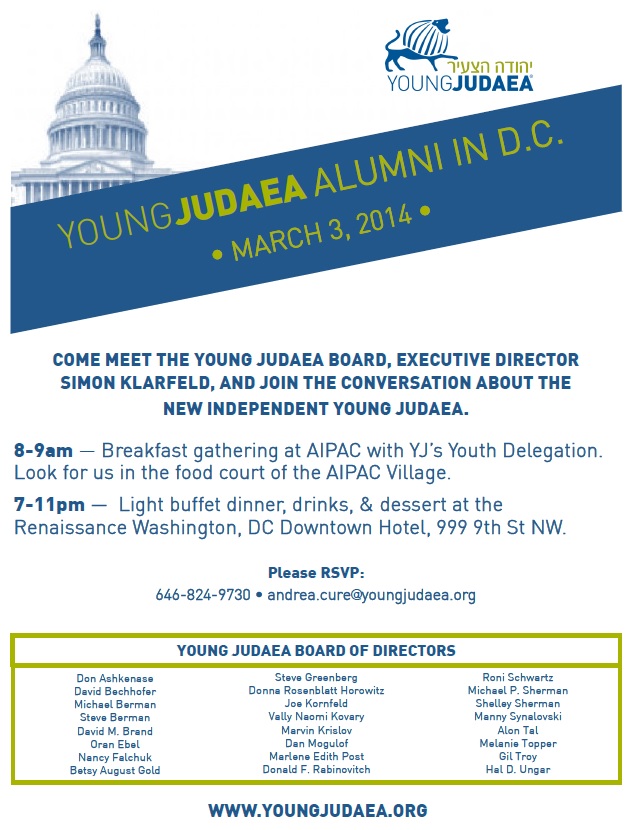
Join Young Judaea at the AIPAC Policy Conference 2014 in Washington, DC!

Join Young Judaea at the AIPAC Policy Conference 2014 in Washington, DC!

Are you going to be in DC on March 3rd?
If so, meet  the Young Judaea Board, Executive Director Simon Klarfeld,
and join  the conversation about the new independent  Young Judaea!

YJ @ AIPAC 2014 Full Page