My First Time (Voting That Is)

My First Time (Voting That Is)

DANIEL VAYNSHTEYN – CHARLOTTE, NC

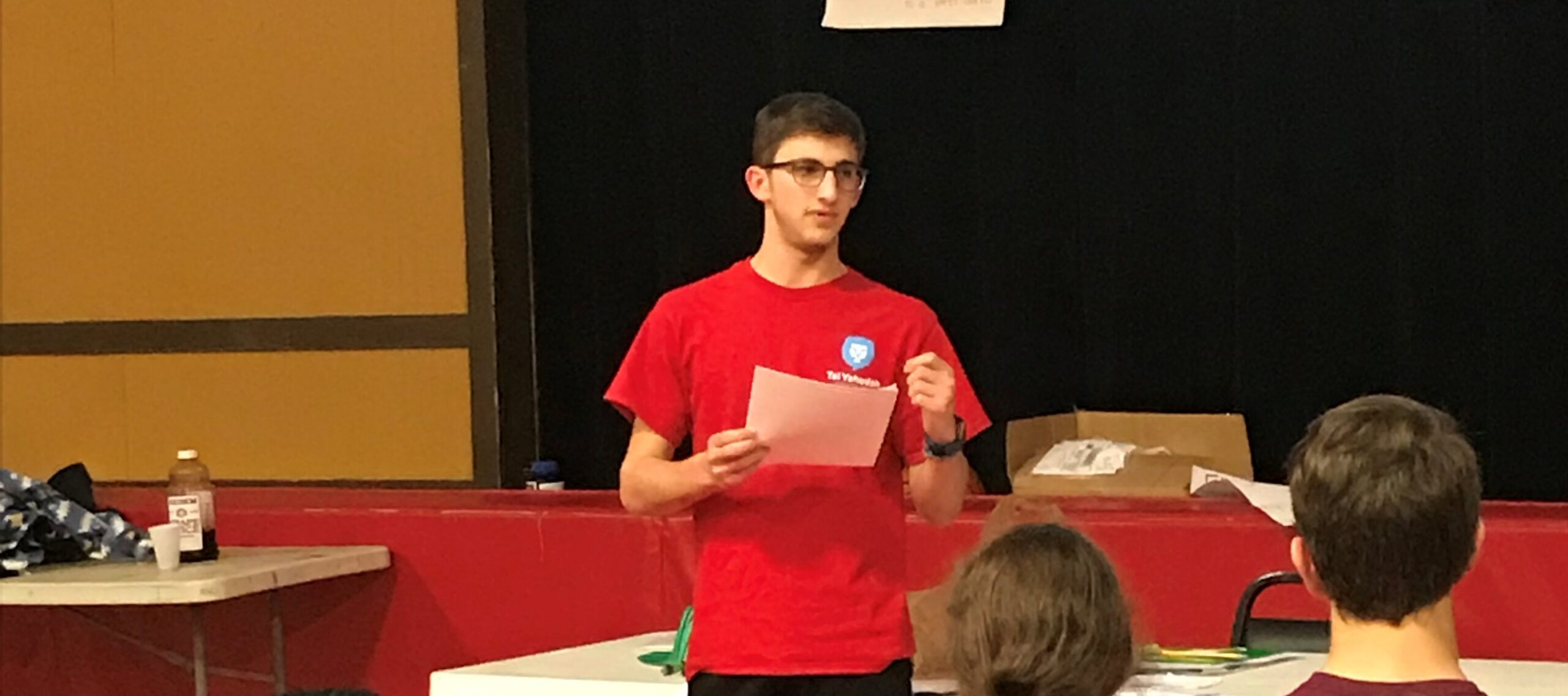
As someone who has been a part of Young Judaea for a long time, voting had always been something I looked forward to. From learning about the importance of the State of Israel from Camp Judaea as a kid to my experience in DC on the Hadracha Program at Camp Tel Yehudah, I had been raised to comprehend the power one vote can have in an election. It was Young Judaea that inspired me to become politically active: taking part in AIPAC summits and lobbying my representatives in favor of Israel and even volunteering for a local congressional candidate’s campaign.

Before I went out to vote, I spent a long time researching candidates and their positions, including watching local debates and comparing them to my stances. I live in the Ninth Congressional District of North Carolina, a highly contested district which was considered up for grabs by polls and political pundits. Through the leadership experience and knowledge, I had received from attending YJ summer camps, I established where I stood on the candidates and the constitutional amendments up for referendum. I reached out to other young people who were first-time voters and friends and acquaintances of my parents, letting them know the importance to vote as well as explaining to them who I was voting for and why.

On Saturday, November 3rd, I went and I voted early. Though the process was simple and quick, I walked out feeling like I had made an impact on the future of our country. Days later on election day, I watched the results come in from the news, and I followed my district’s congressional races closely. Knowing that one of those ballots counted was mine gave me a sense of empowerment. It was through Young Judaea that I became interested and educated on the issues facing our country and the Jewish state. YJ also gave me the opportunity to live in a pluralistic environment where I could hear many different opinions and ideas.

CHARLIE DOVER – AUSTIN, TEXAS

This year, as I turned 18 in August, was the first time I was eligible to vote in the Texas 2018 midterms. Living in Austin, a very liberal city, voting craze was rampant. Everyone at my school was urging any person eligible to vote. The younger students were handing out voting guides so that we would know who we would want to vote for. On the second-to-last day of early voting, my music teacher took me and several students to a nearby voting station during lunch. I was in and out within 30 minutes. My friends on the other hand, took about 10 minutes longer, as they were more thorough. My music teacher texted our teacher to ask if it was okay that we were gonna be late. Our teacher responded, “Of course, we need more people going to the polls”.

Even though I am disappointed that Beto O’Rourke lost the election, I am hopeful for the future of our state and country. According to The Medium, the early voting rate among 18-29 year-olds in Texas increased by nearly five times compared to 2014 midterms. This high level of young voter engagement excites me and my friends about the 2020 elections!
Getting Involved Through Civic Engagement

Getting Involved Through Civic Engagement

Anti-semitism is on the rise, racism is on the rise, hate is on the rise. Every hour in the United States a hate crime is committed. Someone who is full of hatred isn’t going to stop because of laws or armed guards. They will stop because of love and civic engagement.

The people of the Young Judaea community and the people of the world need to unite to stop all the blinding hate. We need civic engagement. Civic engagement is “working to make a difference in the civic life of our communities and developing the combination of knowledge, skills, values and motivation to make that difference. It means promoting the quality of life in a community, through both political and non-political processes”. Civic engagement leads to change. Only we can vote a change, make a change and be the change we want to see. It all starts in your local community.

You have to take action if you want to see change. There are so many opportunities in every community for volunteerism or political participation. Communities need people to be more active. Volunteering has the power to transform communities and improve lives. Civic engagement is a tool which we can use to better the next generations. By teaching them to take direct action, be politically involved and volunteer they can develop the skills and confidence to better society. People who participate in civic engagement are healthier, wealthier and more satisfied with their lives.

Every community is plagued with issues that can be solved. Many times people are unaware of the severity of the problems. If you educate or campaign about the issue then it would be almost impossible for people to be unaware. To be more involved in your communities all you have to do is go to your town website to find more information.
If you want to see a decrease in anti-semitism make it happen through civic engagement. People need to be educated not to hate and your community is the perfect place to start. You can make advertisements and post them around the community, create a program to be held at local schools, start a social media campaign, or become more politically active by joining a campaign or starting your own. Next Tuesday is the perfect opportunity for you to start making and seeing the change you want. Don’t forget to go out and vote!

~ Izzy Canning National Pirsum, Poughkeepsie NY

Young Judaea National Convention 2019 – Camp Twin Lakes, Winder Georgia

Young Judaea National Convention 2019 – Camp Twin Lakes, Winder Georgia

Scroll down to read all posts about National Convention 2019

NAAMA SARFATI-MAGILL

This convention was not my first. It was certainly not the first I attended, and not the first I helped plan. However, the experience of devoting over three months to developing an idea into a weekend was significantly different.

From the beginning of the year, National Maz spent hours discussing what was crucial to Young Judaea as a movement. What was worth our limited time?

It was incredible to see the abstract ideas we had discussed on way-too-long maz calls and random-confusing-brainstorm-documents come to life. Through analyzing our personal identities in different situations to questioning how Young Judaea identifies as Zionist and Pluralist today, we discussed small details and looked at the big picture. We were incredibly reflective as a convention when tackling questions of compromise and biases.

Describing the success and excitement of those specific moments, however, does not do justice to the most significant part: the atmosphere. Convention felt wholesome. I believe we embodied the theme in many ways. We worked to cultivate a cohesive collaborative community, and I would like to thank everyone for contributing to accomplishing that. Participation in peulot and discussion groups reminded me why I love Young Judaea: because it is a concentration of people ready to learn, engage, and tackle the difficult complex questions.

~ Naama Sarfati-Magill, National Bogrim (teen) Programmer – Brooklyn, NY


SIVAN ORNSTEIN-LUKS

Young Judaea is a place where I truly find my people in a welcoming, supporting space. I can only describe the feeling I get from YJ with one word: community. It was fitting to me that the theme for National Midwinter Convention was cultivating community. From the minute that the theme was introduced to the convention body, I felt an immediate connection to it. Being from North Carolina where there is no YJ club, I don’t get the opportunity to participate in year-round very often. Convention is the one place where I feel that special sense of community. I was extremely excited to get to spend a weekend dedicating my time to learning how to cultivate a community.

Each peulah throughout the weekend was attached to this theme. One peulah in particular stuck with me. The activity was a simulated murder mystery at Kibbutz Ketura. After learning a little bit about the history and life on the kibbutz, we were divided into roles (some fictional and some real) and worked to solve the “murder.” A kibbutz is a unique community and in simulating that community, it was clear how much everyone relies on each other and how a single problem can affect the whole group. I immediately felt a difference in the energy of the room as soon as the “murder” was announced. In addition to the really fun social aspect of the peulah, our sicha afterward helped me understand the value of living in a kibbutz community.

Convention also helped me cultivate a community between participants. I grew up going to Camp Judaea and attended Tel Yehudah for the first time this summer. I had a lot of friends going to convention that hadn’t gone to TY and a lot of friends that had. With different junior camp experiences and living in different places, my friends didn’t know each other. It was really meaningful to see all of the people that had played such big parts in my YJ experiences come together as one group.

Convention and the theme of community demonstrated how relevant and significant building community is in our world today. We don’t always realize the ways that we cultivate communities everyday, but it is important to learn the skills in order to do so. National Midwinter convention was such an amazing experience, especially because of the theme, and I can’t wait to be there next year!

~ Sivan Ornstein-Luks, Chapel Hill NC

Alternative Winter Break Puerto Rico Summary

Alternative Winter Break Puerto Rico Summary

This past December, 64 teens and 10 staff coming from 13 states and Puerto Rico, volunteered over 1,800 hours helping to rebuild homes and bring a bit of fun to children in post Hurricane Maria Puerto Rico.  Although we had considered Puerto Rico as an AWB site before the hurricane, it was clear to both Young Judaea teen leadership and the staff that there was no other place that needed help more than Puerto Rico. The fact that Puerto Rico is home to generations of Young Judaeans and the use of the JCC as our  “home base” gave us what we needed to make this one of the most impactful Alternative Winter Breaks in the program’s 11 year history.

Not only were we lucky to receive a generous donation from an alumnus, but teens raised over $8,000 in a self-fundraising campaign to pay for their participation.

Over the course of the 4 full days of work, teens and staff repaired or painted 13 homes in the communities of Guaynabo, Loisa, Morovis and San Juan. They built and ran two carnivals and helped to feed and distribute much needed supplies to residents of Morovis.  However, no group can just descend upon a place and begin to work. We had the privilege of partnering with some outstanding volunteer organizations. Nechama – The Jewish Response to Disaster, trained and guided us in repairing roofs, SBP (St. Bernard Project) gave us the tools and direction to paint and repair flooring and infrastructure in homes and the municipalities of Loisa and Morovis connected us with residents to paint and clean some of the most damaged homes we had seen. We had the pleasure of working with local volunteers on all of these projects.

As is the approach with all Young Judaea programs, the teens spent each evening diving into topics surrounding the situation in Puerto Rico before, during and after the storm through engaging educational programs.  They learned about the Island’s politics and economic struggles, heard testimony from hurricane survivors and first responders and discussed life changing issues facing community leaders and residents a year-and-a-half after the tragedy.

IsraAid, an Israel based humanitarian aid organization that provides access to safe water and mental health and psycho-social support to communities recovering from María, came in on the first night to run a simulation meant to educate the teens about their work and the idea of humanitarian aid in general. The teens also participated in staff and peer led activities around a number of topics including an emotional journey to understand what happened on September 17th and afterwards through videos and pictures and an activity that explored how impoverished communities are disproportionally affected by natural disasters.

One evening the group heard from Puerto Rico residents and Young Judaea community members David Solomiany, Saul Kleiman and Diego Mendelbaum who spoke about everything from the history of the Jewish community in Puerto Rico, opinions about independent statehood and of course, the Jewish community’s response to Hurricane Maria.  On the final evening, as is the tradition for AWB, the teens participated in “Sustain the Change” which prepares them for their return home and sets the stage for them to continue working toward a better world.

After volunteering in Morovis, the group traveled through the breathtaking mountain area to visit Iglesia Cristiana Ministerios Unido, an evangelical church about 45 minutes from the town. This very special congregation, houses a Holocaust Museum established in 2007. The museum has visitors from churches, schools and camps from all over the Island.  There to tour the museum, the teens were moved by the blessings given to them by the congregants and listened in wonder to the story of this little museum.

Although our educational journey is extremely important, our nightly “mishapachot” meetings gave the teens the opportunity to debrief on the day’s work and other experiences and discuss important issues.

Of course the teens and staff needed some down-time to just “be”. One afternoon, the group had the opportunity to hang out at the beach, take a pleasant hike to see a lagoon and tour Condado, and spend an afternoon in Old San Juan.

We were extremely privileged to have Diego Mendelbaum, Director of the JCC in Puerto Rico as our partner and host for the program. As a community leader, Diego leveraged his relationships with the leadership of the municipalities of Loiza and Morovis and other strong connections to help build every aspect of the program, from the food, to the work to the more relaxing aspects of the trip.  Knowing that we had a home base with our family there to support us, made our week in Puerto Rico more meaningful, more important and more comfortable.  Laura Mendelbaum, Diego’s wife and JCC Administrator made sure that everything was perfect and the group felt at home.

There is no question that there is so much more work that needs to be done in Puerto Rico.  When asked if Young Judaea should return to the island in 2019, the answer was a resounding “yes”. Young Judaea returned to New Orleans nine times because the effects of Katrina were so devastating to that city.  A final decision will be made in the coming weeks.


National Initiative for 2019-2020 Chosen

National Initiative for 2019-2020 Chosen

The initiative for the 2018-2019 program year was one dedicated to Women’s Health, both awareness and activism for women’s health.  The “action” was to collect women’s hygiene products at Young Judaea National and local events and donate them to shelters and other organizations. This project was successful in collecting thousands of items.  The collection process will not end with the year and the teens will continue to collect and donate.

The planned initiative for 2019-2020 will focus on the environment. 10th grader Sofie Paternite brought the initiative to the convention body. Upon its selection, Sofie wrote “The national initiative for this coming year is environmentalism and climate change. I’m so excited to see the level of implementation of this topic throughout year round young Judaea as it has become more relevant in modern discussion. The idea for YJ to take charge on this topic stemmed from many social media posts regarding the importance of not using plastic straws as it kills marine life. With much thought and discussion, it seemed to be an age appropriate and hands on topic YJ could be involved with”.  A group of teens will begin their research soon on the topic to be ready for a full launch at Tel Yehudah this summer.

60 Years Ago in Young Judaea: Truman Becomes Honorary Young Judaea President

60 Years Ago in Young Judaea: Truman Becomes Honorary Young Judaea President

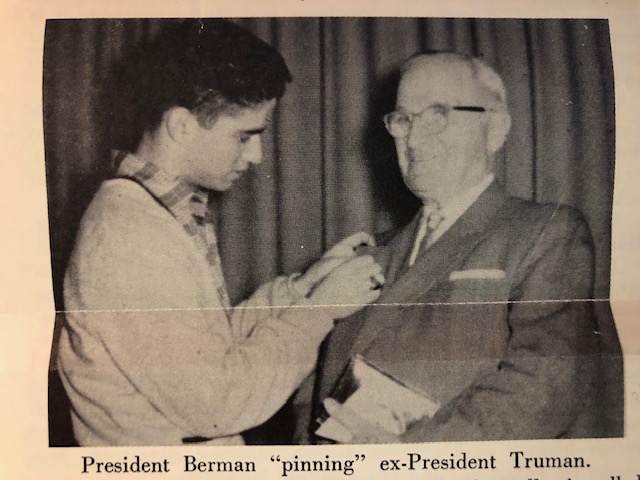
Harry S. Truman, former President of the United States became an honorary National President of Young Judaea at the recent Tri-Region Convention. National Young Judaea President Ed Berman, made the presentation, honoring Truman as “a significant figure in the young life of the State of Israel.” Truman granted the United States’ formal recognition of the State of Israel on the very day that the state was proclaimed, May 14, 1948. . .

In accepting these gifts, Mr. Truman mentioned the importance of the Bible in our daily lives. He stated that “the rules under which our government functions can all be found in this wonderful book – the Bible.” Yankele Satati, Shaliach to Young Judaea from Kibbutz HaSollelim, then spoke of the importance and meaning of Truman’s role in the establishment of the State of Israel. Yankele remarked that “the young peole of Israel in 1948, of whom I was one, were interested in building and protecting their country based on freedom and democracy. We were inspired and thankful for your immediate recognition of Israel’s Statehood.”

In his presentation of the pin symbolizing the honorary position, Ed mentioned the fact that “Young Judaea practices the principles of democracy at its conventions, club meetings, elections, and various executive committees. The job of preserving and teaching the tenets of the American government becomes a simple task in our movement. Young Judaeans are allowed to legislate and administer their own policies and therefore, gain firsthand knowledge of the dynamics of parliamentary rules and constitutional procedure.”
As he was formally installed as an Honorary President of the oldest Jewish youth group in America, Mr. Truman stated that “the future of America lies with groups such as yours which learn and practice the principles of the free world.”

~ From “The Senior” Vol. XVII No. 4: February, 1959

Hatred and Fear Have No Place in the World: Tree of Life, 5 Months Later.

Hatred and Fear Have No Place in the World: Tree of Life, 5 Months Later.

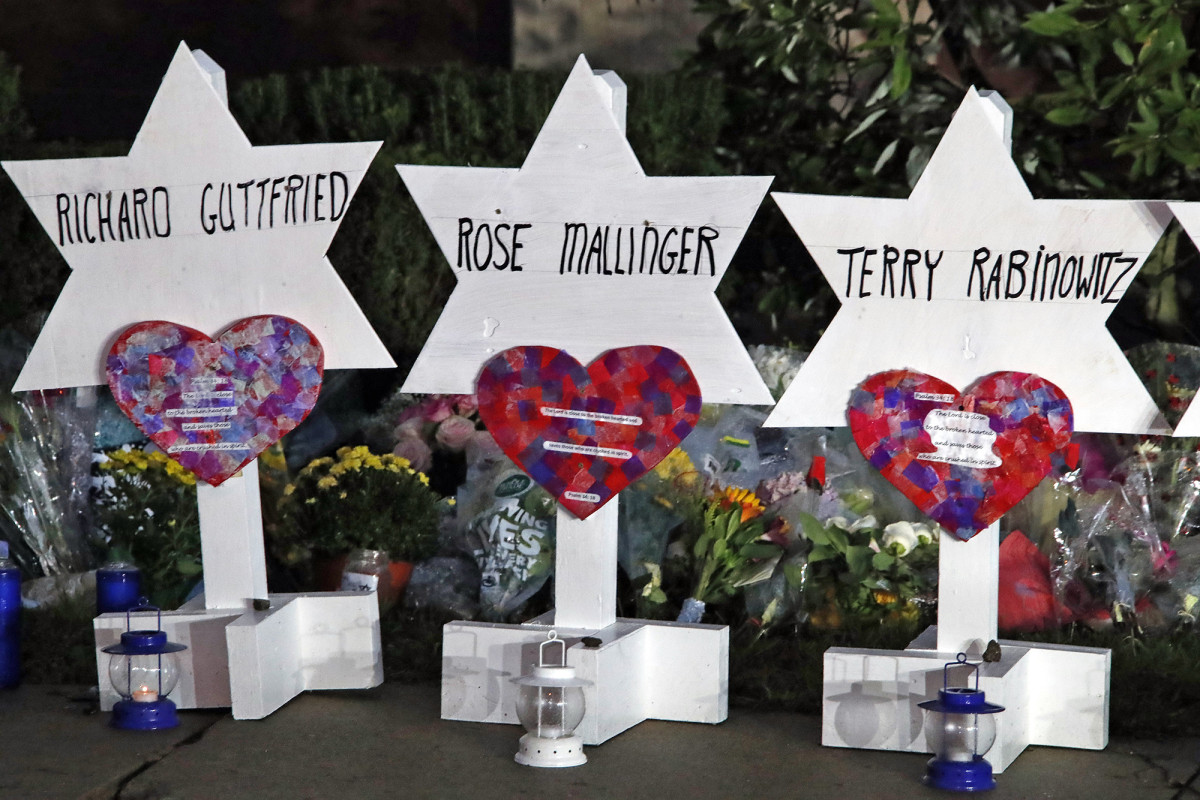
It was October 27, a Saturday morning unlike any other. As I was laying in my bed, skipping services like any typical son of two rabbis, I saw a news notification flash across my phone that shook me to my core. It read “Shooting Reported at Pittsburgh Synagogue”, my body froze and I did not know how to react.

My first question was which synagogue? As I went on Twitter, I prayed it was not my father’s synagogue, Beth El Congregation, a conservative synagogue found in the suburbs of Pittsburgh. I soon found out that it was not my parent’s synagogue but one that was twenty minutes from my house named Tree of Life. Stunned, I tried to call my parents hoping they knew of what was happening across the city and hoping they had already evacuated. Once my family was safe, I began to think of the aftermath and how Pittsburgh will react. Then one question entered my mind: What effects will this have on the Pittsburgh Jewish community? The answer is still being debated in my head.

As the son of two prominent rabbis, I have created connections with many members in the Pittsburgh Jewish community, and I know how tight-knit it is. I was at Tree of Life a week prior to the shooting for a friend’s bat mitzvah, and I saw how familiar all the members were with one another. Seeing this horrible act of anti-semitism and hatred saddened me to see how people were reacting. I was disgusted by the retweets that followed the same message, “screw your thoughts and prayers, go make a difference and vote”.

Although I agree that our country is in desperate need of stronger gun regulation and this tragedy only strengthens the argument, there is a time and place for words like that. I knew that thoughts and prayers could go a long way with the victims’ families and their communities because of how intimate the Pittsburgh Jewish community is. Seeing those tweets angered me, as it had not even been twenty-four hours since the attack, and people were already turning it into a political weapon. I tried my hardest in the aftermath to spread this message of thoughts and prayers, but it––unfortunately––did not go far.

Now, almost a month later, Pittsburgh is not the same, Beth El in particular. Before the shooting, every Shabbat, Beth El would have its doors wide open, welcome for all. Now, the doors stay locked needing approval to enter with an armed guard roaming the building at all times. Now, I fear practicing my own religious beliefs. If I cannot safely pray in my own city, then where can I? And now, I fear for my parents and my own community because Pittsburgh is not a safe place for religion now. The violence spread across America has come to strike the Jewish community in the heart, and now, Pittsburgh will never be the same.

But after six years at Midwest and two in Tel Yehudah, Young Judaea, if anything, has taught me that hatred and fear have no place in the world. We, as Jews and as Americans, cannot let this violence win. Young Judaea was founded on the idea of unity and that is what is needed throughout the country right now. To quote Gandhi, “We must be the change we wish to see in the world”. Old or young, rich or poor, it is our duty to end this anti-semitism and show the world that the Jewish people will survive and thrive.

~ Myles Greenbaum is a senior from Pittsburgh, PA

Year Course in Rwanda

Year Course in Rwanda

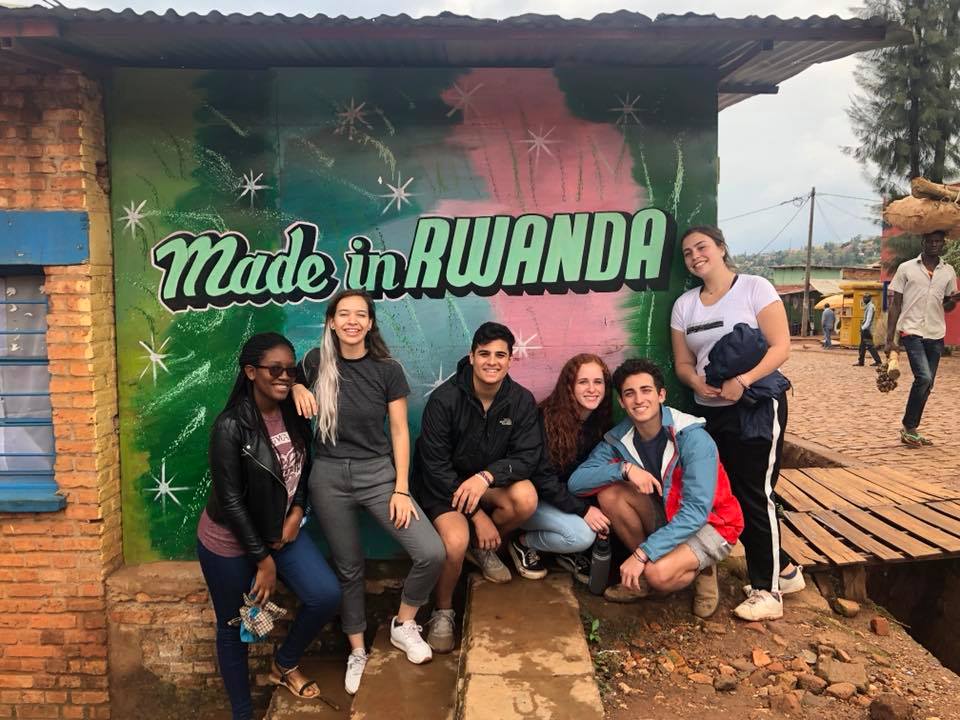
In early February, nearly two dozen Year Course participants traveled on a three-week trip to Rwanda – learning about and experiencing the country through an unprecedented exchange with the students at The Agahozo Shalom Youth Village, founded in 2007 by Year Course alumnus Anne Heyman z”l who left behind an incredible legacy of partnership and community when she passed away in 2014. The village was modeled after the Israeli youth village Yemin-Orde, and was built in an effort to respond to the overwhelming number of orphans living in Rwanda as a result of the 1994 Rwandan Genocide.

The Year Course excursion to Rwanda is unique in its depth and implementation, serving as a learning and cultural exchange trip rather than a service tour. While there are certainly aspects of service and volunteering, the goal of the experience is to create an environment of growth and conversation not only for Year Coursers, but for students at ASYV as well. Thankfully, the village has grown far more self-sufficient since its founding. While the first Year Course visits centered around completing major projects in the village – painting murals, building water tanks, creating a new library – today’s Year Coursers spend more time bonding with their Rwandan counterparts, and perhaps as importantly, learning a different way to live. Coming to Rwanda, for many Year Coursers, is to confront for the first time in their lives a world completely unlike their own – a world that, though rich in culture and community, lacks many of the ‘comforts’ that Year Coursers may take for granted, both emotional and physical.

Jenn Greenspan and Noah Furman, two Year Coursers from Texas, knew they wanted to take part in the Rwanda trip when they first signed up for Year Course. The two are lifelong Judaeans, having attended CYJ-Texas and Camp Tel Yehudah before returning to CYJ-Texas as counselors, where this coming summer they will bring their Year Course experience home to camp after participating in the Camp Leadership Track.

From the beginning of Year Course in September until the trip in February, participants discuss and learn about the Rwandan Genocide in depth, as well as elaborate on Rwandan culture, history and traditions. Aside from better understanding the country and people they are going to visit, participants learn intensively about the genocide before going, because as Jenn and Noah describe, very little of the trip itself deals directly with the genocide – Rwandans are generally reluctant to talk about it. “When someone started to talk about the genocide, you’d hold your breath,” Jenn said. “I didn’t want to ask about it directly, so if someone decided to bring it up, I knew it was going to be important.”

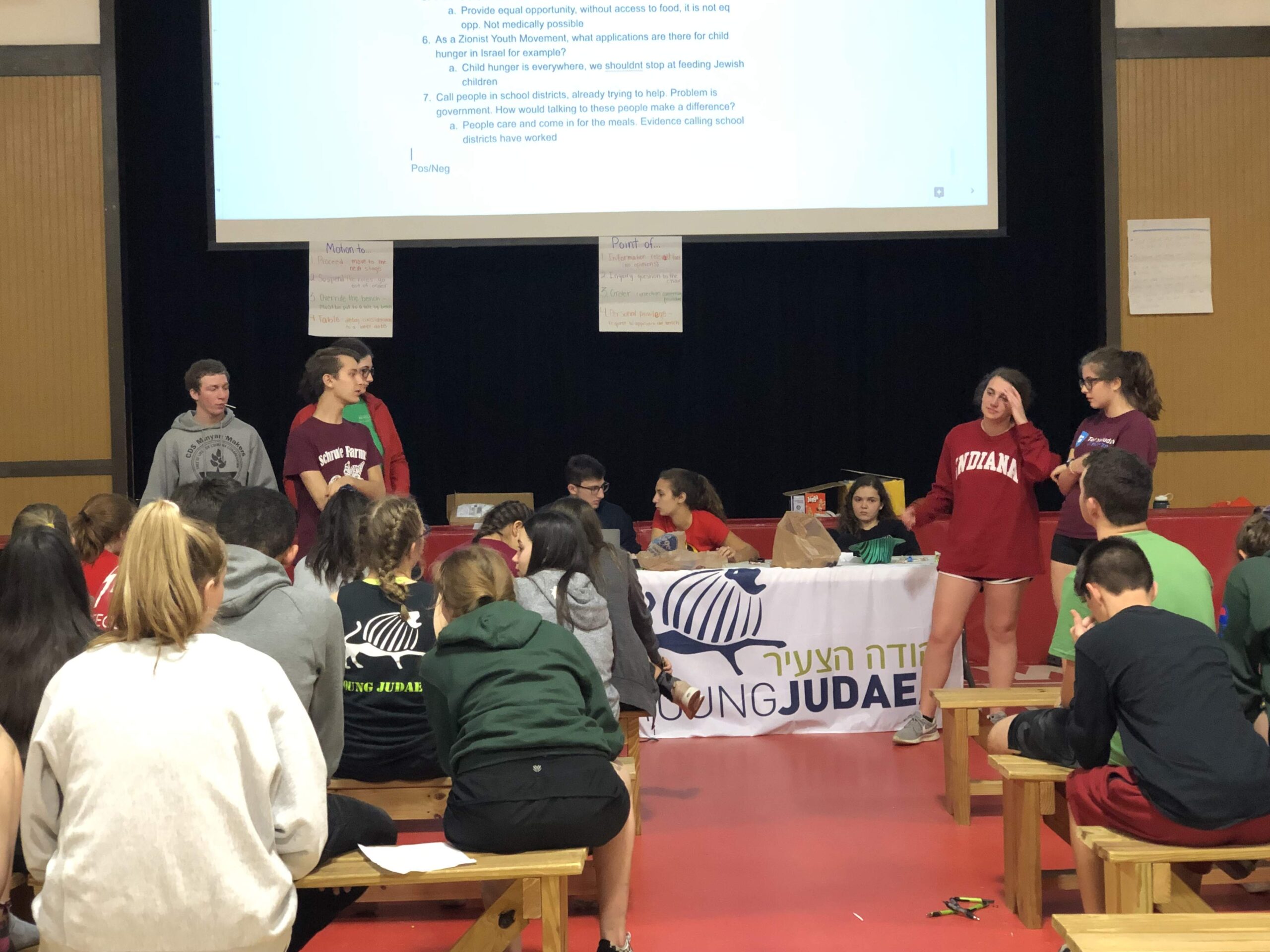
Young Judaea State of the Movement: Evan Ressel, National Mazkir

Young Judaea State of the Movement: Evan Ressel, National Mazkir

Erev Tov.

To start, I want to welcome you all to asepha. Asepha is one of the most important parts of national convention and of what we do as a peer-led youth movement. It is our chance to shape our future and examine what’s important to us as a Pluralistic Zionist Youth movement.

But why are you here? Think about it. What has driven you to spend a weekend around other Jews learning about cultivating a community? I’m sure that for many of you the primary answer to that question is simple. Your friends. The connections you make at summer camp and through involvement in Jewish youth movements are unlike any other relationship. Aside from these connections, Jewish youth groups and youth movements play an incredibly important role. They bring together Jews, who as a people that for thousands of years have survived the pressures that try to force us apart. Simply, Jewish youth movements keep Jews Jewish. There is still undeniable antisemitism in this world, and if we as a people desire to overcome it, it is imperative that teens have the means to explore and foster their connections to Israel and Judaism.

I’d like to share a few statistics from a survey of Young Judaea alumni published last year.

  • Over 80% of respondents indicated that Young Judaea has had a strong influence on their relationship with Israel, their Jewish identity, and on their view of the world
  • 92% of young adult YJ alumni are either very or somewhat emotionally attached to Israel
  • 74% of young adult YJ alumni say being Jewish is very important,
  • And almost 75% of Young Judaea alumni have sent or plan to send their children to Jewish camp, almost 50% to YJ camps

It is clear that for these alumni, their involvement with Young Judaea and Israel as teens has shaped their lives and kept their Judaism and Zionism alive.

Clearly, being involved in a youth movement is important, but all of you are here. There are over a dozen other Jewish youth groups and movements in the United States, but you chose Young Judaea. What is so special about OUR movement?

Well, we have a deep-rooted history. We are the oldest Zionist youth movement in America, and I’m pleased to share that on June 10th, Young Judaea will celebrate its 110th birthday.

From the start, Young Judaea has been at the forefront of Zionist and Social action. In 1909 we were a collection of Zionist clubs across the country, and many of our chanichim made aliyah to lay the groundwork for the future Jewish state. We had a presence at the March on Washington in 1963 during the Civil Rights Movement, were active in the Soviet Jewry Movement, every winter we give our time and energy to help struggling communities, and we even created our own kibbutz.

Today, we still challenge Jewish teens to think critically about Israel and Zionist ideas. By cultivating a pluralistic environment, we’ve developed a strong commitment to openness and diversity of opinion, and have emphasized a tradition of acceptance in our chanichim. It is important that we keep this going and continue to encourage teens to engage with Israel. We focus a lot on the polarization of American politics and our communities here, but as a Zionist organization, Israel is in our roots. One can even argue that the situation in Israel is becoming just as polarized as the U.S. My hope for Young Judaea and all of us is that YJ will be the place for us to struggle with our Zionism; that YJ will be the place for teens to find and use their voice to fight for what is important to them.

I’m sure we can sit here together and talk about what Young Judaea means to us for hours, but instead, I want to turn to what YJ has done just doing this past 5 and a half months.

  • Although we don’t have an exact number yet, more kids have already participated in local programs than in recent years.
  • New groups of teens have come together in Atlanta, South Florida, Los Angeles, and New England to revive their regions and engage teens year-round.
  • Established clubs such as Pittsburgh and Flemington have grown stronger than ever
  • The Midwest region had its largest winter convention and look forward to an even larger one in the spring.
  • In the Northeast: LINYC, Empire, and New Jersey continue to have regular events, and Northeast Convention has also been larger than ever.
  • And As we speak, Puerto Rico Young Judaea is having its annual kibbutz weekend

It is clear that Young Judaea is doing well and is looking at it’s second or even third year in a row of a sustained increase in participation.

I want to end by reminding you that Year-Round Young Judaea is only one part of what YJ’s executive director Simon Klarfeld calls “the Young Judaea ecosystem.” This includes not only Year Round Young Judaea but also the five YJ camps and our Israel programs. Our summer camps are especially important in the development of passionate and confident teens that give life to year-round programming. The two form a cycle, feeding each other and helping the entire ecosystem grow. Participating in year-round programs helps to develop strong leaders who can then walk into camp with confidence in their leadership and a passion for the movement, which in turn inspires others to join, creating a positive feedback loop that fuels the movement that we love.

If we want to continue the upward trend I mentioned earlier; if we want to continue to grow our already active areas and expand Young Judaea to new areas, it has to come from us. Look around; we are the future of Young Judaea: the kids, the leaders, the passionate and inspired teens that want to be connected to each other, Judaism, and Israel.

I hope you keep these things in mind during asepha both tonight and tomorrow night, and throughout the rest of the weekend.


Todah.

Year Course in Mumbai

Year Course in Mumbai

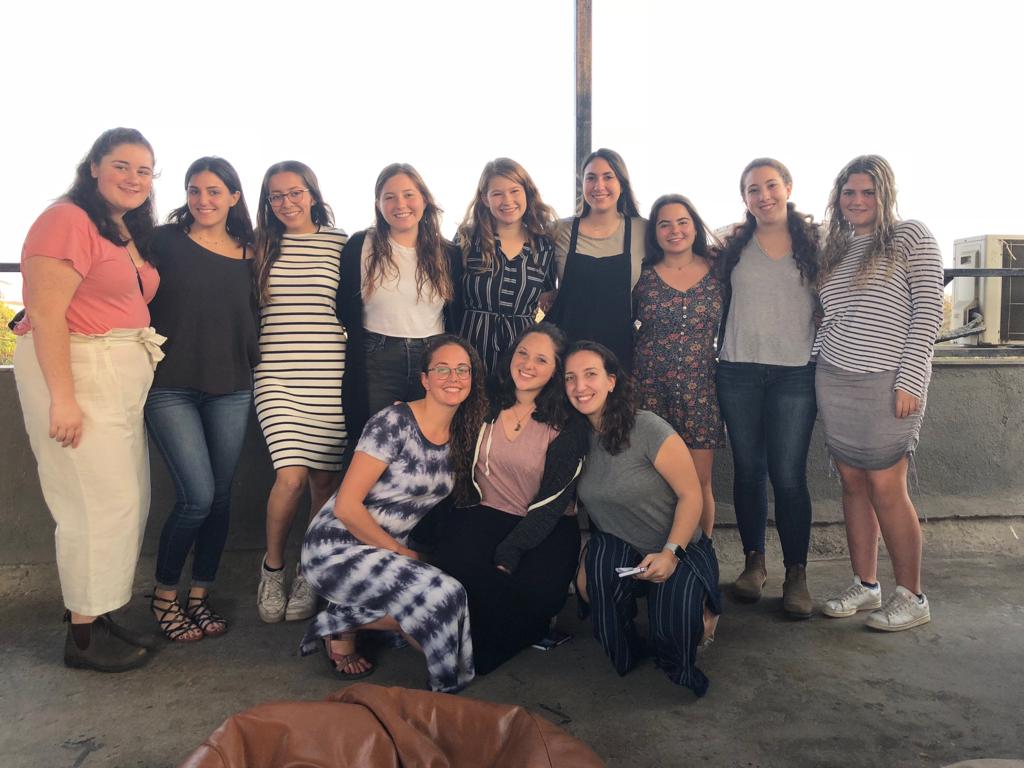
On Sunday, 12 Jewish females embarked on a journey of a lifetime. Arriving in the Mumbai International Airport we were filled with excitement for this trip but, in the back of our minds we could not dodge the nervous feeling of having no idea what to expect. We knew how different the culture would be, but we were not sure entirely how. Coming from various locations in the US and North West London, we have a preconceived notion of how someone lives in the western world. But when asked about the average life of someone in Mumbai, we would not be able to tell you too much. For a lot of us, on of the reasons why we traveled here was too witness the living practices of people here and learn more about Indian culture.

“I came on this trip to experience a culture that is completely foreign to me and take the lessons I learn from it home and have it affect the way I learn and see the world around me,” says Anna Stewart of Yama, from West Chester, Pennsylvania.

After spending five days here, we have learned around 30 phrases in Hindi from a GPM staff named Dennis Moses. After studying Hebrew for 5 months, we were shocked that something could stretch our brains farther than that. Hindi is an incredibly challenging but beautiful language. Dennis was incredibly patient with us as we butchered the sounds and spoke the words extremely incorrectly in our American and British Accents. From those few lessons alone we learned something amazing about the people of India. It is an extremely welcoming and kind country. The people here are eager to help and welcome you into their community.

The Gabriel Project Staff have been especially helpful showing us around Mumbai, giving us advice on how to cope with spicy food, and answering any questions we have about India. A very special thanks to Denis, Dov, David, Leron, Jacob and Rachel for making this experience so much more enriching. The Gabriel Project Mumbai is our entire reason for being here and having a life changing experience.

GPM is an organization that aims to help reduce poverty in the slums of Mumbai by educating its citizens along with providing them with clean water, health care, and hygiene products. We spent three days learning about life how GPM executes its mission and how we can responsibly assist them in making the Slums a more liveable place for its residents. On Friday we went and visited the Slums of Kalwa, and witnessed all of the projects GPM runs.Previous

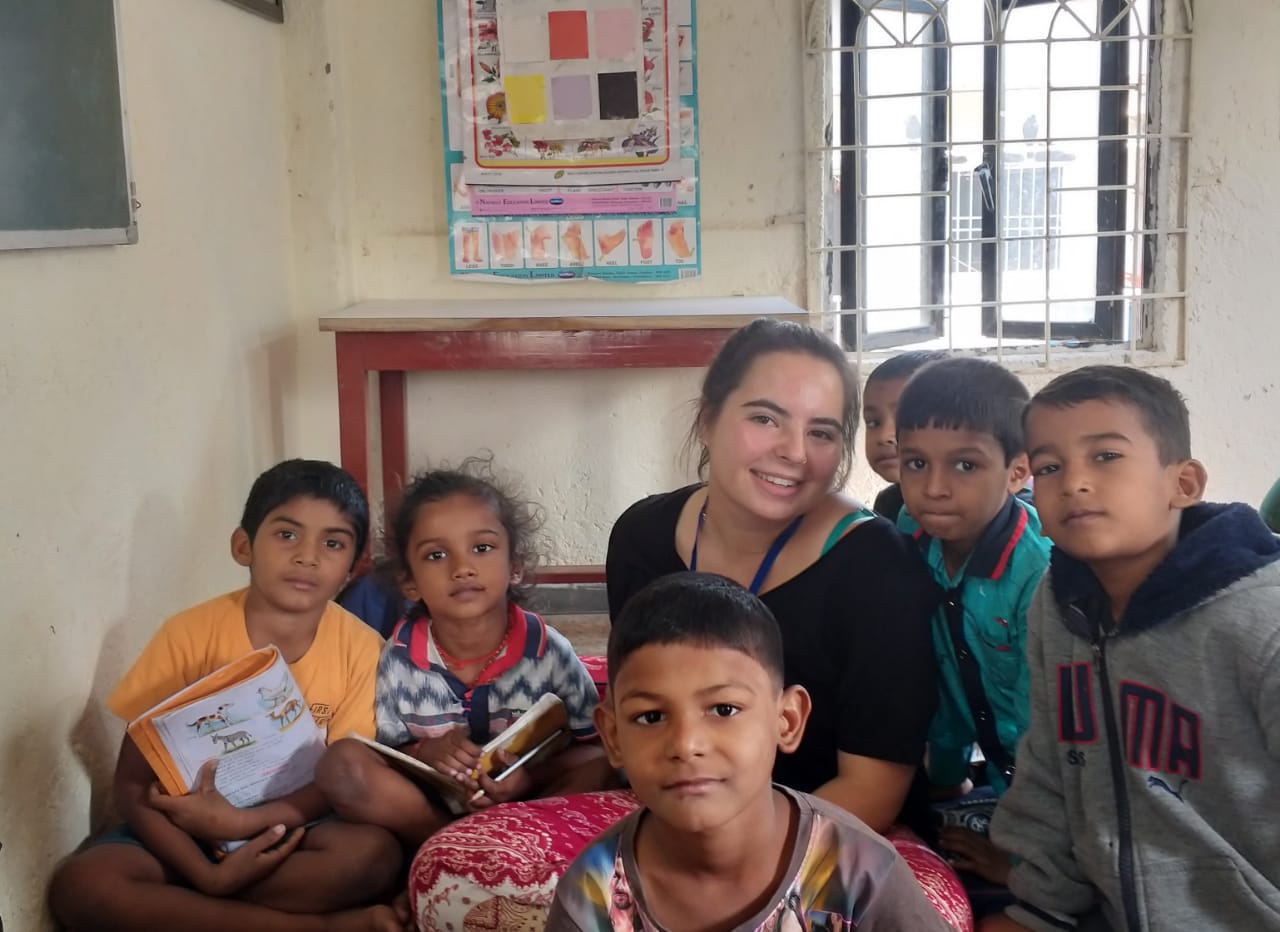
Their women’s empowerment program was especially touching for us. “It was amazing to see empowerment of woman being encouraged by the Gabriel Project Mumbai that service particularly spoke to me” Maddy Duchen of Yama from Northwest London. Eve Laub of Kedma from West Hartford Connecticut spoke about how happy the residents of Kalwa are “Going to the slums was eye opening. These kids had so little yet were greeting us with open arms. A simple wave or “hello” put a huge smile on their faces. I never knew people could be this happy”. After seeing the operations of GPM today, we are incredibly excited to teach the children on Monday and Tuesday and continue to engage in Indian culture over the weekend and spend shabbat with the thriving Jewish Community of Mumbai.

Chanti (Peace) From India

Julia Keizler, Maddy Duchen, Lydia Sheldon, Jenna Uhr, Mia Milewich, Eve Laub, Shelby Sheck, Netanya Ronn, Eve Baliff, Anna Stewart, Miriam Morris, and our wonderful Madricha Ayala

Learn more about Year Course’s global trips and tracks