How Year Course Brought Light to Israel’s Darkest Days

How Year Course Brought Light to Israel’s Darkest Days

By Rabbi Adam Drucker, Director of Education

Immediately after October 7th, before war tourism and volunteer groups began to arrive, a group of 70 gap year students from Young Judaea Year Course chose to stay in Israel. Given the choice to continue their gap year during a time of complete distress and confusion for the country, or to leave and make new plans, this group felt compelled to help Israel’s most vulnerable populations and step up in a time of need.

Directly after the attacks, the Year Course group was moved to the Young Judaea founded Kibbutz Ketura to ensure their safety. While on the Kibbutz, participants began volunteering throughout the area.

In the early days after October 7th, government ministries were not functioning and the responsibility to care for those directly impacted was left to local municipalities and volunteer groups. Once the Year Course cohort had arrived in the south, the staff began to establish links with the local representatives and leaders of these groups to ascertain what was needed. With most of the Israel’s work force above the age of 18 called up to the IDF, the resource of 70 able bodied and energetic gap year students spread among the local leadership in Eilat and the Arava.

It was these groups who Year Course would work with in the first six weeks of the war, volunteering to help displaced families, farmers, soldiers, and all those affected by the attacks.

Participants reflected on those days following the attacks and shared their thoughts on what it meant to contribute in those early days.

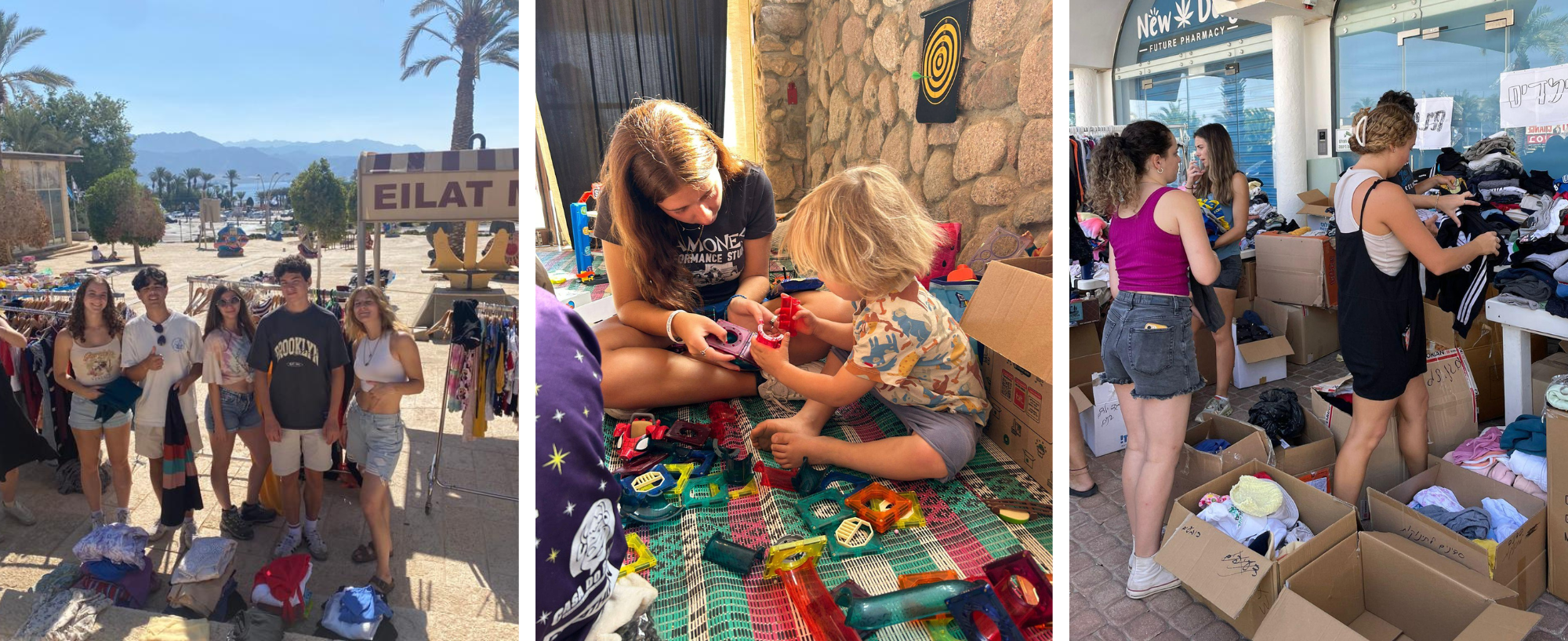
Several participants helped cared for displaced children from the Gaza Envelope communities, while their parents took the time to cope with their trauma, and plan for their future. Maya Kaye’s (Fresno, CA) and Zoe Alon (Fort Lauderdale, FL) helped evacuees by running dance classes and other extra-curricular activities. Maya recalled, “By engaging with displaced children from the Gaza Envelope, I found a sense of belonging and purpose,” and Zoe added, “I wanted a sense of connection to the people I was helping.”  Maya went on to share how her decision to stay and help was driven by a belief in the importance of solidarity and compassion in fostering resilience and healing. By offering moments of joy and distraction, they sought to provide comfort and support during a challenging time.

Some Year Coursers spent time working in distribution centers in Eilat, helping displaced families who had lost everything from the attacks. Klara Walny (Northbrook, IL) remembers, “The main volunteering body (18-40 year olds) had been called up from reserves and were on the front line fighting which is why I needed to be there. These families came into the distribution sites distressed and with few belongings, and with my limited Hebrew, a smile, and a willingness to help, the families left calmer and in a better state of mind. I see no reason not to roll up my sleeves and keep going. I am here for a reason.” Her commitment stemmed from a desire to alleviate suffering and contribute to the community, evident in her efforts to provide essential assistance to those in need.

Reflecting on their experiences six months later, participants’ motivations varied but shared a common thread of compassion and a desire to make a tangible difference during a time when Israelis were abandoned by Israeli governmental institutions. Rafi Nagorsky (Chicago, IL) felt it was his duty to step up, “It was definitely clear that since most of the rest of the country was occupied with other things, if we weren’t volunteering it’s possible that no one else would.”

Many of the participants were so deeply impacted by this moment of solidarity and selflessness, that as of today, nine have enlisted to serve in the IDF. Sophie Gilbert (Woodmere, NY), is one of those students who felt the war sparked something in her, “There was something about the war which made me realize not only do I want, but I that need to be an agent of change in my country.”

The Young Judaea Year Course students found a deep sense of fulfilment in their roles, whether it was providing practical assistance, fostering connections with displaced families, or simply offering moments of joy to Israelis during hardship. Through their collective efforts, they discovered a newfound sense of purpose and solidarity, reaffirming their commitment to Israel, Zionism, the values of Tikkun Olam.

Although there is still much darkness in a post October 7th Israel, Year Course participants who’ve remained in the country have become small, yet bright lights of hope, shaping countless lives and empowered by the desire to give of themselves.Immediately after October 7th, before war tourism and volunteer groups began to arrive, a group of 70 gap year students from Young Judaea Year Course chose to stay in Israel. Given the choice to continue their gap year during a time of complete distress and confusion for the country, or to leave and make new plans, this group felt compelled to help Israel’s most vulnerable populations and step up in a time of need.

Directly after the attacks, the Year Course group was moved to the Young Judaea founded Kibbutz Ketura to ensure their safety. While on the Kibbutz, participants began volunteering throughout the area.

In the early days after October 7th, government ministries were not functioning and the responsibility to care for those directly impacted was left to local municipalities and volunteer groups. Once the Year Course cohort had arrived in the south, the staff began to establish links with the local representatives and leaders of these groups to ascertain what was needed. With most of the Israel’s work force above the age of 18 called up to the IDF, the resource of 70 able bodied and energetic gap year students spread among the local leadership in Eilat and the Arava.

It was these groups who Year Course would work with in the first six weeks of the war, volunteering to help displaced families, farmers, soldiers, and all those affected by the attacks.

Participants reflected on those days following the attacks and shared their thoughts on what it meant to contribute in those early days.

Several participants helped cared for displaced children from the Gaza Envelope communities, while their parents took the time to cope with their trauma, and plan for their future. Maya Kaye’s (Fresno, CA) and Zoe Alon (Fort Lauderdale, FL) helped evacuees by running dance classes and other extra-curricular activities. Maya recalled, “By engaging with displaced children from the Gaza Envelope, I found a sense of belonging and purpose,” and Zoe added, “I wanted a sense of connection to the people I was helping.”  Maya went on to share how her decision to stay and help was driven by a belief in the importance of solidarity and compassion in fostering resilience and healing. By offering moments of joy and distraction, they sought to provide comfort and support during a challenging time.

Some Year Coursers spent time working in distribution centers in Eilat, helping displaced families who had lost everything from the attacks. Klara Walny (Northbrook, IL) remembers, “The main volunteering body (18-40 year olds) had been called up from reserves and were on the front line fighting which is why I needed to be there. These families came into the distribution sites distressed and with few belongings, and with my limited Hebrew, a smile, and a willingness to help, the families left calmer and in a better state of mind. I see no reason not to roll up my sleeves and keep going. I am here for a reason.” Her commitment stemmed from a desire to alleviate suffering and contribute to the community, evident in her efforts to provide essential assistance to those in need.

Reflecting on their experiences six months later, participants’ motivations varied but shared a common thread of compassion and a desire to make a tangible difference during a time when Israelis were abandoned by Israeli governmental institutions. Rafi Nagorsky (Chicago, IL) felt it was his duty to step up, “It was definitely clear that since most of the rest of the country was occupied with other things, if we weren’t volunteering it’s possible that no one else would.”

Many of the participants were so deeply impacted by this moment of solidarity and selflessness, that as of today, nine have enlisted to serve in the IDF. Sophie Gilbert (Woodmere, NY), is one of those students who felt the war sparked something in her, “There was something about the war which made me realize not only do I want, but I that need to be an agent of change in my country.”

The Young Judaea Year Course students found a deep sense of fulfilment in their roles, whether it was providing practical assistance, fostering connections with displaced families, or simply offering moments of joy to Israelis during hardship. Through their collective efforts, they discovered a newfound sense of purpose and solidarity, reaffirming their commitment to Israel, Zionism, the values of Tikkun Olam.

Although there is still much darkness in a post October 7th Israel, Year Course participants who’ve remained in the country have become small, yet bright lights of hope, shaping countless lives and empowered by the desire to give of themselves.

Rising to the Challenge: Young Judaeans Step Up After 10/7

Rising to the Challenge: Young Judaeans Step Up After 10/7

For anyone who grew up in the Jewish youth movement, Young Judaea, pitching in during challenging circumstances is second nature. Steve Berman, a lifelong Young Judaean, put it well: “There’s something in the water we drank. Maybe it’s the shores of the Delaware or the Mediterranean that infused our souls with the same spirit. The spirit of Hineni, calling out that you’re there and ready to serve.”

After the attacks on October 7th and the subsequent war, Young Judaeans lived out this spirit once again. Year Course participants immediately jumped into action, helping survivors in the Gaza envelope who suddenly found themselves without housing, clothes, or basic necessities.

Many Young Judaeans flocked to Israel to volunteer and support in any way they could. Alumni with special skills, like Lisa Fliegel, a trauma therapist, traveled to Israel to help survivors cope. Miriam Schler, Executive Director of the Tel Aviv Sexual Assault Center, stepped up to assist the many sexual assault victims of October 7th. Year Course alumni who have maintained a close friendship, Sam Merrin, Ira Greenberg, and David Cohen-Mintz, longtime friends from Young Judaea’s Year Course volunteered on Kibbutz Kfar Aza, a destroyed community, and assisted farmers near Gaza.  Others, like Julie Kolman Powell, used the power of awareness to aid Israel. While participating in races across the country, Julie wore a photo of a beloved member of the YJ family, Gili Adar, who was murdered at the Nova Festival, on her marathon shirt.

Three Friends Helping a Shattered Community

In a similar spirit, three lifelong Young Judaea friends recently came together to support Israel in a crucial way. Joel Rosenfeld, Seth Merrin, and Steve Berman grew up in the movement, attending YJ clubs, camps, and eventually Year Course. When Joel’s daughter, Ayelet, reached out about a critical cause, he turned to his YJ friends to find a way to help.

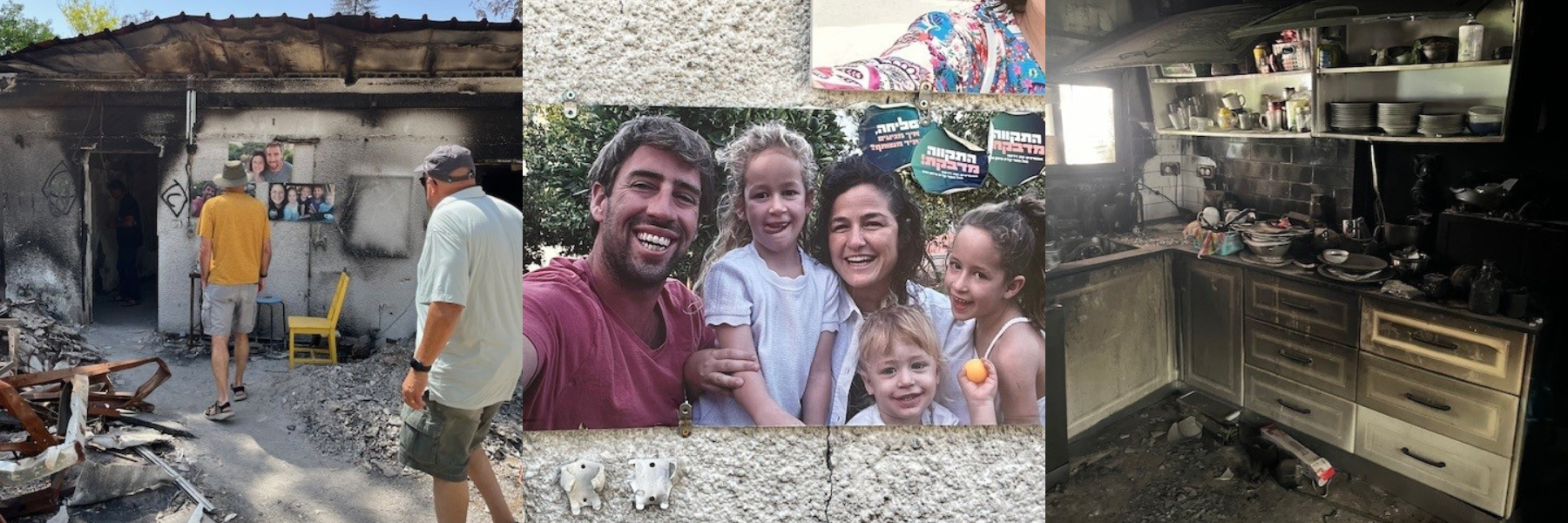
Ayelet served in the IDF alongside Yonaton “Jonny” Siman Tov, who lived with his family on Kibbutz Nir Oz, a community on the Gaza envelope. On October 7th, the kibbutz was brutally attacked by Hamas, resulting in the deaths of a quarter of its residents and the kidnapping of many others. Jonny, his wife Tamari Kedem, their three young children, and his mother were murdered that day.

The survivors were initially relocated to a hotel in Eilat. After the initial shock subsided, the community planned to relocate to a different kibbutz farther from Gaza, Beit Nir. The move, rebuilding, and purchase of land would cost them $26 million. It was during this time that Ayelet, with support from her father Joel and others, began a campaign to aid the community’s relocation efforts.

Joel reached out to old friends like Steve, who reconnected him with Seth, for help. Seth believes their readiness to support this cause stems from their Young Judaea roots. “The activism, the drive to improve the world, and the desire to help others are deeply ingrained in every committed Young Judaean. So, when Joel and Steve called me, my response was, ‘Of course. How can I help?’”

Their outreach was crucial. Steve played a key role in facilitating connections and organizing fundraising efforts. His network in Atlanta, combined with Seth’s connections in the Northeast, amplified the fundraising campaign.

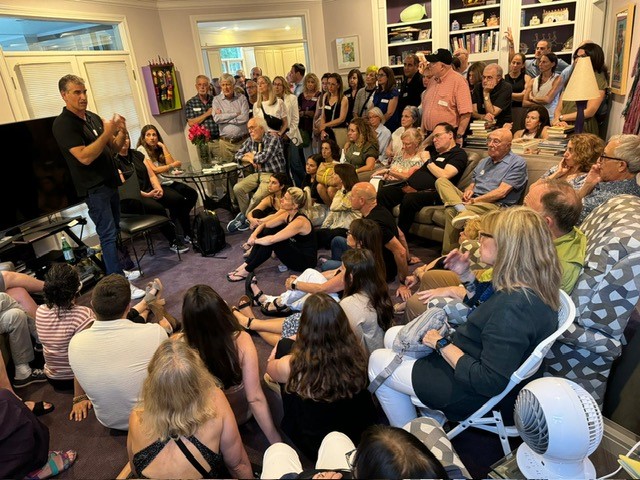
While in Israel, Steve met with Chen Itzik from Kibbutz Nir Oz, who was leading recovery efforts. Steve reassured Chen that many people in the U.S. would want to help. He quickly organized a reception at his Atlanta home, with just four days’ notice. To his relief, 100 people showed up to hear the story of the devastated community from survivors of Jonny’s family, Amit Siman Tov and her sister Koren.

Steve recalled, “My house isn’t really set up for 100 people. It was hot and crowded, shoulder to shoulder, but you could hear a pin drop that night. We had three survivors from Nir Oz sharing their story.”

This event, co-hosted with other community leaders, was a turning point in raising awareness and support for the kibbutz. The positive response led to significant contributions from major foundations and individual donors.

The task of relocating Kibbutz Nir Oz and rebuilding lives is far from over. The efforts of Joel, Seth, and Steve, along with the broader community’s support, are vital to this process.

The Spirit of Service: Shared Values

In the face of extreme adversity, many people waver, unsure of how to help or move forward or worried that their small acts won’t impact the larger challenges. Yet, after October 7th, the subsequent war, and rise in antisemitism around the world, Young Judaeans did the opposite. These stories of resilience and solidarity showcase the enduring power of the YJ community. As we learn from Rabbi Tarfon in Pirke Avot, while it is not our task to finish the work, neither can we desist from it.

As Seth put it, “This is what we do. This is Young Judaea in action.”

*If you would like to help support the Kibbutz Nir Oz project, please contact Joel, joelrosenfeld@gmail.com

October 8th – The Day After

October 8th – The Day After

By Adina Frydman, CEO of Young Judaea

Although we are still processing all that occurred on October 7th and the significance of that day, it is clear we are living in a “before” and “after” October 7th. We must mark the liminality of that day.

When the sun rose the next day, on October 8th, that’s when we started to make sense of things. In the light of day, we could see, truly see, the ugliness in the world and we realized that we were privileged to still be here when so many were not.

There are days that feel like a curse, why me and why not them? What makes me so special? What must I do to deserve a day after to turn the curse into a blessing?

We are here left to pick up the pieces and put them back together; that is our task. But before we turn to the work ahead, we must engage in deep introspection.

Have we felt enough, reckoned enough, done enough to merit another day? Have we dared to imagine a different kind of world – one that would never lead to a day like October 7th.

And where does our hope lie? That 3000-year-old superpower that has carried our people from strength to strength. But what is this hope, and where do we find it today? I can tell you that for me, that hope has emerged countless times in the faces of our youth.

In the United States and in Israel, hope is the young people who are stepping up in defiance donning their pride and wearing it like a suit of armor. In Israel, it is the scores of young people who are serving their country, some who have just graduated from high school and others, having just finished their service. Many are going back and forth from the battlefield to the cemetery to pay homage to fallen friends. Hope is also the thousands of volunteers who put the country back together without waiting for someone else to do it.

In the United States, hope started with the Rally in DC that was led by 30,000 high school and college students. What followed was the petitions, letters, and counter-protests on our college campuses where young people proudly wore their Stars of David and hostage tags all while enduring the social cost of being a proud Zionist.

I am especially inspired by the ability of our teens and college students to hold nuance during such a polarizing time having the ability to hold a both/and position which is often counter-cultural.  But we see it both in Israel and in the United States that it is possible to hold a deep commitment to the Zionism that is yet to come while feeling deeply frustrated with the Zionism that is today. And the bravest are those who commit themselves to working on it. It is a much more comfortable position to opt out, or as Yehuda Kurtzer states the most challenging position, is to be the “troubled committed.”

At Young Judaea we aim to cultivate curiosity and foster a lifelong relationship with Israel, acknowledging its complexities. Our approach to aspirational Zionism is rooted in the belief that we are all part of shaping Israel’s future – a future that reflects our values and strengthens its role in Jewish life and culture. Through this lens, we inspire teens to see themselves as active contributors to Israel’s ongoing story, ensuring its relevance and importance for generations to come.


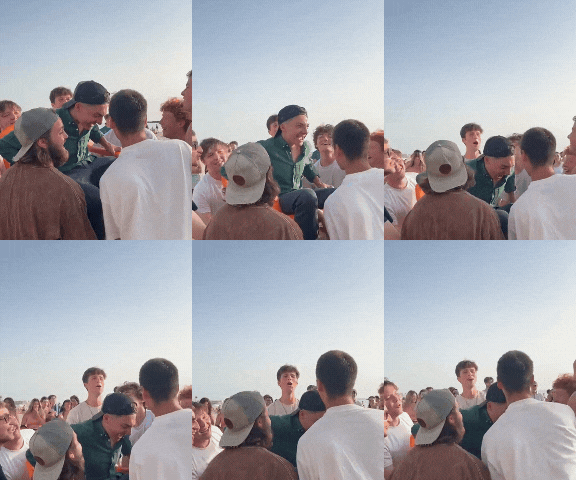
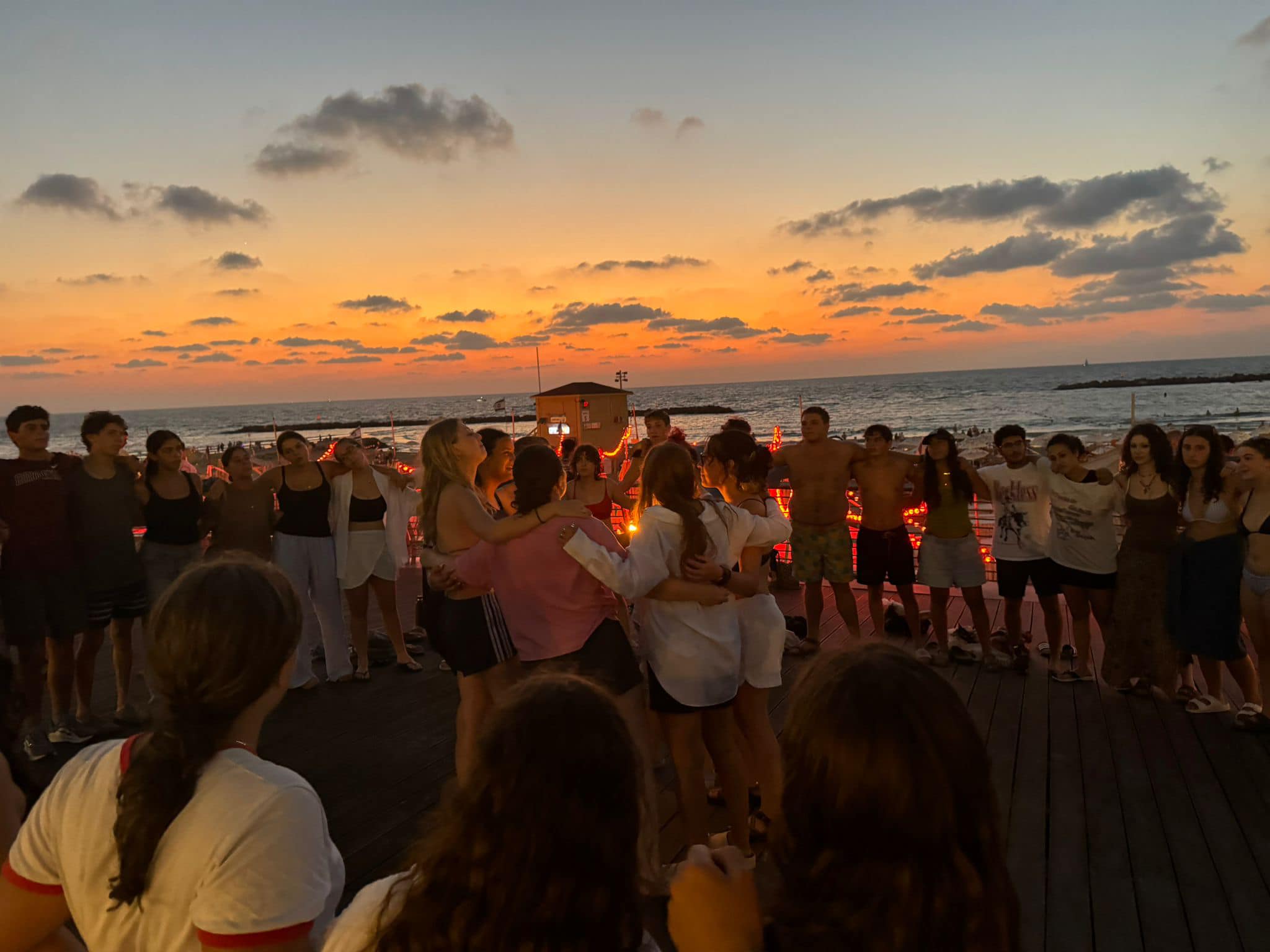
Young Judaea youth on the beach in Israel.

As proud as I feel to be leading Young Judaea in this moment, I know that we cannot do it alone. The day after October 7th calls upon all of us together, from across the Jewish spectrum, left, center, and right, secular, traditional and religious, there is no one individual or group that can bring about our collective redemption. On October 8th we all stand up together under a big tent, not in a single voice but as a choir bringing together our various approaches and perspectives and finding ways for them to harmoniously blend or to be intentionally dissonant. This is a moment that calls for unity and action from across the Jewish spectrum.

And now I speak to our youth.

This is your time. Stand up, stand together, and build the world as you want to see it.

Reach out of your comfort zone to connect and to understand.

Complaining about the world you inherited may give you solace.

Committing that it is your world to fix will give you purpose.

We believe in you, and we are right there with you.


30 Year Reunion: YC 1994

30 Year Reunion: YC 1994

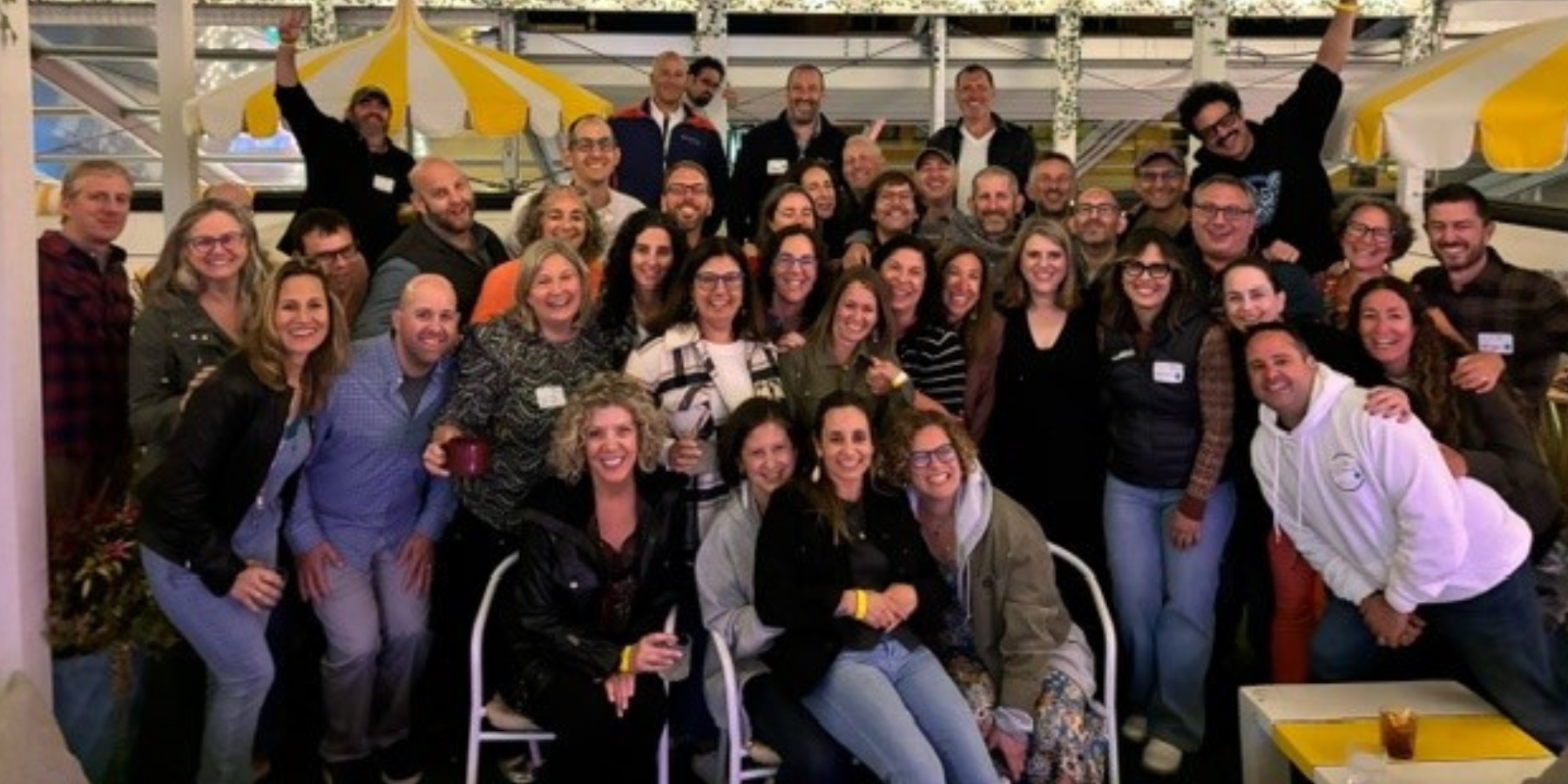
After 30 years it was like nothing has changed. Last month, Year Course 1994-1995 reunited in Chicago for a weekend of memories, laughs and good times. Over 50 people from all over the globe, including FZY participants from Israel and England gathered together for a weekend of nostalgia. As a group we managed to raise $16,000 for Year Course programming in honor of our reunion. As they say, Year Course never ends, and that is certainly true in our case. What a lovely weekend of seeing old faces.

Thank you to reunion committee co-chairs Dana Blitstein and Molli Tobin Monk and the dedicated reunion committee Marla Aistrope, Margo Alpert, Katy Burstein, Becca Katzman and Rachel Secore. A special thanks to Amit Weinberg; you know what you did! Xo

Want to plan your Year Course reunion? We can help! Email alumni@youngjudaea.org

Onward Internship Reflection: Nina Berkowitz

Onward Internship Reflection: Nina Berkowitz

By Nina Berkowitz

This past summer, I had the privilege of participating in the Business and

Marketing Program through Onward, and my experience was nothing short of

transformative. While I had visited Israel before, it was nothing compared to the

immersive experience I had this past summer. Living independently, I had the

opportunity to deeply connect with Israeli culture while gaining invaluable professional experience through my marketing internship.

I interned with Alike Health, a startup healthcare platform that uses AI technology to connect individuals with similar medical histories. The platform enables people to share their experiences, ideas, and offer emotional support, fostering a sense of community among users with common health conditions. As a marketing intern, I contributed to content creation for social media, assisted with the development of their new website, wrote blog posts, and created informative videos for a new feature on their app and website. This hands-on role gave me the chance to see my ideas come to life in a meaningful way.

Beyond gaining professional experience, I immersed myself in the Israeli work
environment, building lasting connections with the team at Alike Health. My background in content creation and video editing allowed me to contribute meaningfully to the company, while also expanding my skill set. Despite studying Psychology and Health Medicine & Society in college, I was eager to explore the business world, and this internship challenged me in ways that helped me grow both professionally and personally. It was thrilling to see my content brought to life on Alike’s platform, and I learned how to shape my ideas to better cater to users’ needs. This experience pushed me to become a more thoughtful, analytical thinker.

On a personal level, this program deepened my connection to Israel. Growing up
in a Conservative Jewish household and attending Jewish day schools, I’ve always had a strong Jewish identity. Being in Israel on my own terms allowed me to develop routines, explore Tel Aviv, and truly live the experience. It felt especially important being in Israel and supporting the country after October 7th as I began experiencing the ways hostility grew on my campus. I was longing to return to Israel and away from the antisemitism that’s been sweeping many universities. So, being in Israel this past summer felt that much more important.

In summary, the Onward program was a pivotal experience for me. It helped me
become more independent, gain valuable work experience, and further strengthen my Jewish identity. It was, without a doubt, a once-in-a-lifetime opportunity that shaped me both professionally and personally.

Welcome letter from the National Mazkirah, Nomi!

Welcome letter from the National Mazkirah, Nomi!

Hello, my name is Nomi Gedzelman and I am so excited to be the National Mazkirah of YJ Teens this year.

I have been part of Young Judaea since starting at Sprout Lake in 2017, continuing through my years at Tel Yehudah and this past summer on Gesher in Israel. I’ve also been on Regional Mazkirut in the Northeast for the last two years.

My strong love for the Young Judaea community inspires me every day, which is why I am grateful and excited to be in this position this year. I hope to spread this love and significantly increase nationwide engagement. We are starting off the 2024-2025 with more regional leaders in more places than in many years, and will be kicking off programming in NYC, Northern NJ, Chicago, Pittsburgh, LA, Atlanta, and Austin local areas, and planning for three regional conventions in the spring, following our annual National Convention in January!

This past weekend at Mazkirut Leadership Training, all Maz members had the ability to bond and share our excitement for the coming year. We spent the whole weekend developing meaningful programming dealing with Zionism and our relationships with Israel and more. Every Mazkirut member is extremely dedicated to the Young Judaea community and its core values. I am confident that this year will be extremely meaningful and so much fun.

As we dive into the year with our National Initiative being antisemitism, we will learn about its roots and how we can combat it as young Jewish leaders. Mazkirut leadership training weekend made it clear that our unique, inviting, and warm community has and will continue to be an extremely important driving value. Throughout the year we are going to have local Havdalah hangs, Friday night dinners, Rikud and more of our traditions which have always brought us together as a community.

I can’t wait to see you at a YJ Teens event this year!


YJ summer of solace, joy and pride

YJ summer of solace, joy and pride

Summer camp can often feel like an oasis— a refuge from the usual worries and fears of everyday life. This summer, that sense of escape was stronger than ever. We’re in a time where ‘real life’ feels unpredictable. Our hostages could be brought home, the war could end, and we will have a new president soon. But at camp, the comfort of community, specifically of Jewish community, made the uneasiness dissipate, even if for a short time.

From the moment campers arrived at one of the seven Young Judaea camps, they exhaled. They happily reunited with friends in a place they call home, and felt comfortable to fully express their Jewish pride. How inspiring it was to see chanichim and madrichim alike, proudly don their Magen David’s or Chai’s on their shirts.

Before camp opened, the staff decided that this summer would be a news and screen-free environment. They carefully selected which news to share with campers and staff, not to shield them from the outside world, but to help them remain present. In the end, this decision proved invaluable. Many campers and staff expressed their gratitude, noting how they were able to wake up and go to sleep without the constant anxiety of the day’s news cycle.

Unplugging was the first step.

As camp began, there were concerns about how the college age students, many of whom were coming from campuses that were taken over by encampments and hostile environments would adapt to camp life.

At one of our camps, through a podcast project focused on helping people craft their Israel stories, the staff took several days to learn how to deeply listen to one another and to be vulnerable in sharing their stories. The American staff shared their campus war stories, and Israeli staff shared their Israel war stories – many had just returned from the army or had lost family and friends since October 7th.

Holding one another was the next step.

Mostly, this was a summer like any other. Campers went to the pool, sang shira at the top of their lungs, and cheered their friends on at Maccabia/bikkurim. They danced rikkud, sang Hatikvah, and slept under the stars. They connected with their madrichims, both American and Israeli.

Making joy normal again was the final step.

As we close out summer 2024, take the time to thank the extraordinary tzevet (staff) at each camp and sign up for next summer – your kids and grandkids deserve it!

Shabbat Shalom,

Adina Frydman,
CEO Young Judaea Global

1984-85 Year Course 40th Reunion Reflections

1984-85 Year Course 40th Reunion Reflections

Written by Susan Parkoff Canning, with support from: David Wilson, Walter Synalovski, Robin Freeman Nelson

At the 2023 75th Tel Yehudah anniversary celebration, a few camp and year course friends decided to pick a date and location for the next 1984-85 year course reunion. Washington D.C. was chosen as the location so the maximum amount of people could drive or fly direct, the 2nd weekend in August picked to ensure our core team could attend. Our group previously had a 10 year reunion in NYC, a 20 year reunion at Kutchers in the Catskills, a 25 year reunion in Las Vegas, and had planned a fall 2020 gathering in New Orleans that was canceled. A core group of four formed to develop a plan. We met monthly and started publicizing through our Facebook page and reaching out via email. Our year course was originally 120 strong and we were able to get in touch with a majority.

On August 9, 2024, 28 of us, including one of our former madrichim, gathered with some nerves and much anticipation. The joy of seeing special friends was apparent from the moment we interacted – all were welcomed with hugs and smiles. We each wore a lanyard name tag with a picture of our 18 year-old year course self, so we could connect past and present. We held Kabbalat Shabbat services and enjoyed a Mediterranean themed dinner, reconnected through shared memories, and remembered friends no longer with us. We looked at photo albums, scrap books, and t-shirts from the year and listened to a playlist of songs from the past, reflecting on how young we were.

Throughout the weekend, many of us expressed immense pleasure in re-connecting with people we had been close to, as well as forming new friendships with those who shared this unique experience. It is not easy to go to a reunion: not everyone wants to revisit the past, many are busy and caught up in present lives, it is hard to make the time or spend the money, some are already in touch with those they want to be. However a group experience is different and special. Many expressed gratitude that each one of us made the effort, showed up and spent time together. We caught up, prayed, sang and did Havdalah together, discussed Israel, shared, laughed, talked and remembered. We ended our weekend with a zoom including friends from around the country and in Israel, checking in to see how they are holding up.

Our final siyum included an old camp tradition of reflecting on our weekend. It was heartwarming and emotional. We are now discussing regional mini reunions and a 45th reunion in 2029. There is new energy and appreciation for special friendships made more than 40 years ago.

In memory of our friends from 1984-1985 YJ Year Course:
Keith Berman, Marc Bloom, Andrew Schauer, Danny Savitzky, Joshua Tobman

YJ’s Central Shaliach’s Summer Camp Tour

YJ’s Central Shaliach’s Summer Camp Tour

My name is Amit Castel and I am Young Judaea’s Central Shaliach and Director of Israel Education. As I wrap up my first year in this role, I had the incredible fortune of touring YJ camps across the country this summer. After a year full of challenges and unique experiences, I was eager to visit the iconic locations I had only heard about.

My journey began at CYJ Midwest in Wisconsin. Nestled by a picturesque lake, this camp is a vibrant hub for over 100 campers, offering them countless opportunities for summer fun. Despite some unpredictable weather, the spirit of the staff and campers remained high. The dedicated Tzofot (Israeli scouts) designed a beautiful toren (flagpole), and alongside the Israeli delegation, they orchestrated a memorable Yom Israel. We also paid tribute to the 120 hostages, with yellow ribbons displayed prominently and meals prepared in honor of their favorite dishes.

Next, I traveled to Camp Judaea in Hendersonville, North Carolina. Set against the stunning backdrop of the Blue Ridge Mountains, CJ offers a breathtaking setting for hundreds of campers. The activities here are both engaging and educational, creating lasting memories. A particularly moving moment was seeing campers gathered at Mifkad Boker (morning flag raising) next to a handcrafted yellow ribbon from the carpentry workshop—a powerful reminder of this summer’s unique significance.

From there, I headed to Camp Tel Yehudah, along the iconic Delaware River in NY’s Pocono Mountains, just in time for Maccabiah! The energy and excitement were palpable, with the blue team emerging victorious. The dedication and enthusiasm from all the teams were truly inspiring. After a meaningful Shabbat filled with educational experiences, the week concluded with a deeply moving Havdalah and Rikkud (Israeli dance party). Despite the heat, the celebration seemed endless. Sunday was especially poignant, marking nine months since October 7th and honoring members of the TY community. The day’s activities, each reflecting the traits and values of those we remembered, culminated in a profoundly emotional ceremony with distinguished guests. It was a touching end to my visit, bringing me closer to home. As Young Judaea’s National Teen Camp, representing all of the Junior camps within its community, it is a true melting pot of tradition and personality.

My next stop was Sprout Lake, near Poughkeepsie, NY where the camp’s atmosphere makes you feel like you’re stepping into a kibbutz in Israel. Among the many exciting activities, I was struck by the project where campers painted clay roses as a tribute to southern Israel’s blooming roses, and appreciative to have the opportunity to participate myself. These roses will decorate the camp’s ceiling, serving as a powerful reminder to aspire for growth, hope and continuity.

Finally, I arrived at CYJ Texas. Despite the sweltering heat, the camp buzzed with activity—Mexico Day, Yom Israel, and various other exciting events made for an unforgettable experience. The camp’s deep connection to Israel was evident in the decorations, flags, and inspiring murals. The all-camp show, featuring a humorous theater performance, vibrant dance routines, and a captivating exhibit of Tzofiut (scouts), showcased the campers’ talents and enthusiasm.

Witnessing over 2,000 campers across five immersive camps unplug from their screens to celebrate their Jewish identity and love for Israel was truly uplifting. Our camps offer more than just fun; they provide a space to be fully present, share unforgettable moments, and deepen one’s connection to Israel. Many campers return year after year, and some even come back as staff, helping to build the community that has shaped so much of who they are. This summer has been remarkable, and I’m already looking forward to what we can build this coming year!

Igniting the Spark: A Year in Review from the Director of Teen Education

Igniting the Spark: A Year in Review from the Director of Teen Education

By Erica Cohen, Director of Teen Education

As I reflect on this past year, I can’t help but feel incredibly fortunate to be part of something truly special. Working with teens has always been a passion of mine (I always say I’ve been doing this since I was one, which is now about 20 years!), but this year has been especially rewarding. I’ve had the opportunity to be a part of our teens’ Jewish journey during a particularly complex time, and witness their growth. It has been nothing short of inspiring. 

Seeing how our teens harness their leadership and engage with their traditions and community is heartwarming. It’s not just about teaching; it’s about guiding and nurturing their curiosity, their questions, and their desire to connect with something greater than themselves.

One of the most fulfilling aspects of my role has been witnessing the excitement that comes with planning meaningful events and activities. Whether it’s a retreat, a volunteer project, or a discussion group, seeing our teens get excited about their Jewish identity and heritage is truly infectious. Their enthusiasm reminds me why I do what I do—to help ignite that spark of curiosity, passion and lifelong engagement.

This year, we’ve had some incredible moments. From deep discussions about Jewish values to fun-filled events celebrating holidays and traditions, every interaction has been an opportunity to learn and grow together. Led by the National Mazkirut, we pivoted as a movement to refocus on Israel after October 7, and they found powerful ways to weave in the complexities, nuance, and growing tensions. More than ever, we sat at the crossroads of Zionism, Pluralism and Tikkun Olam, demonstrating that these are stronger when they are in harmony, and relieving, perhaps even for a moment, the societal pressure to choose among them.

What’s been particularly rewarding is the sense of community that has developed. We’ve created a space where teens feel supported, valued, and empowered to explore their Jewish identity on their own terms. It’s about creating an environment where they feel safe to ask questions, express doubts, and ultimately find their own path. Led by our Regional Mazkiriot in the Northeast, Midwest and Texas, teens planned and led programs for their peers throughout the year. In the spring, teens in LA and Atlanta heard the call to action and began to organize to bring YJ Teens to their communities. We will be starting the coming year with a record 31 Teen Leaders across the movement, and we are certain this is only the beginning.

Looking ahead, I’m excited about what’s to come. We have some amazing plans in the pipeline—more engaging programs, meaningful discussions, and opportunities for our teens to connect with each other in new and exciting ways. I can’t wait to see how they continue to evolve, both individually and as a community. We are building a staffing structure to support our regional growth, and developing new organizational partnerships that will elevate our ability to meet this important moment.

I am extremely grateful to have an incredible professional team who worked hard this year to ensure that the teens were supported and set up for success! Amit Castel joined us in September as the first Young Judaea Central Shaliach in over ten years, and is serving as our director of Israel Education. Our year-round team this year included Allegra Levone, Barak Levy, Lea Kamil, Eitan Weinkle, Chaim Steinberg, Sara Kasler and a number of event and convention staff. Our work would not be possible without this tremendous team.

So, here’s to another year of learning, growing, and celebrating our shared journey. Working with teens has been a privilege, and I’m grateful for the chance to be a part of something so special. Together, we’re shaping the future of our community and helping our teens find meaning and joy in their Jewish identity.

Thank YOU to the teens who are part this movement for allowing me to join you on your journey. Here’s to many more inspiring moments ahead!