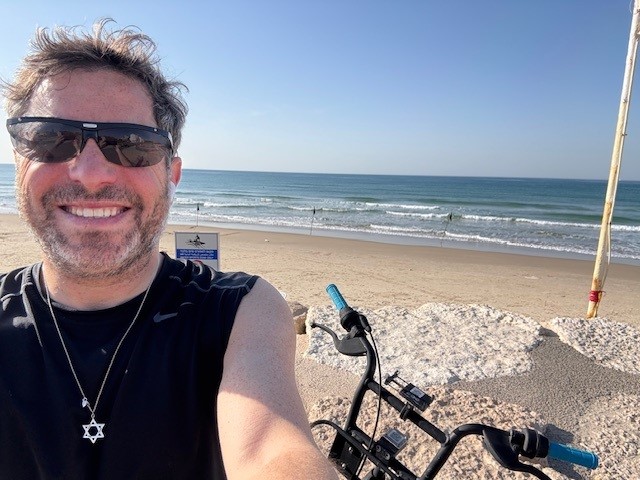
A Young Judaea Alum’s Hopeful Return
By Chuck Fox, Tel Yehudah 1987-1988
I was here in Israel twenty-three months ago, in January 2024, three months after the start of the war, for a week-long Young Judaea Alumni mission during which we met survivors, families of victims, and thought leaders from journalism and politics, and volunteered by picking cucumbers and making care packages for displaced persons.
At that time, in Hostage Square, the large digital clock was at 115 days. Now I am here in December 2025. The art exhibits in Hostage Square have mostly been disassembled, but because we are all still short one final hostage whose body has not yet been returned, the clock continues to count upward. It is at 815 days upon my return.
Seven hundred days that I was at home, living in freedom and peace, not hiding in bomb shelters. Days that my two 20-something-aged kids were not serving in the IDF, but studying and working in the U.S., able to hug me when I came to visit them. Days that I worked as a volunteer as my synagogue board chair, in part trying to support Israel by fighting antisemitism and promoting Jewish pride within the United States. I am so glad to be back in Israel during a time when so many people here, collectively as a population, have (at least, maybe) started to exhale.
Although Israelis are still in a post-trauma phase after October 7th, I am not hearing from them that they are still in the trauma and reliving that day over and over again every day, the way that I heard from so many of them two long years ago. My stepfather lives in Jerusalem and, between COVID and the wars with Hamas and Iran, hasn’t felt safe traveling back to the U.S. to visit his grandkids for nearly six years. He’s finally starting to think about making the trek. Our good friends who live in Shoham, near Ben Gurion Airport, whose son had just finished his IDF training when I was here last time, are now able to sleep at night again, as he is almost done with his service.
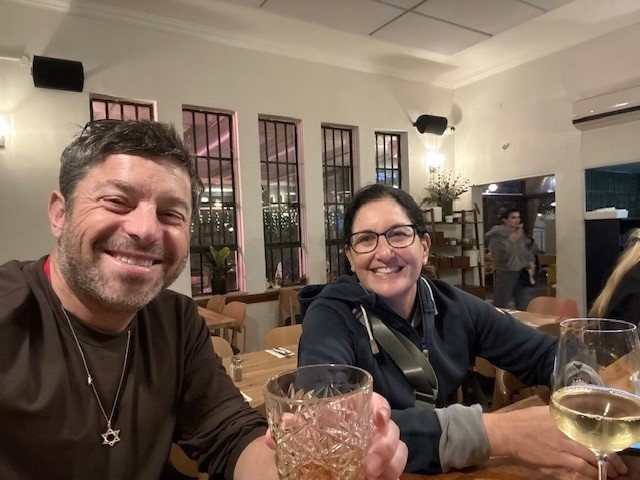
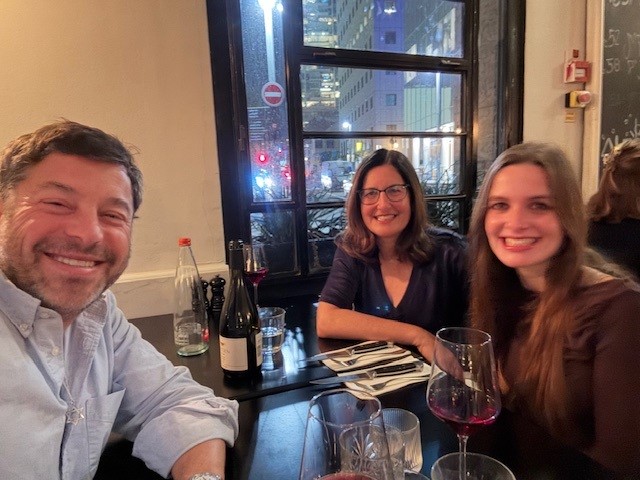
I have spent the last two weeks here mostly just trying to “live like an Israeli” for a little while, as much as a middle-aged American who speaks broken Hebrew can in the heart of Tel Aviv. My wife, Amy, and I rented an Airbnb. She worked a bit during the first week, but mostly we’ve spent time with family and friends—walking the city and boardwalk, eating our way through falafel, pizza, sushi, Chinese, and Italian food, soaking up the sun by day, and watching the Mediterranean sunset in the late afternoon. We have perused art galleries in Florentin, had a prix fixe menu on New Year’s Eve, rented “MetroFun” bikes, toured the Tel Aviv Museum of Art and the ANU Museum on the campus of Tel Aviv University, and met up with friends from back home in Atlanta and from growing up in Maryland, here and there.
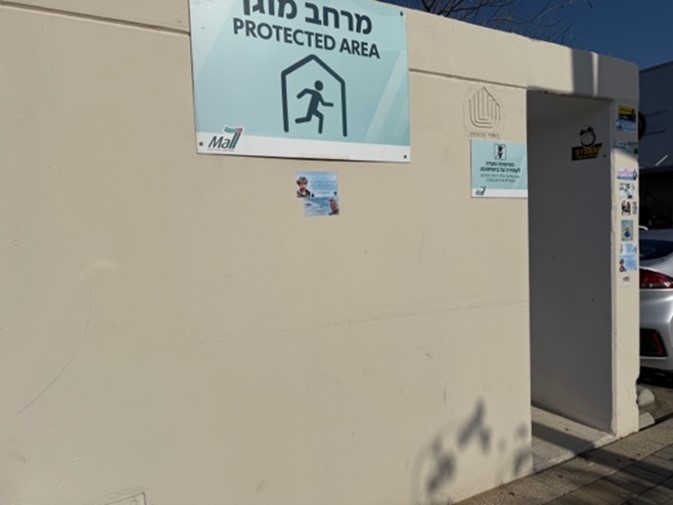
When I am at the beach in Tel Aviv, I can see the Dan Panorama Hotel where I stayed with my Young Judaean friends for six days two years ago. I can see the yellow-domed gas station at which we were loading onto our bus when the tzeva adom alarm sounded and we had to run back into the hotel and hide in the mamad until the Iron Dome shot down rockets coming from Gaza to South Tel Aviv. I can look at the hotel and know that it’s filled with tourists now, and not the hundreds of refugees from Israeli towns on the border of Lebanon who lived there for months after the start of the war, and with whom we shared our accommodations and meals during the week we were here volunteering as Judaeans in 2024.
I am extremely fortunate to be good friends with several IDF soldiers, as many of them have worked with Amy as Shinshinim in Atlanta during their gap year between high school and army service, through a program with the Jewish Federation of Atlanta via the Jewish Agency. It has been so great to see them, give them a hug, treat them to coffee or meals, hear stories of their time in basic training or about their jobs (what they’re able to share!) in the army, and hear what they miss about America. And to know that we are being protected by the best of the best, and that things are a little calmer for them now due to the ceasefire than they would have been last year.
I had lunch today in the heart of Jerusalem with the daughter of one of my best friends from high school. She is a lone soldier who is four months away from finishing her army service, and she just got engaged. It gave me such incredible pride to spend time with her and hear about her experiences and her fellow soldiers that, after we parted ways, my heart was pounding to the point where I thought it was going to beat right out of my chest.
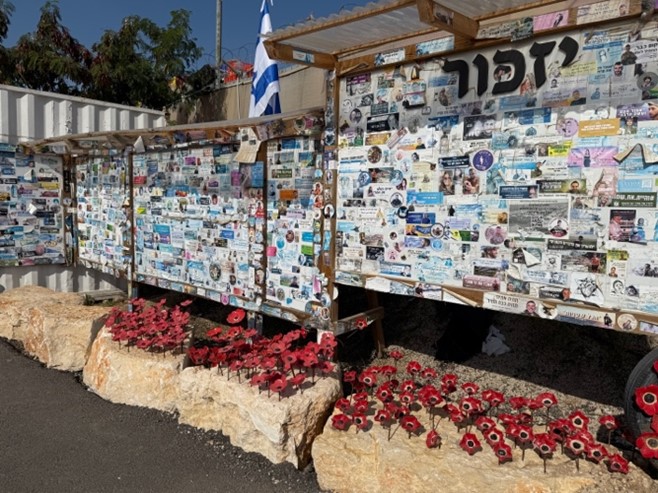
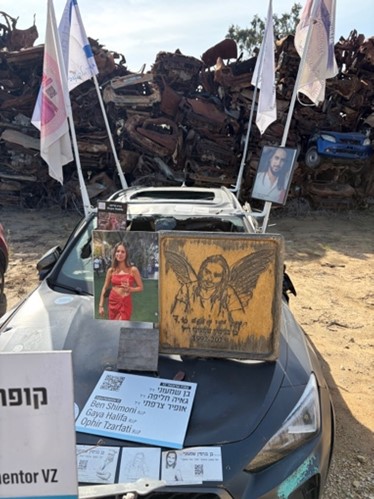
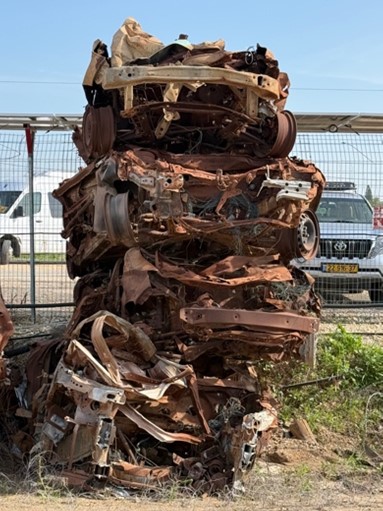
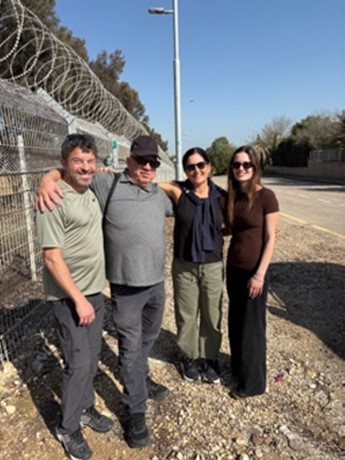
Two days ago, Amy and I took our 23-year-old daughter, Sydney, to the Gaza Envelope for the day to tour the border kibbutzim, the car museum, and the Nova Festival site. So many innocent Israeli children were taken from us in one morning 815 days ago—mostly Jewish people, but also a diverse group of Thais, Druze, Bedouins, and Christians, as anyone who has been following the war knows. People who, while beautifully and tastefully memorialized in the south of Israel so that we can pay our respects and bear witness, have been silenced forever.
But there is hope here now. Next to our Airbnb there is a preschool whose kids are dropped off at about 8 a.m. every morning. It is such a treat to hear the happy voices of small Jewish children filling our street as they start their school day. On the beach are young men and women going for a jog or a bike ride, walking arm in arm with their partners, or joyously playing beach volleyball—using their hands, heads, shoulders, and feet—sometimes yelling as they dive for the ball. As I hear these sounds, it fills my heart to know that, at least for the moment, they are able to live their lives carefree and full of enjoyment.
I spent some of the afternoon today walking around the Old City, and tonight I will be back on the Mediterranean, having dinner in the heart of Jaffa. These are two places where Jews, Muslims, and Christians are strikingly and beautifully able to coexist peacefully day after day, year after year (even if it’s complicated!). My prayer for Israel, for the Middle East, and for the world is that we can use their example to inspire us to continue to uphold the ceasefire, continue to pick up the pieces, and find meaning and joy in life in the wake of the disaster that befell this country and our people in 2023.
Let Ran Gvili be returned. Let the clock in Hostage Square be stopped, turned off, and taken away—maybe even taken to the trash dump, crushed and incinerated, and forgotten forever. Let it be soon. As Young Judaea inspired me and enabled me to come back to Israel in the wake of the war many months ago, I hope that those of you reading this will find a way to use your YJ connection to come back to Israel soon—bring your kids, contribute to the economy, and help our people and our homeland continue to regain a sense of normalcy in 2026.